Understanding Marketing Funnels: A Guide for Small Business Owners

Local SEO Tactics to Attract More Customers in Your Area

In today’s rapidly evolving digital landscape, we as marketers are constantly seeking ways to enhance our strategies and stay ahead of the competition. Fortunately, the rise of artificial intelligence (AI) has presented us with a transformative opportunity to revolutionize our marketing approach. AI tools are empowering us to streamline processes, personalize customer experiences, and drive measurable results like never before.
AI-powered marketing automation enables us to process vast amounts of data, uncover valuable insights, and make data-driven decisions that optimize our campaigns. By leveraging AI tools, we can create highly targeted and personalized marketing content that resonates with our audience on a deeper level. This not only improves customer engagement but also significantly boosts our return on investment (ROI).
Moreover, AI-driven marketing strategies help us stay agile and responsive to the ever-changing needs of our customers. With real-time analytics and predictive modeling, we can anticipate market trends, refine our tactics, and deliver exceptional value to our audience. By seamlessly integrating AI into our marketing arsenal, we can unlock a new level of efficiency, productivity, and competitive advantage.
Key Takeaways
- AI tools enable data-driven decision making and personalized marketing campaigns
- Automation and optimization powered by AI can enhance marketing efficiency and ROI
- AI-driven insights help marketers anticipate customer needs and stay ahead of the curve
- Integrating AI into marketing strategies provides a significant competitive edge
- Careful goal-setting and regular optimization are crucial for effective AI-powered marketing
Understanding AI Tools in Marketing
In today’s digital landscape, artificial intelligence (AI) has become a powerful ally for marketers, revolutionizing the way we approach our strategies. AI tools leverage advanced technologies like machine learning, natural language processing, and predictive analytics to streamline and enhance various aspects of marketing.
What Are AI Tools?
AI tools are software applications that utilize artificial intelligence algorithms to automate tasks, personalize communication, and optimize campaign performance. These tools can analyze vast amounts of data, identify patterns, and make data-driven decisions to improve marketing efforts.
Types of AI Tools for Marketing
- Machine learning algorithms for predictive analytics and personalization
- Automation platforms for task management and content creation
- Optimization tools for A/B testing and performance analysis
- Generative AI for content generation and personalization
- Predictive analytics for forecasting trends and customer behavior
Benefits of AI in Marketing Strategy
The integration of AI in marketing strategies can deliver a wide range of benefits, including data-driven insights, enhanced personalization at scale, reduced response times, improved customer experience, maximized efficiency, cost savings, and increased return on investment (ROI).
As the adoption of AI tools continues to grow, marketers who embrace these technologies will be well-positioned to stay ahead of the curve and deliver exceptional results for their businesses.
Enhancing Customer Insights with AI
In today’s data-driven marketing landscape, artificial intelligence (AI) has emerged as a powerful tool for unlocking deep customer insights. By leveraging advanced analytics, predictive modeling, and personalization techniques, AI enables businesses to better understand their customers’ behavior, preferences, and needs.
Leveraging Data Analytics
AI can process and analyze vast amounts of customer data at unprecedented speeds, uncovering patterns, correlations, and trends that would be difficult for humans to detect manually. This data-driven approach allows us to gain valuable insights into customer behavior, paving the way for more targeted and effective marketing strategies.
Predictive Analytics for Targeting
The predictive power of AI enables us to anticipate customer needs before they are even expressed. By analyzing past behavior and buying patterns, we can use AI to forecast future customer actions and preferences. This, in turn, helps us to develop highly targeted marketing campaigns that resonate with our audience, leading to increased engagement and conversion rates.
Customer Segmentation and Personalization
AI-powered customer segmentation allows us to group our audience into distinct, highly accurate clusters based on shared characteristics and behaviors. This enables us to deliver personalized experiences, content, and offers tailored to the unique needs and preferences of each customer segment. Studies have shown that personalized email campaigns can increase revenue and transaction rates by up to 6 times compared to non-personalized campaigns.
By harnessing the power of AI, we can transform our understanding of customer behavior, paving the way for more effective, data-driven marketing strategies that deliver personalized experiences and drive meaningful engagement and loyalty.
Streamlining Content Creation
In the dynamic world of marketing, content is the heartbeat that captivates and engages audiences. However, the process of content generation can be time-consuming and resource-intensive. Fortunately, AI-powered tools are revolutionizing the way we approach content creation, from copywriting and blogging to automated curation and personalized user experiences.
AI for Copywriting and Blogging
Many marketers, content creators, copywriters, and social media managers face challenges related to content creation on a daily basis. AI tools can help develop outlines for writing, overcome writer’s block, and generate basic content based on specific topics and keywords. For paid ad specialists, utilizing AI for ad copy creation can lead to improved performance through analytical testing.
Automated Content Curation
The task of sifting through the vast ocean of online content can be overwhelming. AI-powered tools can assist in researching competitors’ SEO strategies, identifying top-performing keywords, and tracking website search rankings. Writers can reduce time spent on creating first drafts by using AI tools like ChatGPT, focusing more on enhancing content structure and adding creative elements.
Personalizing User Experience
Delivering personalized content is crucial for engaging and retaining audiences. AI can be utilized for content curation, suggesting relevant content based on keywords from around the web. Social media posting can be automated with AI tools to suggest optimal posting times based on audience engagement patterns and automatically post content accordingly.
By leveraging the power of AI, businesses can streamline their content creation efforts, save valuable time, and deliver personalized experiences that resonate with their target audience. From copywriting to content curation, AI is transforming the way we approach content generation and revolutionizing the marketing landscape.
Optimizing Social Media Marketing
In today’s digital landscape, social media has become a crucial component of any successful marketing strategy. However, with the increasing volume of content and the growing competition for user attention, marketers are constantly seeking ways to stand out and engage their audiences more effectively. Fortunately, Artificial Intelligence (AI) tools are revolutionizing the way we approach social media marketing, empowering us to optimize our efforts and achieve greater success.
AI-Driven Social Listening
AI-powered social listening tools are transforming the way we monitor and analyze conversations on social media. These advanced platforms can scan millions of online discussions, identifying trends, sentiment, and emerging topics that are relevant to our brand and industry. By leveraging this data-driven approach, we can gain deeper insights into our target audience’s preferences, pain points, and behaviors, enabling us to create more personalized and impactful content.
Scheduling and Automation Tools
Manually managing social media posts can be a time-consuming and labor-intensive task. Fortunately, AI-powered scheduling and automation tools can streamline this process, allowing us to plan and execute our content strategies more efficiently. These tools can analyze the optimal posting times for maximum engagement, automatically schedule updates across multiple platforms, and even generate personalized content recommendations based on user preferences.
Analyzing Engagement Metrics
Measuring the success of our social media efforts is crucial, and AI-powered analytics tools can provide us with a wealth of insights to guide our decision-making. These tools can track engagement metrics such as likes, comments, shares, and click-throughs, and use machine learning algorithms to identify patterns and trends. By analyzing this data, we can gain a deeper understanding of our audience’s preferences, optimize our content strategies, and make more informed decisions about our social media marketing campaigns.
By leveraging the power of AI, we can unlock the full potential of our social media marketing efforts, driving more meaningful engagement, better targeting, and higher returns on our investments. As we continue to explore the possibilities of AI in this rapidly evolving landscape, we can stay ahead of the curve and position our brands for long-term success.
Remember, the key to successful social media marketing with AI is to approach it with a strategic mindset, continuously evaluate and refine your tactics, and stay up-to-date with the latest trends and advancements in this dynamic field.
Improving Email Marketing Campaigns
As email remains a powerful marketing channel, businesses are increasingly leveraging AI tools to optimize their email automation, personalization, and campaign performance. By harnessing the power of artificial intelligence, we can transform the way we connect with our audiences through email marketing.
AI for Email Segmentation
AI-powered tools enable sophisticated customer segmentation by analyzing user behavior, preferences, and engagement patterns. Instead of relying on static, one-size-fits-all email campaigns, AI algorithms dynamically group customers based on their unique characteristics, allowing us to deliver highly personalized email content that resonates with each individual.
Optimization of Send Times
AI can also help us determine the most effective send times for our email campaigns. By scrutinizing past data on open rates and engagement, AI identifies the optimal moments to reach our audience, ensuring our messages are delivered when they’re most likely to be noticed and interacted with.
Personalized Content Recommendations
Leveraging AI, we can generate personalized content recommendations for each recipient, tailoring the email’s subject line, body, and visuals to their specific interests and behaviors. This level of personalization can lead to a 2.5 times higher click-through rate and generate 6 times more sales compared to traditional, generic email campaigns.
By embracing email automation, personalized email marketing, and AI-driven email campaigns, we can elevate our email marketing strategy, drive better engagement, and ultimately, achieve greater success in connecting with our customers.
Boosting SEO with AI
When it comes to enhancing search engine optimization (SEO), the power of AI is transforming the game. From advanced AI SEO tools that uncover high-potential keywords to content optimization techniques that align with search intent, AI is revolutionizing the way we approach search engine optimization and content performance.
AI-Powered Keyword Research
Gone are the days of manual keyword research. AI-driven tools like Semrush’s Keyword Magic Tool can rapidly analyze vast datasets, providing granular insights into search intent, volume, and personalized difficulty levels. This accelerated process allows marketers to identify the most valuable keywords and craft targeted content strategies that resonate with their audience.
Content Optimization Techniques
- AI-powered platforms like ContentShake can generate SEO-optimized content, complete with recommendations for improvement.
- Generative AI tools like Jasper’s FAQ Schema Generator simplify the creation of schema markup, making content more understandable for search engines.
- Internal linking structures, informed by AI, help search engines navigate websites, potentially boosting page rankings.
Predictive SEO Trends
The future of SEO is undoubtedly intertwined with AI’s predictive capabilities. By analyzing historical data, industry trends, and external factors, AI algorithms can forecast high and low demand periods for keywords, enabling marketers to adjust their strategies accordingly. This proactive approach to content performance optimization ensures that websites stay ahead of the curve and capitalize on emerging opportunities.

As AI-powered SEO tools continue to evolve, marketers who embrace this transformative technology will be poised to drive sustainable growth and solidify their online presence. By harnessing the power of AI, we can unlock new levels of search engine optimization and elevate our content strategies to new heights.
Enhancing Advertising Strategies
In the dynamic world of digital marketing, AI has emerged as a powerful tool for revolutionizing advertising strategies. Programmatic advertising automation, powered by AI algorithms, has transformed the way we buy and place ads in real-time. By leveraging the power of data and machine learning, these AI-driven platforms analyze vast amounts of information to ensure ad placements are targeted, relevant, and cost-effective across various digital channels.
Programmatic Advertising Automation
Programmatic advertising utilizes AI algorithms to automate the ad buying and placement process. These intelligent systems analyze consumer data, market trends, and real-time bidding to optimize ad campaigns for maximum impact. Programmatic ads allow marketers to precisely target their audience, adjust bids, and optimize ad creatives in real-time, leading to improved campaign performance and a higher return on investment (ROI).
AI-Driven A/B Testing
Marketers can harness the power of AI-powered A/B testing tools to optimize their ad creatives and messaging. These AI-driven platforms analyze user behavior, preferences, and engagement metrics to identify the most effective ad variations. By continuously testing and refining ad elements, businesses can improve their advertising strategies and drive better results.
Real-Time Ad Performance Analysis
AI-powered real-time bidding and ad performance analysis tools provide marketers with instant insights into the effectiveness of their campaigns. These analytics platforms track key metrics, such as click-through rates, conversion rates, and cost-per-acquisition, allowing businesses to make immediate adjustments to their ad strategies. This agility empowers marketers to maximize the ROI of their advertising efforts.
By embracing the transformative potential of AI, businesses can unlock new opportunities to enhance their advertising strategies, drive better campaign results, and stay ahead in the competitive digital landscape.
Maximizing Conversion Rates
Unlocking the power of conversion rate optimization (CRO) is essential for businesses looking to drive growth and profitability. Fortunately, the integration of artificial intelligence (AI) tools can revolutionize your marketing strategy, leading to remarkable improvements in conversion rates.
AI in Sales Funnel Optimization
AI-powered predictive analytics can help us optimize our sales funnels by identifying the most effective touchpoints and personalizing the user journey. By analyzing customer behavior data, AI can predict which users are most likely to convert and guide them seamlessly through the sales process.
Chatbots for Customer Engagement
AI-powered chatbots have become a game-changer in customer engagement. These intelligent virtual assistants provide 24/7 support, answer queries, and guide customers towards making a purchase. By enhancing the customer experience, chatbots can significantly boost conversion rates.
Behavioral Targeting
Understanding customer behavior analysis is crucial for effective marketing. AI enables us to analyze user actions, preferences, and browsing patterns, allowing us to deliver highly personalized offers and content. This targeted approach can lead to increased engagement and higher conversion rates.
By leveraging the power of AI in areas like sales funnel optimization, customer engagement, and behavioral targeting, we can unlock remarkable improvements in our conversion rate optimization efforts. The integration of these AI-driven techniques can enhance the customer experience, boost engagement, and drive meaningful business growth.
Measuring Marketing Performance
As marketers, we understand the importance of data-driven decision making. That’s why AI-powered marketing analytics have become essential in measuring the performance of our campaigns. These advanced tools and techniques provide us with deeper insights into our marketing efforts, empowering us to make informed choices and optimize our strategies for better results.
AI Metrics and KPIs
AI-enhanced marketing analytics allow us to track a wide range of performance metrics and key performance indicators (KPIs) that go beyond the traditional measures. We can now delve into granular data points, such as content engagement, social media likes and shares, audience growth, email open rates, and more. These insights help us evaluate the true effectiveness of our digital marketing campaigns and make data-driven decisions to improve our overall marketing performance.
Real-Time Analytics Tools
Gone are the days of waiting for delayed reports to gauge our marketing success. AI-powered real-time analytics tools provide us with instant access to performance data, enabling us to make quick adjustments and optimizations as needed. By monitoring our campaigns in real-time, we can swiftly identify areas for improvement and capitalize on emerging opportunities, ensuring our marketing efforts remain agile and responsive to changing market conditions.
Data Visualization Techniques
Interpreting complex marketing data can be a daunting task, but AI-driven data visualization techniques come to our rescue. These powerful tools transform raw data into visually compelling charts, graphs, and dashboards, making it easier for us to identify trends, patterns, and insights. With these data visualization capabilities, we can better understand the performance of our marketing initiatives and make more informed, data-driven decisions to refine our strategies and achieve our business goals.
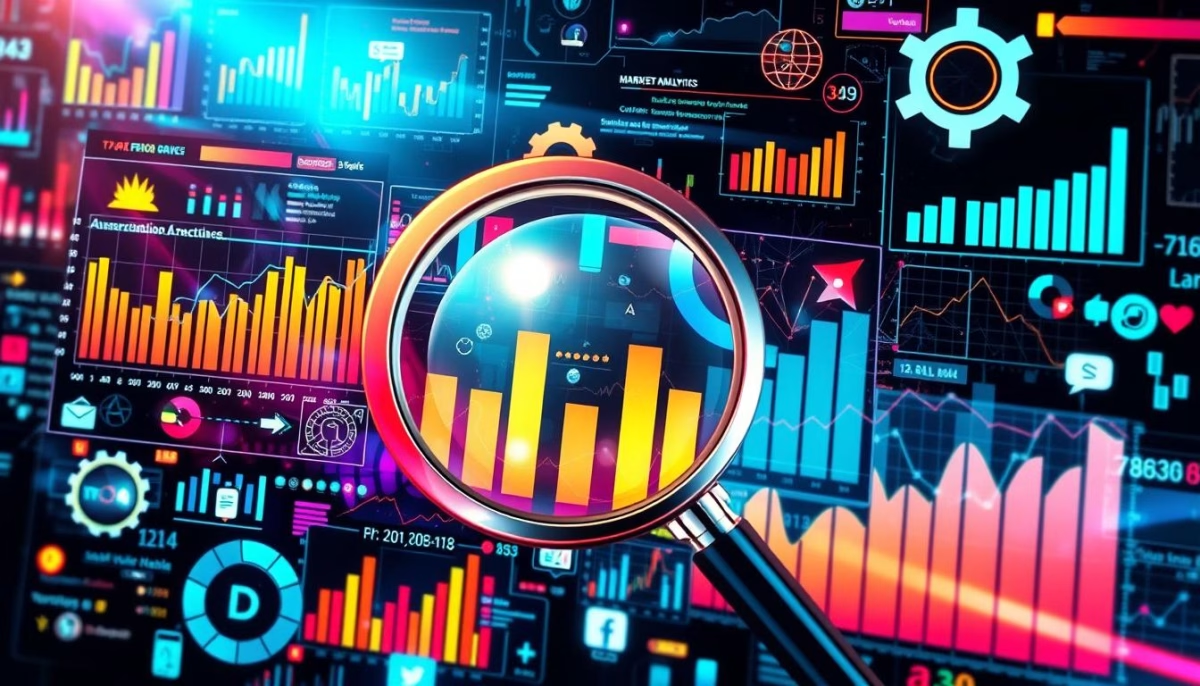
By leveraging the power of AI, we can unlock a new level of marketing performance measurement and optimization. With advanced metrics, real-time analytics, and data visualization techniques, we can gain a deeper understanding of our marketing efforts and make data-driven decisions that drive business growth. As we embrace these AI-powered tools, we are poised to revolutionize our approach to marketing and stay ahead of the competition.
The Future of AI in Marketing
As we look towards the future, the integration of AI into marketing strategies is set to accelerate and reshape the industry in profound ways. From emerging trends in voice search optimization and augmented reality experiences to the growing emphasis on hyper-personalization, the landscape of AI in marketing is continuously evolving. However, with these advancements come important ethical considerations, such as data privacy and algorithmic bias, that must be thoughtfully addressed.
Emerging Trends to Watch
In the coming years, we can expect to see AI-powered search engines like SearchGPT revolutionize the way users interact with search, moving away from traditional keyword-based queries towards more natural, conversational interactions. This shift will significantly impact content creation and optimization strategies, as marketers adapt to meet the demands of these advanced search capabilities.
Additionally, the integration of AI with augmented reality (AR) technologies will enable the creation of highly immersive and interactive marketing experiences, blurring the lines between physical and digital realms. Brands that embrace these innovative AR-AI integrations will be poised to captivate and engage their audiences in unprecedented ways.
Ethical Considerations in AI
As AI becomes more deeply embedded in marketing practices, it is crucial that we address the ethical implications of these technologies. Data privacy, highlighted by regulations like the GDPR, remains a paramount concern, as consumers demand greater transparency and control over the use of their personal information. Equally important is the issue of algorithmic bias, where AI systems can inadvertently perpetuate and amplify existing societal biases, leading to potentially discriminatory marketing practices. Responsible AI development and deployment will be a key focus for forward-thinking marketers.
Preparing Your Business for AI Integration
To harness the full potential of AI in marketing, businesses must take proactive steps to assess their current capabilities, identify areas for improvement, and develop a strategic plan for AI adoption. This involves building AI literacy among marketing teams, investing in the necessary infrastructure and tools, and fostering a culture of innovation and experimentation. By embracing the power of AI, marketers can unlock new levels of personalization, optimization, and customer engagement, positioning their brands for success in the ever-evolving digital landscape.