

Effective Lead Generation Tactics for Small Businesses

Designing an Effective Sales Funnel for Your Small Business

In today’s world, social media is central to how we live. Around the globe, 3.5 billion people connect on social platforms. For businesses, this means a big opportunity to interact with customers. But standing out isn’t easy with all the online noise and competition. This is where social media analytics plays a key role.
It offers critical insights into what your customers like and do online. That way, businesses can tweak their strategies to better fit what customers want. At Solved, we get the power of social media analytics for marketing. In this blog, we’ll show you how to step up your marketing with these analytics.
Key Takeaways
- Social media analytics provides valuable data-driven insights to optimize your marketing strategy
- Measuring performance metrics like impressions, reach, and engagement can help identify high-performing content
- Analyzing audience demographics and behavior can inform personalized marketing efforts
- Tracking competitor strategies and paid advertising performance can help improve your own marketing tactics
- Leveraging social media analytics tools can provide a comprehensive view of your marketing effectiveness
Understanding the Significance of Social Media Analytics
Social media marketing thrives on data-driven insights. Social media analytics is about collecting and analyzing data from sites like Facebook, Twitter, and Instagram. This data shows how users interact with content. Marketers use this information to find what content works best, spot trends, and measure social strategy success.
Measuring ROI and Justifying Social Media Investments
Measuring ROI is vital for companies wishing to enhance their impact online. With social media analytics, they can show the value of their activities. Tracking metrics such as impressions and sales helps prove the benefits to everyone involved.
Identifying High-Performing Content and Audience Engagement
By diving into social media analytics, brands can determine top content and engage better with their audience. Analyzing likes, shares, and clicks helps marketers understand what their audience likes. This knowledge allows them to adjust and improve their content strategies for higher engagement.
Tracking Brand Sentiment and Customer Perception
Social media analytics also shines light on brand sentiment and customer views. Through sentiment analysis, companies gauge how people feel about their brand. This helps companies to better their services and address any concerns.
Using social media analytics gives businesses deep insight into their audience and helps in refining marketing strategies. Whether the aim is to measure ROI or enhance audience engagement, social media analytics serves as an essential tool for modern marketers.

Establishing Key Metrics and Goals
Before diving into your social media data, it’s key to set social media goals. Without goals, analyzing data is like driving without a map. Make sure your goals are SMART (Specific, Measurable, Achievable, Relevant, and Time-bound). For instance, if you want to boost brand awareness, target a specific follower growth.
Defining SMART Goals for Social Media Marketing
Creating SMART goals is vital for your marketing on social media. They give clear direction and allow you to check if you’re succeeding. SMART goals include boosting your follower count by 20% in the next quarter or upping your average engagement rate on Instagram by 15% in six months.
Identifying Relevant KPIs for Different Platforms
Every social media platform has specific KPIs (Key Performance Indicators) for measuring success. For example, on Facebook, look at reach, impressions, and engagement rate. On Twitter, focus on tweet engagements, retweets, and mentions. Matching KPIs to each platform helps in building a strategy that supports your business aims.
Leveraging Social Media Analytics Tools
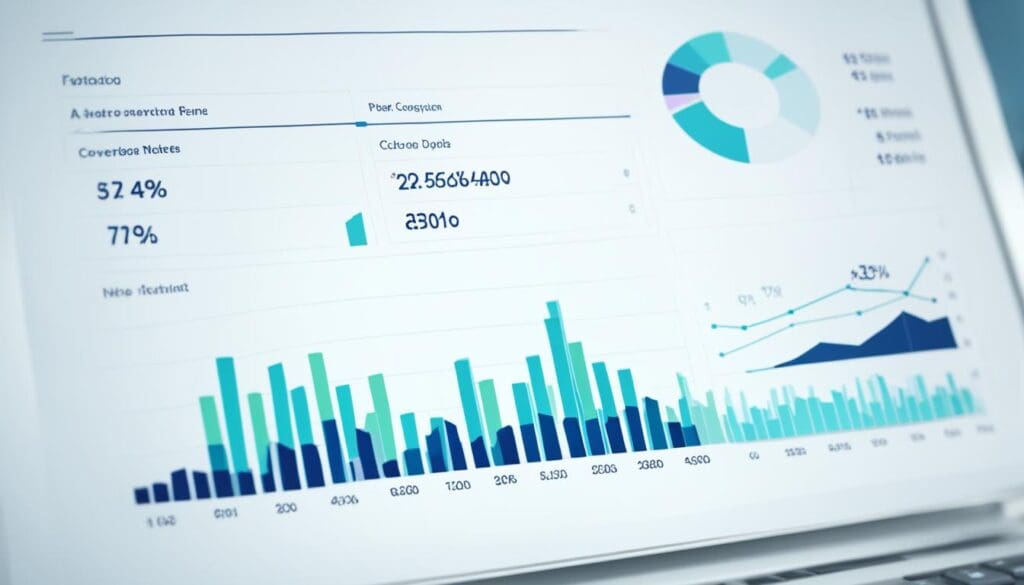
To really benefit from social media analytics, we have to pick the right tools. There’s a wide variety of these tools in the market, some free and some paid. They help businesses track performance, manage brand mentions, look at what competitors are doing, and find insights. Well-known tools include Google Analytics, Hootsuite, Sprout Social, and Buffer.
Choosing the Right Analytics Platform
When choosing a social media analytics platform, think about what’s most important to you. Do you want to measure the effectiveness of your campaigns? How detailed does the data need to be? It’s also important that the platform works well with the tools you already use. Look closely at what each tool offers. Make sure it suits your goals for social media marketing. By making the right choice, you set yourself up to improve your marketing strategies and outdo competitors.
Integrating Analytics with Social Media Management
Getting the most from analytics means linking your tools together. By merging your social media management and analytics tools, you get a full picture of how you’re doing. This allows smarter decisions, better campaigns, and understanding your marketing’s effect on different platforms.
Social Media Analytics
We improve your marketing by understanding your followers better. Social media analytics give insights into who your audience is. They show us their demographics, what they like, and how they act. With this info, you can make content that your target audience loves. And you can tweak your messages to match what they prefer.
Analyzing Audience Demographics and Behavior
We look at things like age, gender, location, and what devices people use. This helps us aim content straight at your target audience. Looking at this data, we notice patterns and trends. This helps in shaping your content and how we spread it out.
Monitoring Competitor Strategies and Market Position
Comparing your social media game with others uncovers where you can stand out. We look at your followers, how much they engage, and how they react to your posts. This way, we spot chances to be different in the crowd. And we find ways to boost your market position.
Evaluating Paid Advertising Performance
We gauge if your paid ads are actually working. To do this, we track metrics like clicks, click-through rate, and cost-per-click. This info helps in making smart choices about where to put your ad money. We want to make sure you get the most value from your investment.
Measuring Influencer Marketing Impact
When it comes to influencer marketing, we look at how well it does. We check things like how much people interact with the posts, their audience size, and sales linked to them. Knowing this, we can make your influencer campaigns better. We also figure out who the best influencers are to partner with.
Conclusion
Social media analytics is key for businesses big and small to improve their strategies. By clearly setting goals and monitoring key metrics, using the right tools, and updating our plans, we learn a lot about our audience and what works best. This helps boost our marketing effectiveness.
The online world is always changing. Now, more than 70% of internet users are on social media every day. Making smart choices with social media analytics helps us create better content, appeal to our audience, and improve our online image.
Using social media analytics wisely can really push our businesses ahead in the digital world. Keeping up and refining our social media plans lets us connect with our customers better. This leads to growth and success over time.