
Importance of High-Quality Graphics in Marketing Campaigns

10 Proven Sales Techniques Every Small Business Owner Should Know
As a small business owner, finding new customers and keeping them interested is key. The marketing funnel is a great tool for this. It shows that most people don’t buy the first time they see your brand. So, guiding them through steps before they buy is critical.
The marketing funnel outlines ways to get and keep customers. It’s the backbone of marketing, online and offline. The funnel guides people from just knowing your brand to making a purchase. It’s evolving as the internet and smartphones change how we shop.
Key Takeaways
- Marketing funnels are crucial for small businesses to attract leads, drive conversions, and build lasting customer relationships.
- Understanding the four stages of the marketing funnel (Awareness, Interest, Desire/Decision, and Action) can help optimize marketing efforts.
- Staying up-to-date with evolving customer behaviors and implementing techniques like omnichannel marketing, personalization, and customer retention can enhance the effectiveness of a small business’s marketing funnel.
- A well-designed marketing funnel can streamline the customer journey, make analytics easier to track, and identify areas for improvement.
- Implementing a successful marketing funnel can help small businesses reduce costs and increase revenue.
What is a Marketing Funnel?
- Marketing funnels are crucial for small businesses to attract leads, drive conversions, and build lasting customer relationships.
- Understanding the four stages of the marketing funnel (Awareness, Interest, Desire/Decision, and Action) can help optimize marketing efforts.
- Staying up-to-date with evolving customer behaviors and implementing techniques like omnichannel marketing, personalization, and customer retention can enhance the effectiveness of a small business’s marketing funnel.
- A well-designed marketing funnel can streamline the customer journey, make analytics easier to track, and identify areas for improvement.
- Implementing a successful marketing funnel can help small businesses reduce costs and increase revenue.
What is a Marketing Funnel?
A marketing funnel guides people through different stages before they buy something. It starts with their first time noticing a business or product. Then it leads them to actually making a purchase. This model helps businesses understand and improve how they sell.
Definition and Concept
The marketing funnel shows the path customers take. It begins with the first time they interact with a business. Then it moves them towards choosing to buy. This approach helps in knowing how to best connect with potential customers.
Benefits of Having a Marketing Funnel
Having a marketing funnel helps small businesses in many ways.
- It outlines the customer journey clearly, which is good for marketing plans.
- It makes tracking and checking results, like how many people buy after seeing an ad, simpler.
- It shows where improvements can be made, making strategies for selling and finding new customers better.
- It comes up with a specific, number-based sales strategy to help teams work better.
- It cuts marketing costs and boosts income by focusing on the best ways to reach customers.
Using a marketing funnel helps small businesses attract and keep customers. It helps grow the business in a steady way.
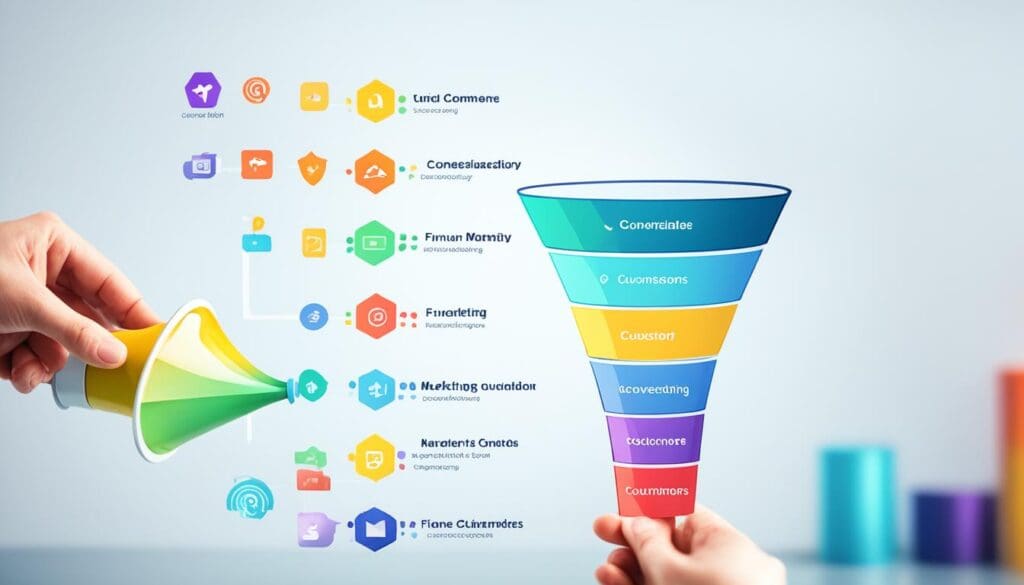
The Four Stages of a Marketing Funnel
Small businesses must understand the marketing funnel to attract and keep customers. We’ll look at the four stages: Awareness, Interest, Desire/Decision, and Action.
Awareness Stage
At first, people learn about your product or service. It’s where you gather leads by making your brand known. Use things like content marketing, social media, and SEO to grab attention.
Interest Stage
After awareness comes building interest. Prospects dive deeper to understand your product, brand, and solutions. Here, provide helpful content showing your expertise and trustworthiness.
Desire/Decision Stage
Next, prospects reach the Desire/Decision stage. They are close to choosing to buy. Highlight what makes your product special, clear up doubts, and guide them to decide.
Action Stage
The last step is the Action stage. Here, prospects become customers. Ensure an easy buying process to turn them into loyal customers.
Remember, the buyer’s journey doesn’t stop at a sale. A well-designed funnel helps build long-term customer relationships. This can lead to loyal customers or brand advocates.

Marketing Funnels for Different Goals
Every business can tweak marketing funnels to match unique goals. We’ll dive into three distinct types. They can guide you in achieving your specific goals outlined in the [marketing funnel types].
Lead Generation Funnel
The lead generation funnel focuses on grasping [lead generation] top-notch leads. Use a mix of paid and natural methods like social media ads, creating content, or lead magnets. Offer compelling resources such as ebooks, webinars, or free trials to collect contact details. This way, you draw in possible customers and compile a list of leads keen on your offerings.
Sales Letter Funnel
The sales letter funnel uses detailed sales content to promote a [sales process] product or service. It typically includes options to boost, complement, or reduce costs. Its aim is to steer the potential buyer through a convincing sales pitch. This pitch addresses their specific problems and encourages a purchase.
Squeeze Page Funnel
The squeeze page funnel aims to spark curiosity in the potential buyer. It prompts them to share their email address for a lead magnet or valuable insights. This funnel’s primary use is to grow [lead generation] an email list. This list is then used for further marketing campaigns. The goal is to convert the leads into paying customers.
Building Your Marketing Funnel
Starting to build a marketing funnel means finding the right issue to tackle. You must know who your target audience is – what they need, their age, and what troubles them. By figuring this out, you can aim your lead generation methods in a way that specifically helps them.
After understanding the problem, it’s time to pick clear goals for your funnel. You might want more people to sign up or to boost sales. Having clear, measurable goals lets you see if your funnel is working and tweak it if needed.
Create a Landing Page
Now, you need a great landing page to showcase your business to those who are interested. This page should look good, be easy to use, and quickly tell visitors what you offer.
Offer a Lead Magnet
To attract and keep leads, it’s smart to give out a lead magnet. This is a valuable freebie, like an ebook, a tool, or a free trial, that your audience will love. It gets people interested and takes them further into your marketing funnel.
Optimizing Your Marketing Funnels
The internet and smartphones are changing how people shop. To keep up, we must make our marketing funnels better. We need to use an omnichannel approach. This means all our marketing teams need to work together to reach the same goal. This approach helps create a smooth, personal experience for customers. It boosts the number of people who buy our products and keeps them coming back.
Personalizing our marketing funnels is crucial. We analyze how users act and use tools like marketing automation. This helps us to show the right content, messages, and offers to each person. It makes their time on our site better and more likely they buy from us.
Getting back the visitors we lost is also key. Using things like exit popups or special deals can bring people back. It gives them a second chance to see what we offer. This approach works great at boosting sales and keeping customers around.
Keeping the customers we have is cheaper than finding new ones. We do this by providing content that helps our customers. This content should answer their questions and solve their problems. It builds their trust and keeps them coming back for more.
Lastly, we need to keep an eye on how our marketing and sales funnels are doing. By looking at the data, we can see where we need to improve. This helps us make smart choices and better our marketing strategies. Regularly checking our progress is vital to our success.
Conclusion
A well-designed marketing funnel is key for small businesses. It helps attract leads, drive conversions, and build customer relationships. Understanding the four stages of the funnel – Awareness, Interest, Desire/Decision, and Action – is vital. This knowledge lets small businesses optimize their marketing efforts to reach growth goals.
It’s also important to keep up with customer behaviors. Using techniques like omnichannel marketing, personalization, and focusing on customer loyalty can make a great impact. By tracking data and automating processes, businesses can make their marketing more efficient. This way, customers are guided smoothly from first interest to purchase.
Having a deep understanding of marketing funnels is very helpful for small businesses. It can help increase sales, build loyalty, and stand out in the competitive market. By using the insights and tips in this guide, small businesses can find new ways to grow and succeed sustainably.