
Essential Graphic Design Tips for Small Business Owners

Leveraging AI Tools for SEO: A Game Changer for Small Businesses
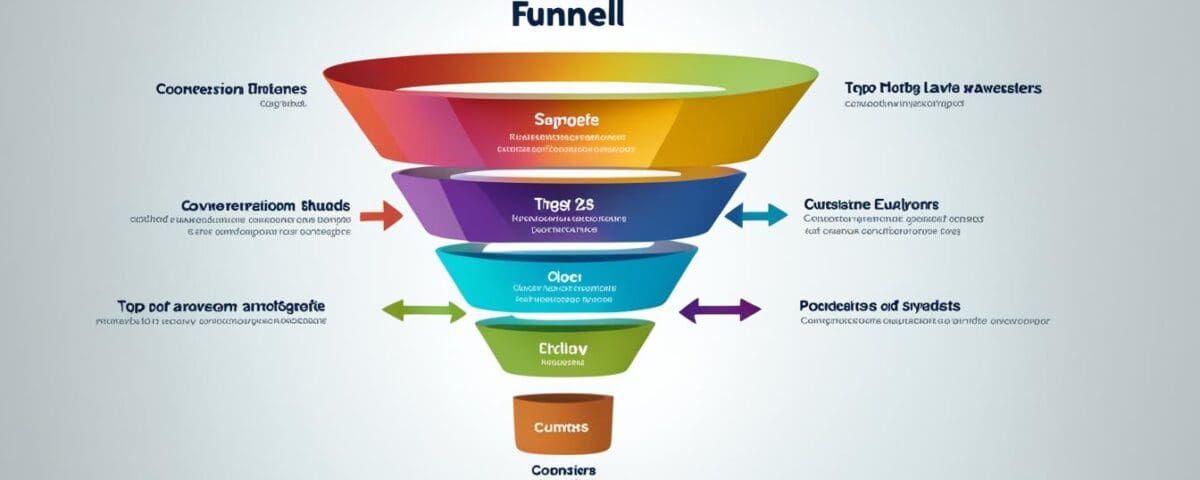
In today’s competitive business landscape, we understand that building a successful small business requires more than simply attracting potential customers. It’s about guiding them through a strategic journey, from their initial awareness of your brand to their ultimate decision to become a loyal customer. This journey is what we refer to as a marketing funnel, and mastering its intricacies can be a game-changer for small businesses.
Marketing funnels are the series of stages that prospects navigate as they consider making a purchase. It’s a well-established fact that only 2% of people will make a purchase during their first interaction with a company. The remaining 98% require a more thoughtful and structured approach to guide them through the decision-making process. By understanding and optimizing each stage of the marketing funnel, we can significantly increase the likelihood of converting those prospects into loyal customers.
Key Takeaways
- Marketing funnels are a crucial tool for small businesses to prioritize and execute a productive marketing strategy.
- Funnels guide prospects through a structured journey, from initial awareness to final purchase.
- Mastering the marketing funnel can help small businesses increase conversion rates and reduce customer churn.
- A well-designed funnel streamlines the customer journey, makes analytics easy to track, and identifies areas for improvement.
- Effective marketing funnels can help small businesses define a sales strategy, reduce costs, and increase revenues.
What are Marketing Funnels?
Definition and Overview
A marketing funnel is a series of stages that guide prospects to become customers. These stages range from a prospect’s first interaction with your company to their decision to purchase. Your marketing funnel helps you visualize how your company converts leads into customers. It’s a critical part of your marketing plan.
The traditional marketing funnel consists of four primary stages: Awareness, Interest, Desire, and Action (AIDA). The awareness stage is when a person first becomes aware of a product or service, the interest stage is when the prospect learns more about the product and brand, the desire stage is when the prospect gets ready to buy, and the action stage is when the prospect makes the final decision to buy.
Different companies use various models to depict their marketing funnels. Some opt for simplicity by dividing the funnel into TOFU (Top of Funnel), MOFU (Middle of Funnel), and BOFU (Bottom of Funnel) sections while others enhance their model by adding stages like loyalty and advocacy.
One of the main advantages of marketing funnels is their measurability. Businesses can track where they are losing customers within the funnel, allowing them to adjust their strategies accordingly to optimize the funnel.
Strategies for each stage of the marketing funnel are essential to seamless customer journey. This includes using branded content for awareness, leveraging brand advocates for consideration, ensuring a simple purchasing process for conversion, implementing a loyalty program for customer retention, and engaging advocates within the loyalty program for advocacy.
The Importance of Marketing Funnels for Small Businesses
As small business owners, we know that digital marketing is essential for customer acquisition and growth. However, navigating the crowded online landscape can be a daunting task. That’s where marketing funnels come into play – they are the key to streamlining our marketing efforts and driving real results.
Marketing funnels help us prioritize and execute a productive marketing strategy. By breaking down the customer journey into distinct stages, we can better understand our audience’s behavior and tailor our approach accordingly. From raising awareness to nurturing loyalty, funnels provide the structure we need to cut through the noise and reach the right customers.
- Funnels streamline the customer journey, making analytics easy to track and identify areas that need improvement.
- They help us define a sales strategy and reduce costs by targeting the right customers, ultimately increasing our revenues.
- As small businesses, we generally don’t have the capital to compete with large corporations. Effective marketing funnels are crucial for standing out in the digital world.
In an era of overwhelming options and information, marketing funnels are the lifeline small businesses need to connect with their target audience and drive sustainable growth. By understanding and implementing these powerful tools, we can level the playing field and thrive in the competitive world of small business marketing, digital marketing, and customer acquisition.
Types of Marketing Funnels
When it comes to marketing funnels, there is a diverse range of options to consider. From lead generation funnels to sales letter funnels, each type serves a specific purpose and can be tailored to your business needs. Let’s explore some of the most common marketing funnel types:
Lead Generation Funnel
The lead generation funnel is all about capturing new leads. Using both paid and organic channels, this funnel aims to attract potential customers and collect their contact information, such as email addresses. By nurturing these leads through targeted content and offers, businesses can convert them into paying customers.
Sales Letter Funnel
The sales letter funnel is a classic approach that relies on long-form sales copy to sell a product or service. This funnel often includes upsells, cross-sells, and downsells to maximize revenue. The sales letter aims to educate, build trust, and persuade the visitor to make a purchase.
Squeeze Page Funnel
The squeeze page funnel is designed to capture email addresses by arousing curiosity and offering valuable content in exchange. This funnel typically features a single, focused page that encourages visitors to provide their contact information, allowing businesses to nurture them further through email marketing.
Membership Funnel
A membership funnel is used in conjunction with a membership site, often including a paywall to restrict access to exclusive content or services. This funnel aims to convert visitors into paying members, providing ongoing value and building a loyal customer base.
Survey Funnel
The survey funnel has two primary objectives: to engage the visitor and to gather information about their identity and preferences. By understanding the customer’s needs and interests, businesses can tailor their sales pitches and marketing strategies to improve conversion rates.
These are just a few examples of the various marketing funnel types available. Businesses may choose to implement a single funnel or a combination of different funnels to achieve their marketing and sales goals.
Marketing Funnels
Marketing funnels provide a structured approach to your business’s customer journey, sales process, and overall marketing strategy. These funnels identify the key milestones that consumers navigate as they progress from initial awareness to becoming loyal, advocating customers.
The traditional marketing funnel typically concludes at the conversion point, where a purchase is made. However, modern marketing funnels go further, encompassing retention factors that foster customer loyalty and advocacy. By applying funnel marketing strategies, you can improve the success rate of your marketing and sales efforts, tailoring your approach to each stage of the customer journey.
- The marketing funnel consists of four stages: Awareness, Consideration, Conversion, and Loyalty.
- Top-of-the-funnel (ToFu), middle-of-the-funnel (MoFu), and bottom-of-the-funnel (BoFu) activities target different stages of the customer journey.
- A sales funnel has five stages: Awareness, Interest, Decision, Action, and Loyalty.
By aligning your sales and marketing funnels, you can effectively convert leads into loyal customers, driving revenue growth for your small business. Integrating data-driven insights and optimizing your funnel at each stage can help you maximize the impact of your customer journey, sales process, and overall marketing strategy.
Creating an Effective Marketing Funnel
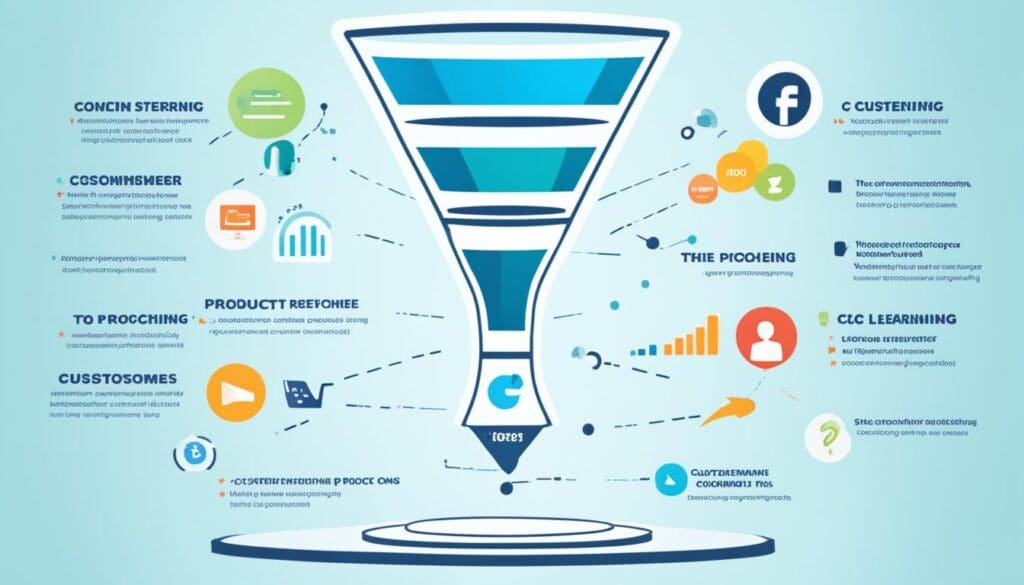
Crafting a successful marketing funnel is crucial for small businesses looking to attract and convert their target audience. By understanding the customer journey and leveraging various content creation and awareness channels, you can guide potential customers through the buying process and achieve your marketing goals.
Step-by-Step Guide
To create an effective marketing funnel, follow these essential steps:
- Define your target audience: Evaluate the needs, desires, interests, and behaviors of your potential customers to develop a detailed buyer persona. This will help you tailor your content and messaging to resonate with your target audience.
- Define your marketing goals: Determine what you aim to achieve, such as increased website traffic, higher lead generation, or improved sales. Setting clear objectives will guide your funnel strategy and metrics.
- Create compelling content: Develop content that captivates your target audience, including blog posts, articles, social media posts, and other valuable resources. Focus on providing information, solving problems, and building trust.
- Identify the right awareness channels: Determine where your target audience is most active online, whether it’s social media, search engine optimization, email marketing, or other channels. Ensure your presence and visibility on these platforms to attract potential customers.
By following this step-by-step approach, you can build a marketing funnel that effectively guides your target audience through the buying process and ultimately drives your business growth.
Benefits of Using Marketing Funnels
Creating marketing funnels can provide numerous benefits for small businesses. From laser-focused lead targeting to efficient budget management and insightful customer journey data, marketing funnels can be a game-changer for your business.
One of the key advantages of using marketing funnels is the ability to target your ideal customers. By understanding the different stages of the customer journey, you can streamline your efforts and enhance your return on investment (ROI). This targeted approach helps you allocate your marketing budget more effectively, ensuring every dollar is spent wisely.
Additionally, marketing funnels provide valuable customer insights, allowing you to fine-tune your strategy based on how potential customers move through the buying process. This data-driven approach can lead to higher conversion rates, as you guide your audience through a well-thought-out journey and improve the odds of turning them into loyal customers.
But the benefits of marketing funnels extend beyond just the numbers. By building lasting relationships with your customers, you can create a thriving community of brand advocates who will continue to support your business for years to come. This customer-centric approach is the foundation of a successful small business.
So, if you’re looking to target the right customers, manage your marketing budget effectively, and gain valuable customer insights that drive higher conversion rates and stronger customer relationships, investing in a well-designed marketing funnel is a strategic move that can propel your small business to new heights.
Marketing Funnel Metrics and Optimization
Tracking and Improving Funnel Performance
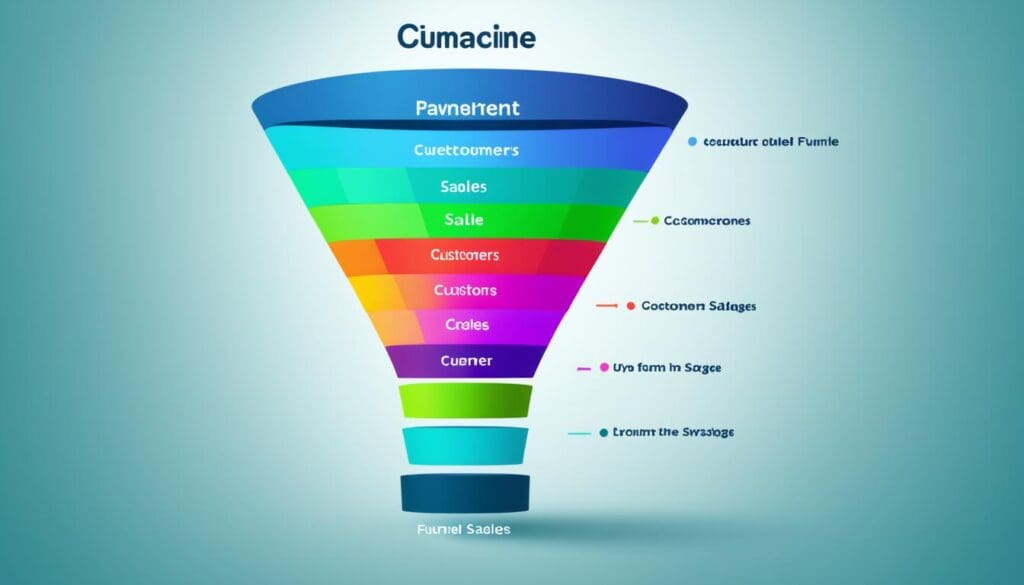
To ensure the success of your marketing funnel, it’s crucial to track and analyze key metrics. By monitoring these metrics, you can identify areas for improvement and make data-driven decisions to optimize your funnel’s performance, ultimately driving more sales and customer loyalty for your small business.
At the top of the funnel, focus on awareness stage metrics like ad impressions and website traffic to gauge the effectiveness of your marketing efforts. In the consideration stage, track email sign-ups, time spent on your site, and clicks on retargeting ads to understand how well you’re engaging potential customers.
As leads progress through the funnel, pay close attention to your conversion rate – the percentage of consumers who ultimately make a purchase. Additionally, monitor customer retention metrics, such as repeat purchases and referrals, to measure loyalty and build long-term relationships.
By analyzing these marketing funnel analytics, you can identify areas of your funnel that need improvement and make strategic adjustments to optimize its conversion rate and customer retention. This data-driven approach will help you drive more sales and foster stronger customer loyalty for your small business.
Conclusion
Marketing funnels are a powerful tool for small businesses looking to cut through the noise of the crowded digital landscape and effectively convert leads into loyal customers. By understanding the different stages of the funnel, defining our target audience and goals, creating compelling content, and identifying the right awareness channels, we can build a marketing funnel that streamlines the customer journey, provides valuable insights, and boosts our conversion rates and customer retention.
Implementing and continuously optimizing our marketing funnel can be a game-changer for the growth and success of our small business. By leveraging the power of small business marketing, customer acquisition, and customer retention strategies, we can create a more efficient and effective sales process that sets us up for long-term success.
As we move forward, it’s crucial to stay agile and adaptable, continually analyzing our funnel’s performance and making adjustments as needed. With a well-structured marketing funnel in place, we can navigate the competitive landscape, build strong relationships with our customers, and position our small business for sustained growth and profitability.