

How to Use Instagram to Drive Sales and Build Your Brand

Creative Social Media Graphics That Drive Engagement

As we approach the new year, the world of video marketing is poised to witness a remarkable transformation. For small businesses, harnessing the power of video has become an essential strategy for growth and engagement. With the content marketing industry projected to reach a staggering $600 billion by 2024, driven by the integration of AI and machine learning, now is the perfect time for small businesses to capitalize on the latest video marketing trends.
In 2023, an astounding 92% of marketers reported a positive return on investment (ROI) from their video marketing efforts. This statistic underscores the ever-growing importance of video as a powerful tool for small businesses to connect with their audiences, build brand awareness, and drive tangible results.
As we navigate the rapidly evolving landscape of video marketing, we’ll explore the top trends that will shape the industry in 2024. From the rise of short-form content and the surge in live streaming to the increasing importance of personalization and user-generated content, these insights will equip small businesses with the knowledge they need to stay ahead of the curve.
Key Takeaways
- Video marketing is a crucial strategy for small business growth, with 91% of businesses using it as a tool.
- The video marketing landscape is evolving, with AI tools, short-form content, and personalization leading the trends.
- The content marketing industry is projected to reach $600 billion in 2024, driven by the integration of AI and machine learning.
- Interactive videos can boast a click-through rate 1,000% higher than passive videos, highlighting the power of engagement.
- Short-form videos provide the highest return on investment for 39% of marketers, suggesting the need for concise and attention-grabbing content.
The Growing Importance of Video Content
In today’s digital landscape, video content has emerged as a powerful tool for businesses of all sizes. With over 91% of companies integrating video marketing into their strategies, it’s clear that video has become an essential component of effective marketing campaigns. This is because video content not only captivates audiences but also plays a crucial role in driving consumer engagement, marketing ROI, and brand awareness.
Why Video is Essential for Businesses Today
Video content has a unique ability to connect with consumers on a deeper level. More than 57% of consumers prefer video content from brands they support, and with nearly 5 billion users engaging on social media platforms daily, the reach of video marketing is undeniable. In fact, videos on platforms like Facebook are shared almost 90 times more than other types of content, and over 91% of Instagram users watch videos on the platform weekly.
Understanding Consumer Preferences
- Around 98% of customers watch explainer videos to learn more about products or services, highlighting the value of educational video content.
- Over 90% of YouTube viewers discover new products or services through the platform, demonstrating the power of video in driving brand awareness and product discovery.
- Over 84% of customers state they made a purchase after watching a branded video, showcasing the direct impact of video on sales and marketing ROI.
By leveraging the power of video content, businesses can create deeper connections with their target audience, increase consumer engagement, and ultimately drive measurable results in terms of marketing ROI and brand awareness.
Short-Form Video Takes Center Stage
In the ever-evolving world of digital marketing, short-form video content has emerged as a powerful tool for small businesses. Platforms like TikTok, Instagram Reels, and YouTube Shorts have captivated audiences with their engaging, bite-sized videos, and savvy marketers are taking note. In fact, 39% of marketers report the highest ROI from short-form video content, and 90% plan to increase or maintain their investment in this format.
Platforms Driving Short-Form Success
The rise of TikTok, Instagram Reels, and YouTube Shorts has disrupted the video marketing landscape. These platforms have popularized short, attention-grabbing content that resonates with modern audiences. TikTok, in particular, has become a phenomenon, with adults in the United States spending an average of 58 minutes on the platform every day. The ease of creating and sharing content on these platforms has given birth to a new wave of content creators, each vying to craft the most engaging short-form videos.
Tips for Creating Engaging Short Videos
- Capture attention in the first 3 seconds: With limited time to capture a viewer’s interest, the opening moments of your short video are crucial.
- Keep mobile viewing in mind: Optimize your videos for seamless viewing on smartphones, where the majority of short-form content is consumed.
- Leverage Instagram Reels and YouTube Shorts to reach wider audiences: These platforms offer unique features and algorithms that can amplify your short-form engagement strategies.
- Experiment with TikTok trends and challenges: Tap into the platform’s vibrant community and leverage popular formats to increase your visibility.
As the attention spans of consumers continue to shrink, the importance of short-form video content will only increase. Small businesses that embrace this trend and master the art of creating engaging, short-form videos will be well-positioned to capture the hearts and minds of their target audience.
Live Streaming: Engaging Audiences in Real-Time
In the dynamic landscape of digital marketing, live streaming has emerged as a powerful tool for small businesses to connect with their audience in real-time. As the worldwide live-streaming market is projected to reach $3.21 billion by 2027, growing at a CAGR of 21.2%, it’s clear that this trend is here to stay.
Best Platforms for Live Streaming
When it comes to live streaming, businesses have a variety of platforms to choose from. Twitch, the leading live-streaming platform, accounts for over 73% of the market share, followed by Bigo Live, Nimo TV, and Omlet. Additionally, social media giants like Facebook Live and Instagram Live offer businesses the opportunity to engage with their audience in a more intimate and interactive manner.
How to Promote Your Live Events
To maximize the impact of your live streams, it’s crucial to promote them effectively. Leverage your existing social media channels to create buzz and tease upcoming live events. Collaborate with influential industry figures or customers to drive real-time engagement and reach a wider audience. Additionally, repurpose your live content by creating short-form videos or highlights to extend the life of your live events.
By embracing the power of live streaming, small businesses can foster authentic audience interaction, bring a human element to their digital marketing, and create valuable, reusable content. As the demand for real-time engagement continues to grow, it’s clear that live streaming will play an increasingly vital role in the future of video marketing.
Personalized Video Experiences for Customers
In today’s competitive landscape, providing a personalized customer experience is no longer a nice-to-have, but a necessity. Customers crave content and messaging that is tailored specifically to their needs and preferences. This is where the power of personalized video comes into play, allowing businesses to create engaging and impactful experiences that resonate with their audience.
The Power of Personalization
Personalized video campaigns have been shown to deliver impressive results, with an 8x increase in conversions, 10x higher engagement rates, and a 37% reduction in customer churn. By leveraging customer data, businesses can craft targeted content and personalized messaging that resonates with their audience on a deeper level, fostering stronger emotional connections and brand loyalty.
Tools for Creating Personalized Videos
Advancements in technology have made the creation of personalized videos more accessible than ever. AI-powered tools now enable businesses to quickly and efficiently generate personalized video content, from welcome messages for new customers to exclusive offers and year-in-review recaps. By harnessing these innovative solutions, companies can deliver a tailored experience that sets them apart in the crowded marketplace.
Personalized video marketing is a powerful strategy that can drive tangible results for businesses of all sizes. By leveraging customer data, crafting targeted content, and delivering personalized messaging, brands can cultivate stronger relationships, boost engagement, and ultimately drive growth.

User-Generated Content (UGC) and Its Impact
In today’s digital landscape, user-generated content (UGC) has become a powerful tool for brands seeking to build authentic connections with their audience. With 84% of consumers reporting that UGC videos significantly impact their purchase decisions, savvy businesses are embracing the power of brand authenticity, customer testimonials, and social proof.
Encouraging UGC from Our Audience
Campaigns like GoPro Awards have shown how brands can successfully encourage their fans to create and submit content. By tapping into the creativity and enthusiasm of their audience, businesses can cultivate a sense of community and foster deeper engagement. Interactive UGC enabled by Living Video technology takes this a step further, allowing viewers to become active creators within the content itself.
Showcasing UGC Effectively
Once brands have secured a wealth of UGC, the next step is to showcase it in a way that maximizes its impact. Integrating customer testimonials and social proof throughout the marketing funnel can significantly boost brand credibility and trust. By amplifying the authentic voices of their audience, businesses can tap into the power of word-of-mouth marketing and drive more conversions.
As the digital landscape evolves, the importance of UGC will only continue to grow. By harnessing the power of brand authenticity, customer testimonials, and social proof, businesses can create more engaging, trustworthy, and effective marketing campaigns that resonate with their audience.
The Rise of Video SEO Strategies
In the ever-evolving digital landscape, video optimization has emerged as a crucial strategy for small businesses seeking to boost their online visibility and audience reach. By harnessing the power of video content, we can significantly enhance our search rankings and drive mobile traffic to our websites.
Optimizing Videos for Search Engines
Properly optimizing our videos for search engines is the first step in unlocking their full potential. This involves incorporating appropriate tags, detailed descriptions, and engaging thumbnails that capture the essence of our content. Search engines prioritize the core substance of webpages when determining rankings, making it essential to craft compelling video narratives that resonate with our target audience.
Integrating Keywords Effectively
Strategically integrating relevant keywords throughout our video content and metadata can further improve our video optimization and search rankings. By aligning our keywords with the preferences and search habits of our audience, we can enhance the visibility and reach of our video assets, ultimately driving more qualified traffic to our digital platforms.
As we navigate the evolving world of video marketing, embracing these video SEO strategies can be a game-changer for small businesses. By optimizing our videos and integrating keywords effectively, we can unlock new avenues for growth, captivating our audience and driving tangible results for our organizations.
Educational Videos Boosting Brand Authority
In today’s digital landscape, educational videos have emerged as a powerful tool for businesses to establish their expertise and build brand authority. By creating informative, engaging content that addresses customer needs and challenges, we can position ourselves as industry leaders and thought-provokers. This not only fosters long-term brand loyalty but also differentiates our offerings in a crowded market.
Types of Educational Content to Create
From explainer videos that break down complex topics to step-by-step how-to content, the opportunities to showcase our industry expertise are endless. Customers are increasingly seeking out educational resources that provide real, actionable solutions to their problems. By tailoring our content to their specific needs and learning preferences, we can build genuine connections and enhance trust in our brand.
Tips for Engaging Educational Videos
- Incorporate storytelling elements to make the content more memorable and engaging.
- Balance entertainment and information to maintain viewer interest and improve retention.
- Leverage customer testimonials and success stories to build credibility and showcase real-world impact.
- Structure the video series in a way that encourages deeper engagement and aligns with the viewer’s learning preferences.
By leveraging the power of educational videos, we can position our brand as a trusted authority, differentiate ourselves in the market, and ultimately drive stronger customer loyalty and conversion rates.
The Shift Towards 360-Degree and VR Videos
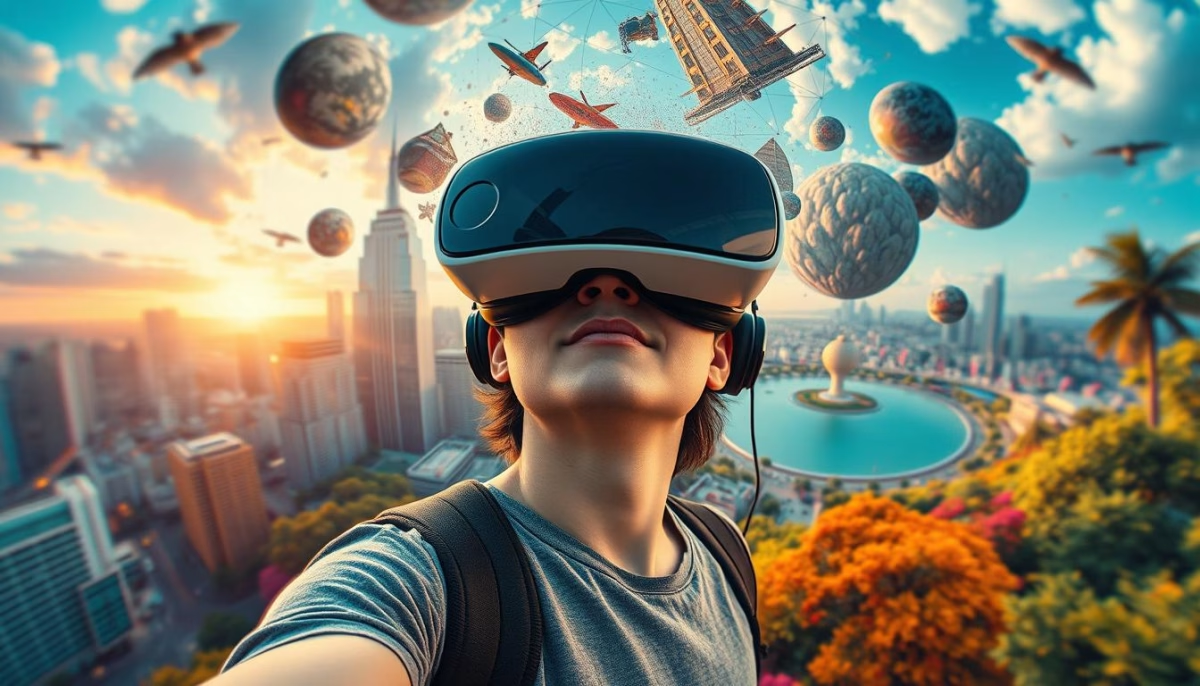
In the ever-evolving world of video marketing, we’re witnessing a significant shift towards immersive experiences. The rise of virtual reality (VR) and 360-degree video technologies is transforming the way businesses engage with their audiences. These innovative formats offer viewers a captivating and interactive way to explore products, services, and brand stories.
Understanding the Technology
The increasing affordability and availability of VR headsets have led to a surge in the consumption of VR and 360-degree videos. These advanced technologies allow viewers to be transported to a fully immersive digital environment, where they can look around and explore the content from multiple angles. From tourism and real estate to education and marketing, various industries are embracing VR and 360-degree videos to provide their customers with engaging and memorable experiences.
When to Use 360-Degree Video
- To showcase products or services in a unique and interactive way, such as virtual product tours or 360-degree showrooms.
- To take viewers on a virtual journey, like a 360-degree tour of a destination or a behind-the-scenes look at a company’s operations.
- To create educational content that immerses the audience, like virtual field trips or interactive learning experiences.
- To enhance event marketing and live experiences, such as 360-degree livestreams or virtual event experiences.
As we embrace the future of video marketing, the integration of immersive experiences, virtual reality, and augmented reality will continue to evolve, offering businesses new and exciting ways to captivate and engage their target audiences.
Leveraging Influencer Marketing through Video
In the ever-evolving world of marketing, video content has become increasingly essential for businesses looking to engage their audience and drive sales. One strategy that has gained significant traction is the use of influencer marketing through video. By partnering with influential content creators, businesses can tap into their vast networks and leverage the social proof that influencers provide.
Finding the Right Influencers
When it comes to influencer marketing, the key is finding the right fit. Micro-influencers, with 1,000 to 100,000 followers, can be highly effective in reaching targeted niche audiences. Macro-influencers, with 100,000 to 1 million followers, offer broader reach, while celebrity influencers with over 1 million followers can provide unparalleled brand partnerships. The choice of influencer should align with the brand’s values, target audience, and desired outcomes.
Collaborating for Effective Campaigns
Successful influencer collaborations require a strategic approach. Platforms like TikTok and Instagram Reels have become hotbeds for short-form video content, where influencers can create engaging, authentic content that resonates with their followers. Live video also allows for real-time interaction and deeper engagement. By providing influencers with creative freedom and clear guidelines, brands can foster authentic partnerships that drive measurable results.
As the influence of video content continues to grow, savvy businesses are embracing the power of influencer marketing to reach new audiences, build trust, and ultimately, drive sales. By finding the right influencer collaborations and leveraging the power of video, brands can unlock the full potential of this dynamic marketing strategy.
Importance of Video Analytics for Strategy
In the fast-paced world of video marketing, data-driven decisions reign supreme. By closely monitoring key performance metrics, we can unlock valuable insights that refine our video strategies and maximize our return on investment (ROI). Video analytics offer a treasure trove of information, empowering us to make informed choices and drive real business impact.
Key Metrics to Monitor
When it comes to video performance tracking, several essential metrics demand our attention. View count provides a pulse on overall audience reach, while watch time reveals how engaging our content truly is. The engagement rate – a combination of likes, shares, and comments – showcases how well we’re resonating with our target audience. And perhaps most importantly, conversion rates help us quantify the tangible results of our video marketing efforts.
Tools for Analyzing Video Performance
- YouTube Analytics: Offering a wealth of data on view count, watch time, audience retention, and more, this platform-specific tool is a must-have for video marketers.
- Google Analytics: Integrating video metrics with broader website and marketing performance data, Google Analytics provides a holistic view of video’s impact.
- Specialized Video Analytics Platforms: Solutions like Paperflite, Vidyard, and Wistia offer advanced features for tracking engagement, lead generation, and ROI.
By leveraging these powerful analytics tools, we can make data-driven decisions that drive performance tracking and maximize our ROI measurement. The insights gleaned from video analytics are instrumental in refining our content, optimizing our distribution, and ultimately achieving our data-driven decisions.
The Role of Video in Social Commerce
In the ever-evolving world of digital marketing, the intersection of video and social commerce has become a game-changer for businesses of all sizes. With the rise of platforms like Instagram, TikTok, and YouTube introducing live video shopping features, the power of shoppable video content is undeniable. In fact, studies show that shoppable videos can increase conversion rates by up to 30% compared to traditional video.
As the social selling and e-commerce integration continue to grow, businesses are leveraging the power of video to create seamless customer experiences that drive direct purchases. By embedding shoppable elements within video content, consumers can easily browse and purchase products without leaving the video platform, enhancing the overall shopping journey.
Creating Shoppable Video Content
Producing effective shoppable video content requires a strategic approach. Here are some best practices to consider:
- Incorporate clear and prominent calls-to-action that direct viewers to product pages or shopping carts
- Highlight key product features and benefits through engaging visual storytelling
- Leverage user-generated content and influencer partnerships to build trust and authenticity
- Optimize video content for mobile viewing, as the majority of social media users access platforms on their smartphones
Strategies for Social Media Sales
Integrating video into your social media sales strategy can unlock new opportunities for growth. Consider these tactics:
- Live Video Shopping Events: Host real-time shoppable livestreams to foster a sense of urgency and community among your audience
- Shoppable Social Posts: Embed product tags and links within your video content to enable seamless purchasing
- Collaboration with Creators: Partner with influential creators to leverage their authentic following and showcase your products in a relatable way
As the social commerce landscape continues to evolve, embracing the power of video will be crucial for businesses looking to stay ahead of the curve and drive increased sales through social media platforms.
Future Trends: Looking Ahead to 2025 and Beyond
As we look towards the exciting future of video marketing, several emerging technologies and trends are poised to reshape the industry. From AI-powered video production to the potential impact of blockchain, the next few years will bring about significant advancements that small businesses should keep a close eye on.
Emerging Technologies We Should Watch
The rise of AI-powered video creation and personalization is one of the most promising developments on the horizon. By 2025, we anticipate that over 40% of marketers will leverage AI tools to streamline the video production process, from ideation to editing and optimization. This technology will enable us to create highly customized video content at scale, catering to the individual preferences of our target audience.
Another trend to monitor is the integration of blockchain technology in video marketing. Blockchain has the potential to revolutionize video distribution, monetization, and rights management, empowering creators and brands to have greater control over their content and intellectual property. We may see the emergence of decentralized video platforms that leverage blockchain to offer more transparent and secure solutions for video sharing and payment processing.
Predictions for Video Marketing Evolution
Looking ahead, we expect to see a surge in interactive storytelling and choose-your-own-adventure style videos. As attention spans continue to decline, consumers will gravitate towards engaging, immersive video experiences that allow them to actively participate in the narrative. Brands that embrace this trend and create innovative, interactive video content will be well-positioned to capture the hearts and minds of their audience.
Lastly, the emphasis on authenticity and user-generated content (UGC) will only intensify in the coming years. With 86% of consumers prioritizing authenticity when choosing brands, we anticipate that small businesses will increasingly leverage UGC, influencer marketing, and other strategies that showcase genuine, relatable content. By fostering a sense of community and collaboration with our audience, we can cultivate deeper connections and build lasting brand loyalty.