
Speed to Lead: How Fast Should Your Business Respond to a New Lead?

How to Optimize Your Google Business Profile to Generate More Calls and Customers
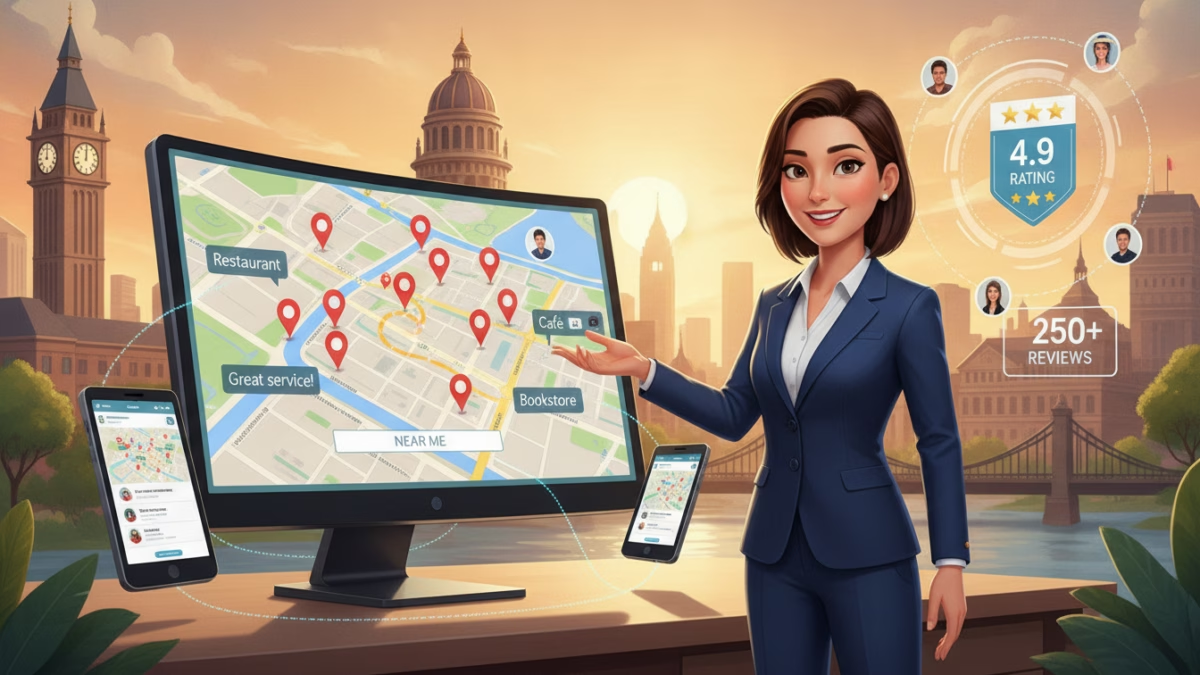
More than 34 million small companies compete for attention across the United States. At the same time, nearly 46% of Google searches show local intent. That means many people already want a product or service near them.
Local SEO helps you reach those ready-to-buy customers at the right moment. A complete Google Business Profile can improve visibility in Google Maps and search results. Your website adds depth through useful content, clear information, and focused keywords.
This guide explains how accurate details, recent reviews, strong photos, and a trusted profile can influence customer choices. You will also learn how to track search activity and measure progress over time.
Sales Solved serves owners throughout the United States. If you are serious about growth, call us. We believe Sales Solved is the best marketing decision you can make.
Key Takeaways
- Nearly 46% of Google searches have local intent.
- Accurate information supports stronger search visibility.
- Reviews and photos can shape customer trust.
- Useful content helps your website answer real needs.
- Sales Solved serves owners across the United States.
What Is Local SEO for Small Business?
Local SEO for small business improves unpaid visibility on Google Search, Google Maps, and other engines. It helps nearby people find your location, products, and services when they need them.
This process connects your business details with searches in a city, district, or service area. A complete Google Business Profile and a clear website give search systems useful information about what you offer and where you work.
Standard search engine optimization often reaches national or global audiences. Local optimization focuses on practical distance and nearby customer needs. That difference can support stronger ranking in relevant results.
Restaurants, dentists, mechanics, plumbers, tutors, and dog walkers can all benefit. A profile can show hours, contact details, photos, and services. A website can then explain each service in greater depth.
When your information stays accurate, people can act with confidence. The goal is simple: appear when nearby customers search, compare their options, and prepare to make contact.
| Optimization Focus | Customer Need | Useful Asset |
|---|---|---|
| Location | Find nearby options | Google Maps profile |
| Services | Compare available help | Website service page |
| Trust | Choose with confidence | Reviews and photos |
Why Local SEO Brings Ready-to-Buy Customers
Nearly 46% of Google searches carry intent tied to a nearby need. That signal matters: people want a solution, not a broad guide. A focused local search strategy places your offer in front of customers who may act soon.
Queries such as “brunch near me,” “plumber today,” or “movers in Denver” reveal strong buying signals. Searchers may check reviews, compare results, open a map, or call your service team. Clear keywords and useful content help your business match that intent.
Google delivers billions of relevant results each month. Strong visibility can lead to calls, visits, appointments, and purchases. It also limits wasted traffic from outside your service area. That focus helps you use your marketing time wisely.
A logistics business in the moving sector increased traffic by 37% year over year after receiving targeted SEO support. This example shows how a clear plan can improve ranking and reach customers with urgent needs.
How Google Ranks Local Search Results
Google weighs several signals before it places a company in Maps or standard search results. The three main factors are relevance, distance, and prominence. Together, they show how closely your offer fits a person’s need.
Relevance to the Search
Relevance starts with clear information. Your Google Business Profile, website content, services, and keywords should describe what you provide. Matching language helps the search engine connect your profile with the right searches.
Distance from the Customer
Distance can change map results throughout the day. Someone searching from home may see different options than the same person searching from an office. Google estimates the searcher’s location and compares it with your address or service area.
Business Prominence and Trust
Prominence reflects how well known and trusted your company appears online. Reviews, links, citations, and strong content can support ranking. Traditional webpages also need quality and usability, including fast loading, helpful answers, and simple navigation.
| Factor | What Google Evaluates | How You Can Help |
|---|---|---|
| Relevance | Profile details and service content | Use accurate terms and descriptions |
| Distance | Searcher location and company address | Keep location information current |
| Prominence | Reviews, links, and trusted citations | Earn genuine mentions and feedback |
Find Local Keywords Your Customers Use
The words people type into a search box can reveal what they need next. Use that insight to shape your local SEO plan and reach buyers with clear intent.
Discover City, Neighborhood, and Near-Me Searches
Build a list around city names, neighborhoods, “near me” phrases, products, services, and common questions. Google Autocomplete can surface long-tail terms influenced by a searcher’s location. Google Keyword Planner adds monthly search data tied to a specific area.
Study Competitor Keywords and Search Intent
Semrush’s Keyword Gap tool compares your domain with up to four competitors. Its filters show search volume, KD%, and intent, including transactional, commercial, navigational, and informational searches.
Prioritize terms that match your offer and support realistic ranking gains. Add them naturally to a relevant website page, title, heading, description, and useful content. This approach supports SEO without forced repetition and can bring qualified traffic to your business.
| Source | Insight | Best Use |
|---|---|---|
| Autocomplete | Long-tail phrases | Find natural wording |
| Keyword Planner | Monthly volume by location | Estimate demand |
| Keyword Gap | Competitor opportunities | Set priorities |
Optimize Your Google Business Profile
Your map listing often gives customers their first view of your company. A complete Google Business Profile supports local SEO and helps people act with confidence. Claim ownership, then verify it through email, text, phone, or a video call.
Complete Your Business Information
Enter the exact name, physical address, operating hours, local phone number, description, products, and services. Add customer-facing options, such as booking or messaging, when available. Check each detail against your website so customers receive one clear message.
Choose Accurate Categories and Add Services
Google recommends using as few categories as possible while keeping each choice accurate. Select the category that best describes your business, then add related services and products. Use natural keywords in descriptions, not repeated phrases. This careful optimization supports local SEO and stronger ranking.
Publish Photos, Posts, and Updates
Upload authentic photos of your storefront, staff, products, and service work. Add Google Posts about news, offers, and events. Fresh updates give customers useful information and can complement reviews while they compare results.
Keep Your Name, Address, and Phone Number Consistent
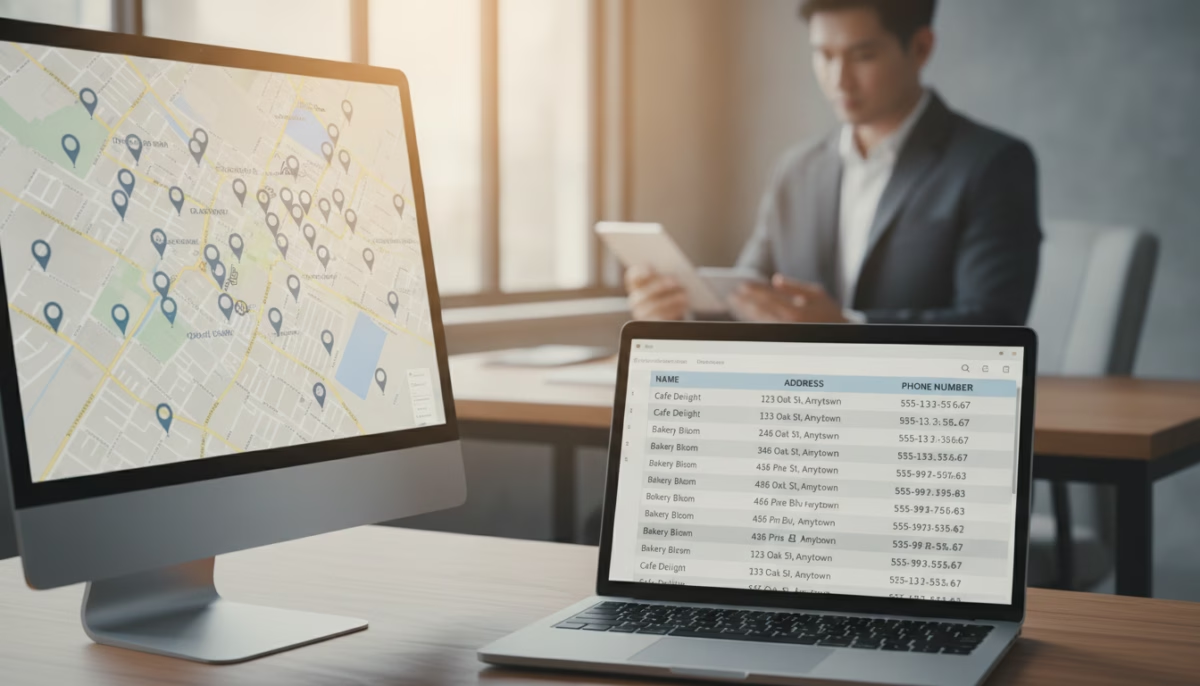
Accurate contact details make it easier to trust your business. Your name, address, and phone number should match across your website, Google Business Profile, directories, and social pages. Even a missing suite number or an old phone can create doubt.
Correct Inaccurate Local Listings
Google updates do not always reach every directory. An outdated address may remain on Apple Maps, Bing, Yahoo, or another platform. Check these sources often so customers receive clear directions and the right contact information.
Consistent NAP details support local SEO by giving search systems one clear record. They also reduce confusion when people compare providers. Tools such as BrightLocal, Loganix, Yext, Whitespark, Semrush, Soci, Moz Local, and Chatmeter can find duplicate listings and citation errors.
- Compare your business profile with every directory record.
- Correct the address, phone number, hours, and service details.
- Review NAP accuracy after any move or phone change.
This routine strengthens your SEO foundation and helps your business appear dependable in nearby searches.
Build a Website for Your Local Service Area
Your website should make your service area clear at a glance. Add your address, neighborhood, opening hours, and local phone number as readable text. Google can index this information more easily than details hidden inside an image.
Place city and neighborhood keywords in page titles, meta descriptions, headings, URLs, service pages, and product descriptions. Use natural language that answers real questions from customers. This approach supports local SEO and helps the search engine connect your services with nearby search results.
Make Each Location Easy to Understand
If your company serves several locations, create a dedicated page and location-specific URL for each area. Include unique content, directions, nearby landmarks, and accurate contact information. Avoid placing every location on one generic page.
Use internal links to connect service pages with area pages. A map can guide visitors, while structured data can share hours, payment methods, events, services, and products with Google. Clean text, useful content, and accurate details can bring more qualified traffic to your website.
Earn Trust with Reviews and Local Citations
Public feedback can shape a buyer’s choice before a call or visit. Genuine reviews on Google, Yelp, Tripadvisor, Apple Maps, Bing Places, and Facebook provide social proof. They also add detail that may not fit inside a main business profile.
Strong feedback can support local SEO and help your business earn better results. It may describe your products, services, staff, or service quality. These details give people a clearer view of what to expect.
Encourage Genuine Customer Reviews
Ask satisfied customers to share honest feedback after a completed service. Use cards, posters, QR codes, a website widget, or a direct follow-up message. Make the request simple, and never pressure anyone to leave praise.
Never offer or accept money for reviews. Paid feedback violates Google Business policies and the terms of other review platforms. It can also damage trust in your name, phone details, photos, and NAP information.
Respond Professionally to Positive and Negative Feedback
Thank people who leave positive reviews. Address negative comments with patience, facts, and a clear next step. A prompt reply shows that your business values feedback and takes service concerns seriously. This steady approach supports your SEO efforts and can improve future results.
Strengthen Technical SEO and Measure Your Progress

A reliable website helps search engines read your information and gives people a smooth path to contact you. Technical SEO also supports stronger results when your content matches customer needs.
Improve Mobile Usability, Speed, and Site Security
Test each page on a phone. Compress images, use caching, fix broken links, and keep URLs easy to read. An SSL certificate protects visitors and supports trust. Clear menus and fast pages help customers take action.
Use LocalBusiness Schema Markup
Add structured data with your name, address, phone, coordinates, hours, services, products, payment methods, and valid review details. This markup gives a search engine useful context about your location and profile.
Track Rankings, Calls, Traffic, and Directions
Google Business Profile Insights reports listing views, calls, direction requests, and website visits. Semrush studied over 16,000 keywords; six of its 15 top ranking factors involved backlinks. Use relevant links, Search Console, analytics, map tracking, and Position Tracking across cities or ZIP codes.
Consistent optimization often shows gains within three to six months. Review trends, not guesses, and adjust your plan as results develop.
| Measure | Tool | Action |
|---|---|---|
| Listing activity | Google Business Profile Insights | Compare calls and directions |
| Rank position | Semrush Position Tracking | Check city and ZIP results |
| Site health | Search Console and analytics | Fix errors and track visits |
Conclusion
Your growth plan starts with a complete Google Business Profile, matching directory details, and a website that speaks to your area. Use clear keywords and helpful content to guide people from discovery to action.
Steady attention creates lasting visibility. Check reviews, citations, page speed, and customer actions each month. A search engine rewards clear information, while consistent updates can improve results across major engines. Many companies begin to see progress within three to six months when their plan stays active.
Sales Solved serves owners across the United States. If you are serious about growth, call us today. We can help turn search traffic into calls, visits, and loyal customers. Choosing Sales Solved may be the strongest marketing decision your company makes.