
How AI Sales Assistants Can Automate Your Follow-Ups and Increase Conversions

How to Use AI to Generate Sales Proposals and Close More Deals
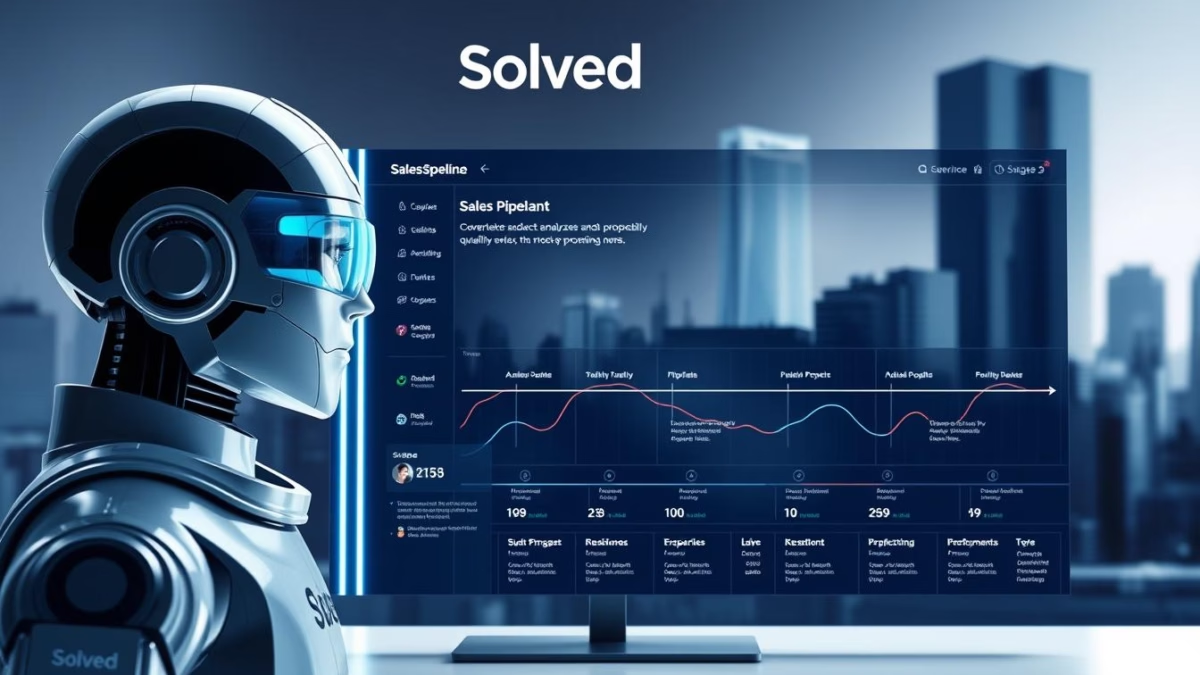
In today’s fast world, AI changes how we manage sales. It makes qualifying leads quick and easy. This lets sales teams spend more time on important things like building relationships and closing deals.
AI also makes our work better by giving us useful insights. It helps us turn leads into loyal customers. This makes our work more efficient and our chances of success better.
Imagine making lead qualification fast, under four minutes. This is now possible with AI tools. They look at how people engage and what they do online. This makes sure we qualify leads well, no matter how many we have or when.
Using AI in sales means we’re ahead, not just keeping up. It helps us work better and makes more money. This is how we grow and succeed in the future.
Key Takeaways
- Automated lead qualification can dramatically shorten the time spent on qualifying leads.
- AI tools provide a comprehensive view of each prospect, enriching lead profiles efficiently.
- Consistency in lead qualification processes minimizes errors and delays.
- Leveraging AI can significantly increase conversion rates and customer lifetime value.
- Integrating AI into our sales strategy can lead to substantial growth and efficiency improvements.
Understanding Automated Lead Scoring
In today’s market, knowing about automated lead scoring is key for success. It helps us figure out which leads might buy from us. By using data, we can pick the best leads to talk to first.
What Is Lead Scoring?
Lead scoring gives numbers to leads based on what they do and who they are. We use different kinds of data to understand each lead better. This way, we know who is most likely to buy.
Importance of Lead Scoring in Sales
Good lead scoring is vital for better sales. It helps us focus on leads that really want to buy. This makes our sales team more effective.
Studies show that using automated lead scoring can increase qualified leads by 50%. It also helps keep customers happy by working better with marketing and sales.
How Automation Enhances the Process
Automation makes lead scoring better. Old ways of scoring can miss new trends. But automated scoring keeps up with changes.
By using automated scoring with CRM, we see lead scores in real time. This helps our teams work together better. It makes our sales work smarter and more efficient.
Benefits of Automated Lead Scoring
Automated lead scoring brings many benefits. It makes our sales work better and saves time. This helps us grow our sales and work more efficiently.
Time Savings for Sales Teams
Automated lead scoring helps us save time. Sales reps spend a lot of time on leads. This can add up fast, mainly for bad leads.
By using automated systems, we spend less time on bad leads. This lets our sales team focus on good leads. Studies show AI can cut lead management time by 50%.
Improved Lead Qualification
Lead scoring makes qualifying leads better. It helps us pick the right leads. This means we can focus on leads that are really good for us.
Using lead scoring, we can make our lead qualification 35% more accurate. This means more good leads for our sales team.
Increased Revenue Potential
Lead scoring helps us make more money. Companies using it see sales go up by 30%. They also see a 20% increase in lead conversion.
By focusing on the right leads, we can sell more. This makes our sales team more effective. It also helps us make more money.
The Role of AI in Lead Scoring
AI is key to better sales strategies. It uses machine learning to find patterns in data. This helps us know which leads are most likely to buy.
Machine Learning Algorithms Explained
Machine learning is at the heart of AI in lead scoring. It looks at lots of data to sort leads. For example, HubSpot uses it to find leads like successful ones before.
Data Analysis and Insights
AI gives us deep insights into lead behavior. Tools like Salesforce Einstein track how leads interact. This helps us know who’s ready to buy.
Predictive Analytics in Lead Scoring
Predictive lead scoring uses data science to guess lead behavior. It updates scores as new data comes in. Tools like 6sense look at buying signals to help us focus on the right leads.
Key Features of Automated Lead Scoring Tools
Understanding automated lead scoring tools is key to better sales. These tools make our sales work easier and help our teams focus on the best leads. They connect all data smoothly through CRM integration.
Customizable lead scoring lets us adjust how we score leads. This is based on what our business needs. Real-time alerts help us quickly grab new chances.
Integration with CRM Systems
CRM integration is the heart of automated lead scoring. It makes sure data flows well between our lead and sales systems. This helps us make better decisions and improve our sales pipeline.
Customizable Scoring Criteria
Customizable lead scoring lets us make our own scoring rules. We can use points for things like website visits or email opens. This way, we can pick the best leads for our business.
Real-time Updates and Alerts
Real-time updates and alerts keep our sales team on their toes. They get alerts about lead changes or when someone shows interest. This helps our team follow up fast and sell more.

Choosing the Right Automated Lead Scoring Solution
Finding the right automated lead scoring solution can feel hard. There are many choices out there. We need to think about what we want to achieve and what tools will help us get there.
Factors to Consider When Selecting a Tool
When picking tools, we should look at a few important things:
- Usability: A tool that’s easy to use helps our sales team work better without needing a lot of training.
- Feature Sets: Choose tools with cool features like predictive analytics and customizable scoring. This makes us better at our job.
- CRM Compatibility: Tools that work well with our CRM make things easier and help us keep our data in one place.
Popular Automated Lead Scoring Tools
There are many tools to consider. Clay has a free plan to start, and paid plans start at $149/month. HubSpot is great for inbound marketing and has strong lead scoring features. Each tool has its own strengths for different sales strategies.
Pricing and Budgeting
Setting a budget for sales tools is key. We need to think about both the cost now and the savings later. Clay’s starter plan is cheap, but other tools might cost more. We should compare costs and benefits to find the best deal for our budget.
Implementing Automated Lead Scoring in Your Business
To start using automated lead scoring, we need a plan. We should focus on key steps to make it work well. Training employees and checking how it goes will help us use it right.
Steps to Get Started
Starting with automated lead scoring is easy:
- First, decide why you want to use it. Maybe to get better leads or sell more.
- Then, pick a tool like HubSpot. It lets you score leads in many ways.
- Next, set up how you score leads. Good things like visiting your site raise scores. Bad things like not doing anything lower them.
- After that, connect it with your CRM. This makes things easier.
- Lastly, keep checking and changing your scoring rules. This keeps it up to date with your goals and the market.
Employee Training and Onboarding
Teaching your team about lead scoring is key. They need to know how it works and why it’s good. Here’s what to do:
- Give them hands-on training. This helps them get used to the tech.
- Ask for their feedback. This helps make the scoring better.
- Keep training them. This keeps them up to date and doing well.
Measuring Success and ROI
It’s important to see if lead scoring is working. Look at things like:
- More leads: Lead scoring can make you get 77% more leads.
- Better sales: It can make your sales team 79% more productive.
- Better leads: Making your scoring better can lead to 73% better leads.
- More sales: Keeping it up can increase sales by 10% each year.
Best Practices for Optimizing Your Lead Scoring
To make our lead scoring better, we need to follow the best ways. We keep our scoring up to date with the market. Working together with sales and marketing helps us manage leads better.
Also, checking how we do helps us get better at finding good leads. This way, we keep improving at finding the best leads.
Regularly Update Scoring Criteria
Changing our scoring often helps a lot. As the market changes, so should our scoring. This way, we focus on the most important leads.
Studies show updating scoring can make conversion rates 10-15% better. It’s key to stay current in the fast sales world.
Collaborate Between Marketing and Sales
Working together between marketing and sales makes lead scoring better. This teamwork makes communication 70% better. Both teams work together on goals and strategies.
This teamwork leads to better leads. It also helps us understand what customers want and like.
Monitor and Analyze Performance
Checking how we do is very important. It helps us see if our lead scoring is working. By looking at key numbers, we learn a lot.
Using this data, we can make our lead scoring 20% better. A regular check-up helps us keep our sales pipeline running smoothly.
Common Challenges with Automated Lead Scoring
When we move to automated lead scoring, we face big challenges. These can affect how well we do our job. One big issue is data quality in sales. If our data is wrong or old, our systems might not find the right leads.
Data Quality Issues
Data problems are a big challenge in lead scoring. Old ways of doing things often led to bad data. This bad data can mess up AI’s work.
To fix this, we need to check our data often. We should clean and make sure it’s right. Using tools with our CRM can help keep our data good.
Resistance to Change within the Team
Our teams might not want to change to new lead scoring ways. They might like old ways even if they’re not good. We need to tell them how new ways can help.
Talking to our teams about how automation can help them is important. This can make them more open to change.
Over-reliance on Automation
Automation is great, but we can’t rely on it too much. We need to mix AI with our own ideas. This way, we can use automation to help us, not do everything.
By making our systems better and listening to people, we can make our lead scoring better. This way, we can connect with leads better too.

Case Studies: Successful Implementation Stories
We look at how businesses changed their sales with automated lead scoring. These stories show how they got great results. We can learn from these examples to improve our lead scoring.
Company A: Transforming Sales Processes
Carson Group used a machine learning model for lead scoring. It was 96% accurate in predicting lead chances. They saved a lot of time and effort in converting leads.
The model grew with the company. Leaders were happy and want to use more AI and machine learning.
Company B: Achieving Growth with Automation
6clicks grew 806% after using HubSpot’s CRM. This shows how lead scoring can change things. It made their sales team better at finding good leads.
They could focus on the best leads. This led to more sales and better results.
Company C: Lessons Learned and Improvements
SkipTheDishes made CAN$71 million in rebates during the pandemic. They got $1.6 million more in revenue. This shows the power of targeting the right leads.
Universal Creative Solutions grew 100% without spending more. This shows how lead scoring can help grow without extra costs. These stories teach us to keep improving our sales strategies.
Future Trends in Automated Lead Scoring
Looking ahead, sales automation will change a lot. AI will get better at analyzing data and making things easier for users. We can use these tools to make our sales better and keep customer info safe.
AI Advancements in Sales Technology
New AI tech is amazing for lead scoring. It looks at many things like how people act and outside data. This makes scores that change as things do.
This helps us find leads that really want to buy. It makes our sales work better and faster.
The Growing Importance of Personalization
Personalization is getting more important. AI helps us make ads that really speak to people. This makes people more interested and happy with what they get.
It’s what people want today. It helps us stand out and connect better with our customers.
Potential Impact of Data Privacy Regulations
Data privacy rules are changing. We need to think about how they affect our lead data. Following these rules is key to our sales plans.
Using new AI tools, we can keep customer info safe. This helps us score leads better while keeping things right.
Aligning Automated Lead Scoring with Inbound Marketing
Inbound marketing gets better with automated lead scoring. It helps sales and marketing work together. This way, we focus on leads that are most likely to buy.
This teamwork makes our marketing better. It also helps us keep leads interested over time.
Seamless Integration with Marketing Campaigns
Automated lead scoring makes our marketing smooth. It helps us talk to leads when they’re ready. AI uses old data to learn and score leads better over time.
This means we reach out to the right people at the right time. It helps us focus on leads that are ready to buy.
Enhancing User Experience and Engagement
Automated lead scoring makes things personal for users. We get to know what they like and do. This lets us send messages that really speak to them.
It makes people more interested and builds strong relationships. This leads to more sales and loyal customers.
Tracking and Nurturing Leads Effectively
We can see how leads move through our process. This lets us change how we care for them as needed. Marketing tools adjust based on lead scores in real time.
This keeps us in tune with what leads want. It helps us sell more and keep good relationships going.
Conclusion: Embracing Automation to Enhance Sales Efficiency
Embracing automation with AI is key to better sales. It lets our sales teams spend more time on important tasks. They can focus on building relationships and planning, not just doing the same thing over and over.
Studies show that using AI makes teams work better and brings in more money. AI helps pick the best leads to chase. This makes our sales work smoother and more effective.
Looking to the future, we need to keep improving and changing. AI helps a lot, but we must also deal with issues like bad data and training. Working with experts in AI can really help our sales get better.
We invite you to start changing your sales approach. By using AI and automation, we can make our sales work better. This will help us serve our customers better and grow in the long run.