
How a CRM System Can Improve Your Sales Process

How AI Can Help Small Businesses Increase Sales
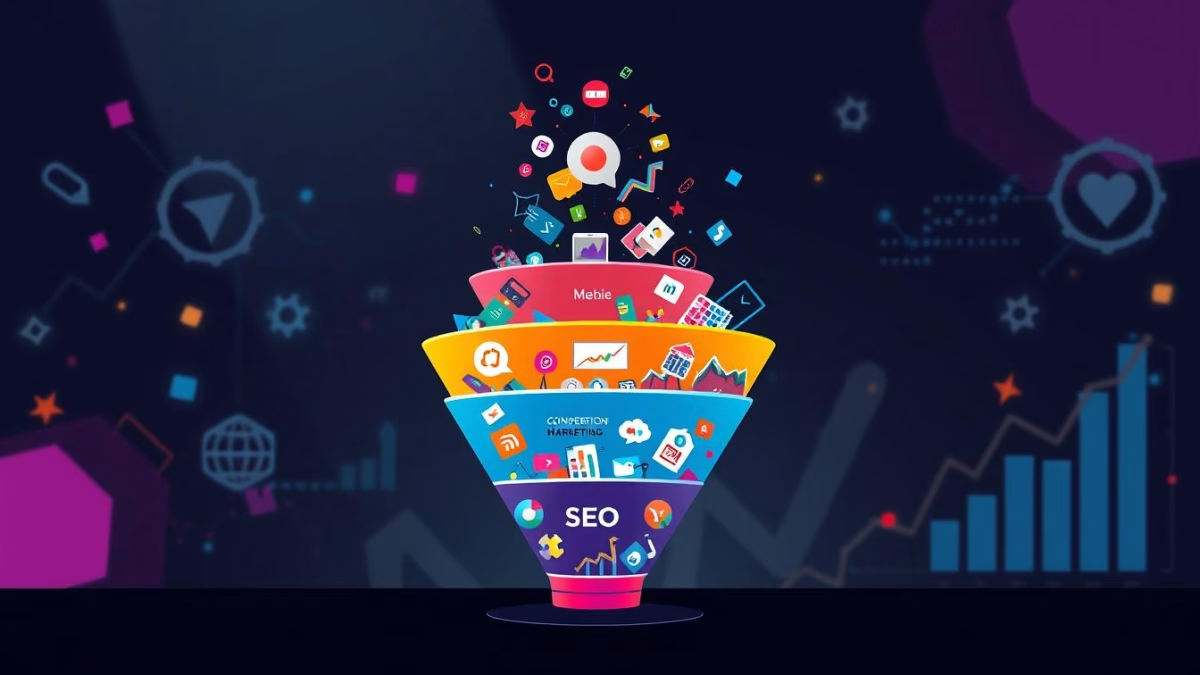
As a small business owner, you understand the importance of an effective marketing strategy to attract, nurture, and convert potential customers. At the heart of this strategy lies the marketing funnel – a roadmap that illustrates the customer journey from initial awareness to the final purchase. By crafting a high-converting marketing funnel, we can increase conversions, drive revenue, and create loyal customers.
Marketing funnels can be complex due to the multitude of channels available, from paid ads and social media to SEO and content marketing. Most businesses operate with multiple marketing funnels, each designed to reach and engage prospects through various touchpoints. The key to success is understanding how to guide potential customers through the different stages of the funnel, from awareness to consideration and ultimately, conversion.
Key Takeaways
- Marketing funnels are essential for driving conversions, revenue, and customer loyalty.
- Funnels can be complex due to the variety of marketing channels, but most businesses utilize multiple funnels to reach prospects.
- The goal is to guide potential customers through the funnel stages, from awareness to consideration and conversion.
- Tailoring marketing strategies and content to match the needs of prospects at different funnel stages is crucial for success.
- A well-designed marketing funnel can make a significant impact on a small business’s growth and profitability.
Understanding What an Effective Marketing Funnel Is
A marketing funnel is a strategic framework that maps the customer journey and tracks our efforts to attract, engage, and convert leads through various marketing materials. It differs from a traditional sales funnel by focusing on the broader stages of prospect engagement, rather than just the final purchase decision.
The three main stages of an effective marketing funnel are awareness, consideration, and decision. By understanding and optimizing each stage, we can generate high-quality leads and guide them smoothly through the customer journey, ultimately driving conversions and growing our business.
The Power of a Marketing Funnel for Small Businesses
Small businesses can particularly benefit from leveraging a well-designed marketing funnel. By targeting customers at each stage with the right content and strategies, we can efficiently allocate our marketing resources and maximize the customer journey, lead generation, and conversion process.
Stages of an Effective Marketing Funnel
- Awareness: This is where we capture the attention of our target audience and introduce them to our brand, products, or services.
- Consideration: In this stage, we nurture the leads we’ve generated, providing valuable information to help them evaluate our offerings and build trust.
- Decision: At this final stage, we encourage our leads to take the desired action, whether it’s making a purchase, signing up for a service, or engaging with our brand in a meaningful way.
By understanding and optimizing each of these stages, we can create a high-converting marketing funnel that drives sustainable growth for our small business.
The Awareness Stage: Capturing Attention
In the marketing funnel, the awareness stage is all about grabbing the attention of potential customers and building brand recognition. This is where we focus on attracting new prospects and encouraging them to engage with our content. Our goal is to position ourselves as trusted authorities who can provide valuable insights and solutions to their problems.
Techniques for Generating Leads
To generate qualified leads, we employ a variety of outbound marketing techniques, such as paid advertising, influencer partnerships, and event sponsorships. These methods allow us to reach a wider audience and introduce our brand to potential customers who may not have been aware of us before.
Content Marketing Strategies
Content creation is a crucial part of our awareness-building efforts. We develop educational and informative content, including blog posts, videos, infographics, and guides, that address our target audience’s pain points and questions. By providing valuable, brand awareness content, we can establish trust and keep potential customers engaged as they move through the customer journey.
Social Media Engagement
- Leveraging social media platforms, we actively lead capture and engage with our target audience, sharing relevant and engaging content that piques their interest.
- Through social media, we can build brand awareness, foster conversations, and gain insights into our audience’s preferences and pain points.
- By fostering an active social media presence and content creation, we can attract new leads and build a strong foundation for future nurturing and conversion efforts.
The Interest Stage: Nurturing Potential Customers
In the marketing funnel, the interest stage is where we really start to connect with potential customers who have already shown some level of engagement with our brand. At this point, our goal is to nurture these leads and build trust through personalized interactions and valuable content. By leveraging lead nurturing, email campaigns, and customer engagement strategies, we can guide these prospects further down the funnel.
Personalization Techniques
Personalization is key in the interest stage. We want to tailor our content and outreach to the specific needs and pain points of each potential customer. This could involve segmenting our email lists, creating custom landing pages, or delivering personalized product recommendations. By showing that we understand their unique challenges, we can establish a stronger connection and increase the likelihood of conversion.
Utilizing Email Marketing
- Email campaigns are an excellent way to nurture leads during the interest stage. We can use email to deliver valuable, educational content that addresses our prospect’s concerns and builds our credibility.
- Automated email sequences, such as welcome series or abandoned cart reminders, can help keep our brand top-of-mind and move leads closer to making a purchase.
- Segmenting our email lists and personalizing the content allows us to provide a more relevant and engaging experience for each recipient.
Retargeting Strategies
- Retargeting ads are a powerful tool for re-engaging prospects who have shown interest but haven’t yet converted. By tracking their website activity and online behavior, we can serve them highly relevant ads to draw them back to our products or services.
- Social media platforms like Facebook and Instagram offer robust retargeting capabilities, allowing us to reconnect with our audience across multiple touchpoints.
- Retargeting can be particularly effective for prospects who have added items to their cart but didn’t complete the purchase, or those who have viewed specific product pages on our website.
By implementing these strategies, we can effectively nurture our potential customers during the interest stage, building trust, increasing engagement, and moving them closer to conversion. The key is to provide value, personalize our outreach, and leverage the power of lead nurturing, email campaigns, and customer engagement.
The Consideration Stage: Building Trust
As buyers move through the marketing funnel, the consideration stage is where they begin to seriously evaluate potential solutions to their problems. During this critical phase, your focus should be on building trust and establishing your brand as a thought leader in your industry.
Crafting Compelling Offers
Craft offers that address your customers’ pain points and demonstrate the value of your products or services. These offers can take the form of free trials, discounts, or bundled packages that make it easier for buyers to justify their investment.
Customer Testimonials and Case Studies
Leverage social proof to build trust and credibility. Feature customer testimonials and detailed case studies that showcase how your solutions have helped other businesses achieve their goals. These trust-building elements can be powerful in convincing buyers to move forward with your offerings.
Creating Valuable Content
- Develop a content marketing strategy that positions your brand as an expert in your industry.
- Create in-depth guides, webinars, and product demonstrations that educate your audience and address their needs.
- Consistently publish new, high-quality content marketing that establishes your credibility and reinforces your expertise.
By providing valuable, informative content, you can build trust with your audience and help them feel confident in choosing your products or services.

The Intent Stage: Encouraging Action
In the intent stage of the marketing funnel, our goal is to encourage prospects to take the plunge and become paying customers. This is a pivotal moment where we need to design effective call-to-actions (CTAs), develop enticing pricing strategies and incentives, and time our outreach based on customer behavior and engagement data.
Effective Call-To-Actions
Our CTAs must be crystal clear, compelling, and prominently displayed throughout our marketing materials. We’ll craft action-oriented language that clearly conveys the next steps we want our prospects to take, whether it’s making a purchase, signing up for a free trial, or downloading a valuable resource.
Pricing Strategies and Incentives
To motivate purchases, we’ll explore strategic pricing tactics such as limited-time offers, bundled packages, and tiered pricing models. By understanding our customer acquisition goals and the perceived value of our products or services, we can develop pricing structures that strike the right balance between profitability and customer satisfaction.
Timing Your Outreach
The timing of our outreach is crucial in the intent stage. We’ll leverage lead scoring to identify the prospects who are most likely to convert, and tailor our messaging accordingly. By striking the right balance between persistence and restraint, we can nurture our leads and guide them towards the conversion optimization we’re aiming for.
The Conversion Stage: Making the Sale
In the conversion stage of your marketing funnel, the focus shifts to turning leads into paying customers. This is where we put our conversion rate optimization, user experience, and sales strategies to the test.
Optimizing Your Landing Pages
Your landing pages are critical in this stage. They must be designed for clarity, relevance, and persuasiveness. Ensure your value proposition is crystal clear, and make it easy for visitors to understand what you’re offering and how it can benefit them. Leverage compelling copy, eye-catching visuals, and strategic call-to-actions to guide them towards conversion.
Simplifying the Checkout Process
Reduce friction in the checkout process to minimize cart abandonment. Streamline the number of steps, eliminate unnecessary form fields, and provide multiple payment options. Make the process intuitive and seamless so customers can complete their purchases without any hassle.
Follow-Up Strategies
- For leads who haven’t converted, implement personalized email campaigns to nurture them further.
- Utilize retargeting ads to stay top-of-mind and encourage them to revisit your website and complete their purchase.
- Continuously A/B test your landing pages, checkout flow, and follow-up tactics to optimize for the best conversion rates.
By focusing on these key areas, you can create a conversion-focused marketing funnel that guides your prospects towards becoming loyal customers. Remember, a seamless purchasing experience is crucial in turning leads into sales.
Post-Purchase: Turning Customers into Advocates
In the world of marketing, the journey doesn’t end once a customer makes a purchase. In fact, this is where the real work begins – turning satisfied customers into brand advocates. By focusing on customer retention, building brand loyalty, and fostering referral marketing, we can transform our customers into powerful ambassadors for our business.
The Importance of Customer Support
Providing excellent customer support is crucial in the post-purchase stage. We must ensure that any issues or concerns are promptly addressed, leaving our customers with a positive, lasting impression. Prompt and personalized support not only resolves problems but also demonstrates our commitment to their satisfaction, strengthening the foundation for long-term relationships.
Encouraging Feedback and Reviews
- Actively soliciting feedback and reviews from our customers is a powerful way to build trust and social proof.
- Positive reviews can serve as a valuable marketing tool, influencing potential customers and reinforcing our brand’s credibility.
- By addressing any negative feedback constructively, we can showcase our responsiveness and commitment to continuous improvement.
Building Long-Term Relationships
To transform customers into advocates, we must focus on building meaningful, long-term relationships. This can be achieved through personalized communication, loyalty programs, and exclusive offers. By demonstrating our genuine interest in their success and providing ongoing value, we can foster a sense of loyalty and encourage our customers to become passionate ambassadors for our brand.
Remember, the post-purchase experience is a crucial opportunity to leave a lasting, positive impression on our customers. By prioritizing customer support, encouraging feedback, and nurturing long-term relationships, we can turn our satisfied customers into the most powerful advocates for our business.
Analyzing Your Marketing Funnel Metrics
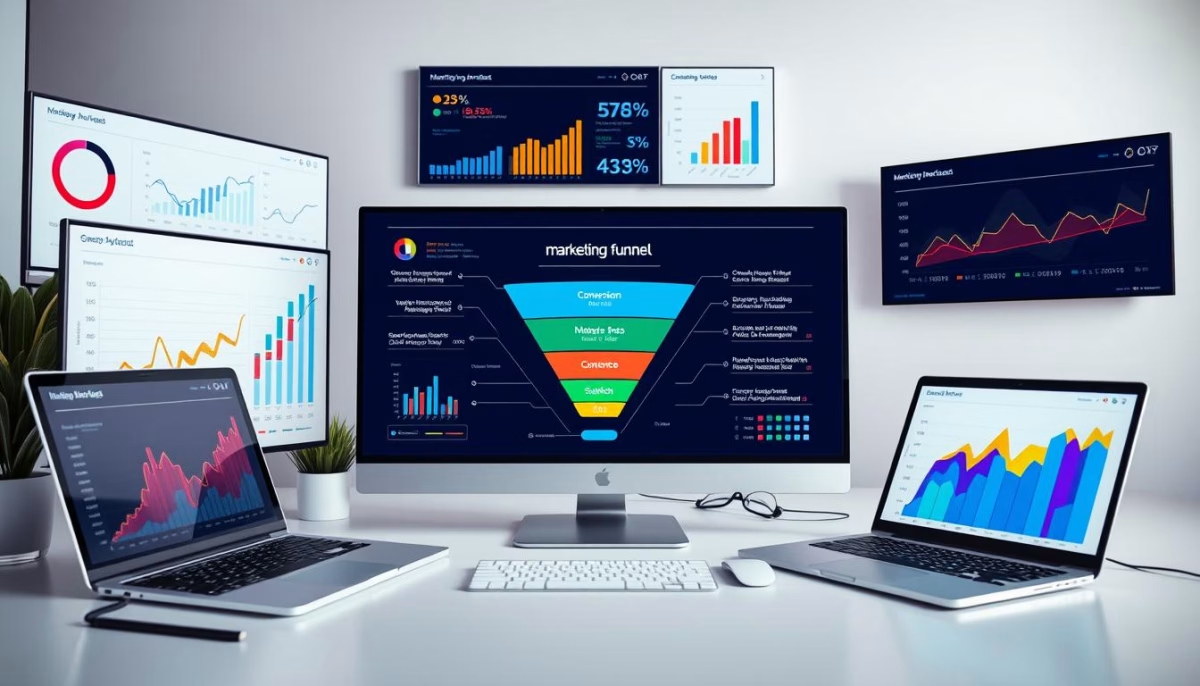
To optimize the performance of your marketing efforts, it’s crucial to regularly analyze the metrics associated with your marketing funnel. By tracking key performance indicators (KPIs) and utilizing powerful analytics tools, you can make data-driven decisions that will continually improve the effectiveness and efficiency of your funnel.
Key Performance Indicators (KPIs) to Track
When it comes to analyzing your marketing funnel, there are several critical KPIs to keep an eye on, including:
- Conversion rates at each stage of the funnel
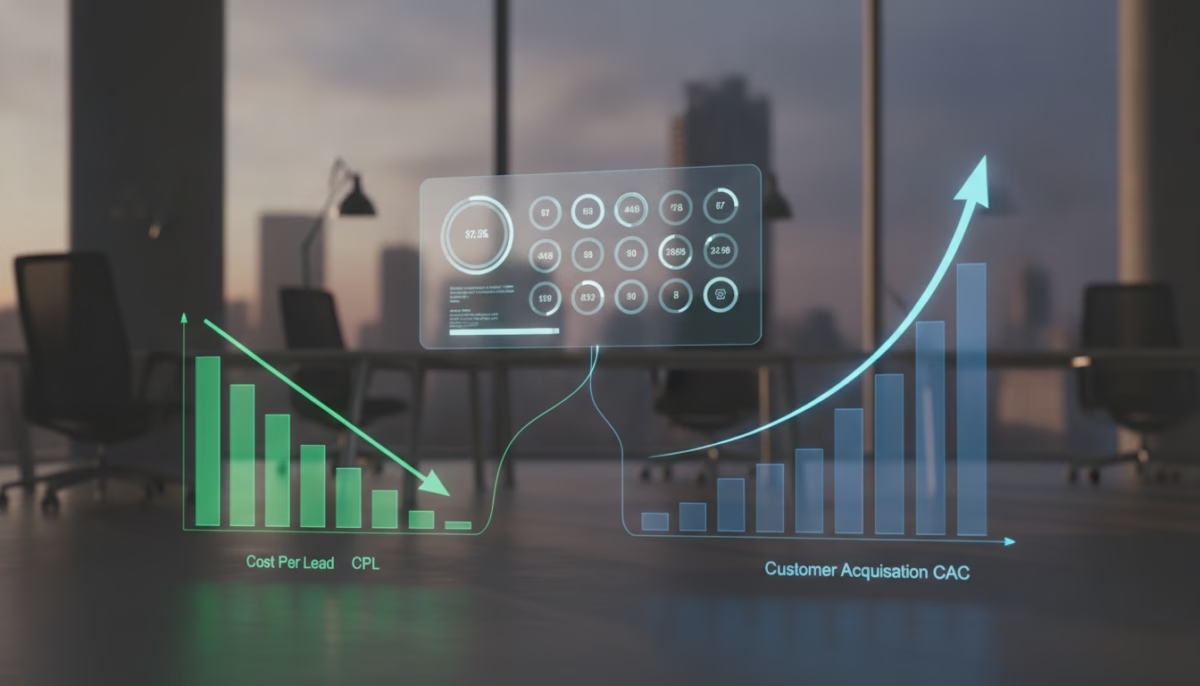
- Customer acquisition cost (CAC)
- Lifetime value (LTV) of your customers
- Drop-off rates and user behavior analytics
- Time to conversion and user engagement metrics
Utilizing Analytics Tools
To gather and interpret the data necessary for in-depth marketing funnel analysis, you can leverage a variety of powerful analytics tools, such as:
- Google Analytics for comprehensive website and user interaction tracking
- Customer relationship management (CRM) software like HubSpot for lead and customer data
- Marketing automation platforms like Userpilot for funnel visualization and user behavior insights
- Cross-channel performance analysis tools like Improvado for a holistic view of your marketing efforts
Making Data-Driven Decisions
By harnessing the insights gained from your marketing funnel metrics and analytics, you can make informed decisions to optimize your strategies, identify friction points, and allocate your resources more effectively. This data-driven approach will help you enhance your conversion rates, reduce customer acquisition costs, and ultimately drive a higher return on your marketing investment (ROI).
Common Pitfalls in Marketing Funnels
Building an effective marketing funnel is crucial for the success of any small business, but it’s not without its challenges. At our agency, we’ve observed three common pitfalls that often hold businesses back from achieving their full potential.
Misunderstanding Your Target Audience
One of the most common mistakes we see is a lack of understanding about the target audience. Customer insights are essential for creating a marketing funnel that resonates with your ideal customers. Inadequate research can result in low conversion rates and underutilization of lead magnets.
Neglecting Follow-Ups
Another pitfall is the failure to follow up with leads effectively. Marketing challenges often arise when businesses don’t have a clear system in place for nurturing leads through the different stages of the funnel. Ignoring different buyer stages can affect customer engagement and lead to missed opportunities for upselling and cross-selling.
Failing to Optimize for Mobile Users
In today’s digital landscape, mobile optimization is essential for any successful marketing funnel. With over 60% of all website traffic coming from mobile devices, neglecting to ensure a seamless user experience on mobile can lead to a significant drop in potential customers.
To overcome these common pitfalls, it’s crucial to deeply understand your target audience, implement an efficient lead follow-up process, and optimize your funnel for mobile users. By addressing these key areas, you can create a high-converting marketing funnel that drives consistent results for your small business.
Leveraging Automation in Your Marketing Funnel
As businesses strive to create a seamless customer experience, marketing automation emerges as a powerful tool to streamline the customer journey. From lead scoring and email marketing to social media posting and personalized content delivery, automation can significantly enhance the efficiency and effectiveness of your marketing funnel.
Benefits of Marketing Automation
Implementing a marketing automation funnel can provide numerous benefits for your business. Automated marketing funnels empower delivering the right message at the right time tailored to individual needs, leading to higher conversion rates. Additionally, automation can guide customers through the various stages of the funnel, from initial awareness to conversion and beyond, while efficiently allocating resources.
Popular Tools for Automation
- HubSpot
- Marketo
- Mailchimp
These are just a few of the popular marketing automation tools that can help streamline your customer journey and enhance your overall customer experience. By leveraging these platforms, you can create a more seamless workflow optimization and deliver personalized messaging at each stage of the funnel.
Creating a Seamless Customer Journey
The key to a successful marketing funnel lies in creating a seamless customer journey. Utilize automation to track and respond to customer behavior, such as Amazon’s personalized product recommendations or Club Vistara’s loyalty program that offers tailored benefits and discounts. By implementing these strategies, you can guide your customers effortlessly through the funnel, from initial awareness to long-term advocacy.
In conclusion, marketing automation is a powerful tool that can significantly improve the efficiency and effectiveness of your marketing funnel. By leveraging the right automation tools and strategies, you can create a seamless customer journey, increase conversion rates, and optimize your resource allocation for maximum impact.
Adapting Your Funnel for Different Audiences
In the dynamic world of marketing, one-size-fits-all approaches simply won’t cut it. To truly engage and convert your target audience, you need to adapt your marketing funnel to cater to their unique needs and preferences. This is where audience segmentation, personalized marketing, and global outreach come into play.
Segmenting Your Audience
The foundation of an effective marketing funnel lies in understanding your audience. By segmenting your target market based on factors like demographics, psychographics, and behavior, you can create tailored messaging and content that resonates with each unique group. This level of personalization can significantly increase the relevance and effectiveness of your marketing efforts.
Tailoring Your Message
Once you’ve identified your various audience segments, it’s time to craft personalized marketing messages that speak directly to their pain points, desires, and buying habits. By aligning your content and offers with the specific needs of each segment, you’ll not only capture their attention but also build trust and drive them deeper into your sales funnel.
Cultural Sensitivity in Marketing
When expanding your reach to global outreach, it’s crucial to approach marketing with cultural sensitivity. Understand the nuances of different markets, languages, and traditions, and adapt your messaging accordingly. Localization strategies, such as translating content and incorporating culturally relevant imagery, can help ensure your marketing funnel resonates with diverse audiences across the world.
By embracing audience segmentation, personalized marketing, and global outreach strategies, you can create a marketing funnel that is tailored, relevant, and effective in converting customers from diverse backgrounds. This holistic approach will not only improve your overall marketing performance but also foster deeper, more meaningful connections with your target audience.
Hiring “Solved” to Elevate Your Marketing Funnel
Are you looking to optimize your marketing funnel and drive sustainable growth for your business? Look no further than “Solved,” a team of marketing experts dedicated to delivering results. Our approach combines data-driven strategies and cutting-edge tools to create and implement effective marketing funnels tailored to your unique business needs.
Our Expertise and Approach
At “Solved,” we understand the importance of a well-crafted marketing funnel. Our team of seasoned professionals specializes in every aspect of funnel optimization, from lead generation and nurturing to conversion rate optimization. We leverage the latest industry insights and technologies to ensure your funnel is performing at its peak, attracting the right leads and converting them into loyal customers.
Success Stories from Our Clients
Our track record speaks for itself. We’ve helped businesses across various industries achieve remarkable results by optimizing their marketing funnels. From boosting brand awareness and lead generation to improving conversion rates and customer lifetime value, our clients have consistently seen significant growth through our tailored strategies.
Taking the Next Steps with Us
Ready to take your marketing funnel to new heights? Contact “Solved” today to schedule a consultation. Our team will assess your current funnel, identify areas for improvement, and develop a customized plan to help you reach your business goals. With our expertise in marketing consultancy, funnel optimization, and driving business growth, you can trust us to elevate your marketing efforts and unlock new opportunities for success.