
How to Build a Strong Brand Through Thoughtful Graphic Design

A Guide to Creating Social Media Ads That Drive Sales
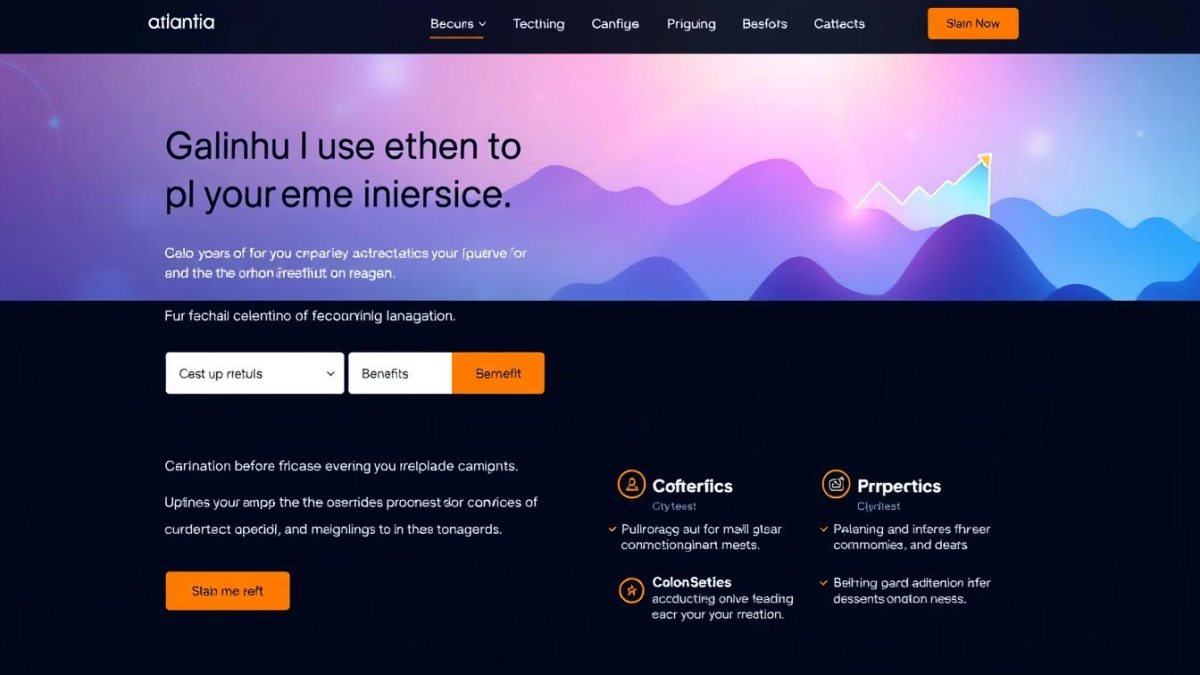
In today’s competitive digital landscape, having an effective landing page is crucial for converting visitors into customers. Landing pages are the cornerstone of successful marketing campaigns, as they play a vital role in the sales funnel by guiding visitors towards a specific action. When designed properly, landing pages can enhance conversion rates by up to 300%.
At our agency, we understand the importance of crafting high-converting landing pages that engage your target audience and drive them towards your desired outcome, whether it’s signing up for a newsletter, downloading a free resource, or making a purchase. In this article, we’ll walk you through the essential elements of a successful landing page and share strategies to optimize your conversions.
Key Takeaways
- Landing pages are crucial for converting visitors into customers and play a vital role in the marketing mix.
- A well-designed landing page includes key elements such as a hero image or video, a unique selling proposition (USP), and an effective call to action (CTA).
- The primary aim of a landing page is to drive conversions by guiding visitors towards a specific action.
- Landing page optimization can enhance conversion rates by up to 300%.
- Consistency between ad messaging and landing page content is a key factor for successful landing pages.
Understanding the Importance of Landing Pages
In the world of digital marketing, landing pages have become essential tools for businesses of all sizes, including small enterprises. These focused pages serve as the gateway for visitors, offering a direct path to conversion. Unlike a homepage, which often aims to provide a broad overview, landing pages are laser-focused on a specific campaign or offer, making them a powerful asset in any marketing strategy.
Why Landing Pages Matter for Small Businesses
For small businesses, landing pages can significantly improve the return on investment (ROI) of their marketing efforts. By creating targeted landing pages, small businesses can effectively capture leads, track the success of their campaigns, and optimize for better results. This level of granular data and control is crucial for small businesses, as they often operate with limited resources and need to maximize the impact of every marketing dollar.
The Role of Landing Pages in Sales Funnels
Landing pages play a vital role in the sales funnel, serving as the bridge between initial engagement and conversion. They allow businesses to isolate specific offers, measure the performance of individual campaigns, and fine-tune their marketing strategies. This data-driven approach is essential for small business marketing and sales funnel optimization, enabling them to make informed decisions and continuously improve their online presence.
By understanding the importance of landing pages, small businesses can unlock the full potential of their digital marketing efforts, driving more qualified leads, increasing conversions, and ultimately, achieving greater business success.
Essential Elements of a High-Converting Landing Page
When it comes to converting visitors into customers, the design and content of your landing page play a crucial role. To create a high-converting landing page, we need to focus on several key elements that work together to guide visitors towards taking the desired action.
Crafting Compelling Headlines
The headline is the first thing visitors see, and it should grab their attention and convey the essence of your offer. A clear, benefit-driven headline that is 10-20 words long can significantly impact your conversion rate. Supporting subheadings can further reinforce your unique selling proposition and encourage visitors to take the next step.
The Importance of Images and Videos
Visual content is essential for capturing attention and quickly conveying your message. High-quality images or videos that showcase your product or service can help visitors better understand the offering and its benefits. These visual elements should work in harmony with your copy to tell a cohesive story that resonates with your audience.
Building Trust with Testimonials and Reviews
Social proof, such as customer testimonials and reviews, can be incredibly powerful in building trust and credibility. In fact, an average customer reads up to 10 reviews before deciding to make a purchase. Strategically placing these social proof elements on your landing page can significantly increase conversion optimization.
By focusing on these essential elements – compelling headlines, engaging visuals, and authentic social proof – you can create a landing page that effectively connects with your visitors and guides them towards your desired conversion goal.
Utilizing Clear Call-to-Actions
As we’ve explored the critical elements of a high-converting landing page, it’s clear that the call-to-action (CTA) is one of the most pivotal components. This button or link serves as the gateway for visitors to take the desired action, whether it’s making a purchase, signing up for a newsletter, or downloading a resource. Effective CTA design and strategic placement can significantly impact your user experience and conversion funnel.
Designing Effective CTAs
Crafting a compelling CTA requires careful attention to various design elements. Studies have shown that adding a clear call-to-action (CTA) to a landing page can increase conversions by as much as 121%. The impact of a well-designed CTA can be the difference between a visitor bouncing from your site and a visitor becoming a customer.
- Utilize contrasting colors to make the CTA button stand out
- Choose highly visible and easily readable font styles
- Ensure the CTA button is large enough to be easily clicked on any device
- Convey a sense of urgency or excitement with action-oriented language
- Consider adding an icon or visual element to further draw attention
The Placement of Your Call-to-Action
The strategic placement of your CTA can also have a significant impact on user experience and conversion rates. Heat mapping tools provide valuable insights into visitor behavior and interaction with your CTA for optimization. Aim to position your CTA in a prominent location, such as at the top of the page and after highlighting key benefits or positive testimonials.
By leveraging clear and compelling CTAs, you can guide your visitors through the conversion funnel with ease, ultimately driving more customer conversions and achieving your business goals.
A/B Testing: Why It’s Crucial for Optimization
As a data-driven marketing agency, we understand the power of A/B testing in optimizing landing pages for maximum conversions. A/B testing is a powerful method that allows us to continuously improve our clients’ websites and drive better results.
What is A/B Testing?
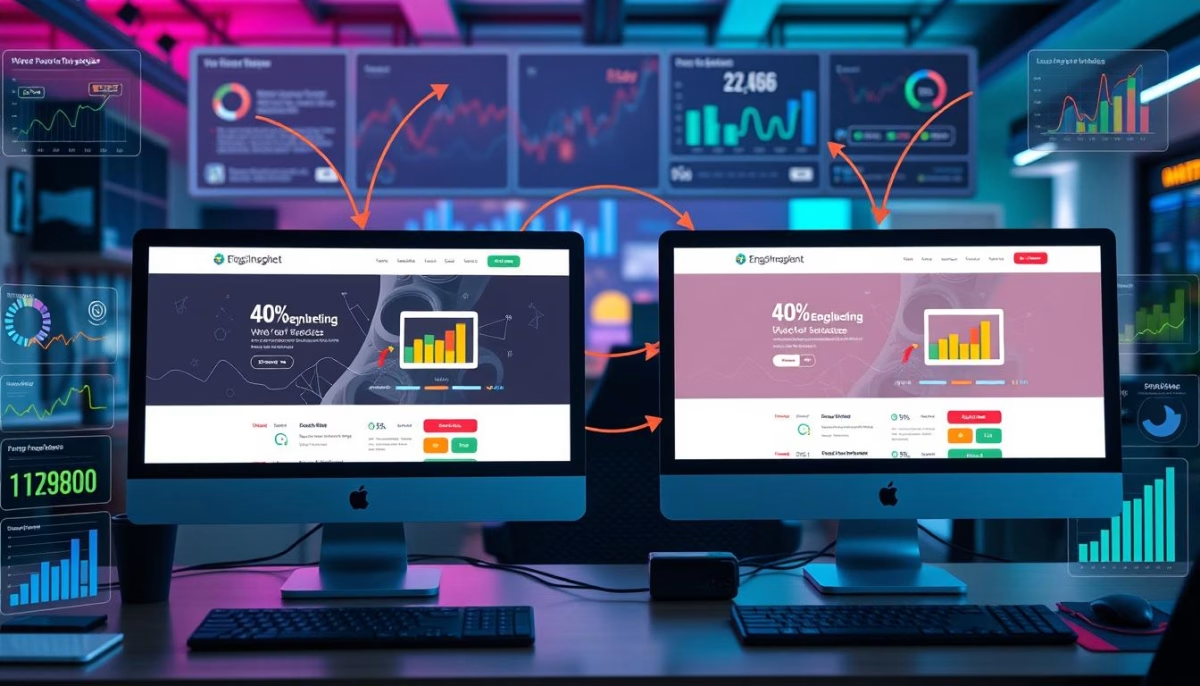
A/B testing is the process of creating two versions of a webpage or landing page (let’s call them A and B) and comparing their performance to determine which one performs better. This can involve testing different elements such as headlines, images, button colors, and layouts to see what resonates best with your audience.
How to Conduct A/B Tests on Your Landing Page
- Set Clear Goals: Before starting any A/B test, it’s crucial to define your objectives, whether it’s increasing sign-ups, improving click-through rates, or reducing cart abandonment.
- Gather Relevant Data: Analyze your existing landing page performance using tools like Google Analytics to identify areas for improvement.
- Develop Hypotheses: Based on your data analysis, create hypotheses about the changes you believe will improve your landing page’s conversion rate optimization.
- Design Variations: Develop two versions of your landing page, incorporating the changes you want to test.
- Implement the Test: Use A/B testing tools to randomly show visitors either version A or version B of your landing page.
- Analyze the Results: Monitor the performance of each version and determine the winner based on your pre-defined success metrics.
By continuously conducting A/B tests on your landing pages, you can make data-driven decisions to optimize your website for better conversion rate optimization and overall business success.
Personalization: Making Visitors Feel Valued
In today’s competitive digital landscape, personalization is a key component of successful marketing strategies. In fact, 89% of marketers report seeing a positive return on investment when using personalization. By tailoring content to different audiences based on their demographics, behavior, or preferences, we can create more relevant and engaging landing pages that resonate with our visitors.
Tailoring Content to Different Audiences
Understanding your buyer personas is crucial, as it enhances your ability to personalize landing page content. Personalized CTAs convert 202% better than default versions, and more than 70% of consumers expect a more tailored approach from companies. By creating dynamic landing pages that adapt content based on factors like a visitor’s location, search keywords, customer journey stage, viewing device type, and time of day, we can provide a seamless and engaging experience.
Using Visitor Data to Enhance Experience
Leveraging visitor data to enhance the user experience can lead to higher conversion rates. This may involve displaying personalized product recommendations, customized messages, or targeted offers based on the visitor’s browsing history or previous interactions with the brand. Websites optimized for mobile attract 15% more unique clicks, and 82% of consumers made a purchase decision after watching a video in 2024, underscoring the importance of optimizing the landing page experience.
Companies like Sleeknote and Spotify have successfully implemented dynamic landing pages for personalized experiences, streamlining content optimization processes compared to static landing pages. By leveraging customer segmentation and personalized marketing, we can create landing pages that truly make our visitors feel valued and enhance the effectiveness of our marketing campaigns.
Mobile Optimization: Reaching Customers on the Go
In today’s digital landscape, mobile optimization has become a crucial factor for the success of landing pages. As the number of users accessing websites through mobile devices continues to rise, ensuring a seamless and responsive user experience is paramount. By adopting a mobile-first approach, we can design landing pages that are easily accessible and functional across all devices.
Importance of Mobile-Friendly Designs
A mobile-friendly design is essential for capturing the attention of your target audience and driving conversions. With over half of all internet traffic now coming from mobile devices, it’s crucial to optimize your landing pages for smaller screens, slower connection speeds, and different interaction patterns. Google and other search engines also prioritize mobile-friendly sites in their search results, making mobile optimization a key factor for improving visibility and search engine rankings.
Best Practices for Mobile Landing Pages
- Responsive Design: Utilize a responsive design that allows your landing pages to adapt seamlessly to different screen sizes, ensuring a consistent and user-friendly experience across devices.
- Optimized Images and Videos: Ensure that all visual elements on your landing pages are optimized for mobile, with compressed file sizes and mobile-friendly formats to maintain fast load times.
- Simple Forms and Navigation: Simplify your landing page forms and navigation, making it easy for mobile users to interact with your content and complete desired actions.
- Fast Load Times: Optimize your landing pages for speed, as even a one-second delay can significantly impact mobile conversion rates. Techniques like image compression, minimizing code, and using a content delivery network (CDN) can help improve load times.
By incorporating these best practices into your mobile landing page design, you can create an engaging and user-friendly experience that resonates with your on-the-go customers, ultimately driving higher mobile conversion rates and business success.
Analyzing Metrics for Continuous Improvement
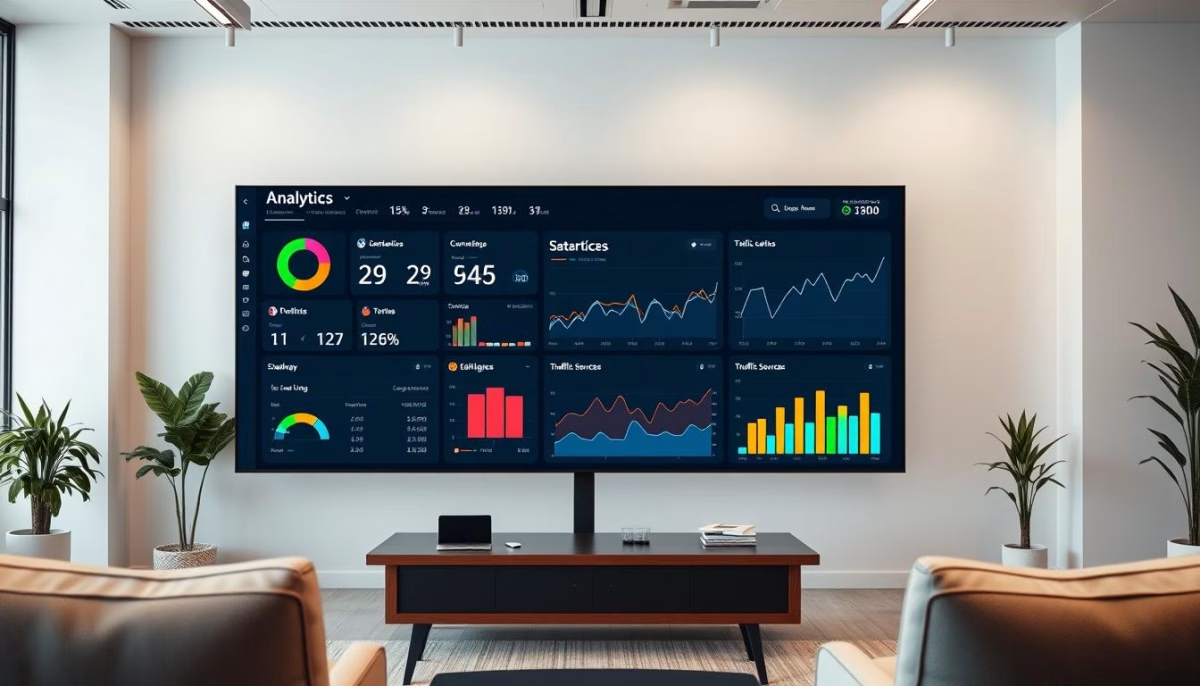
Tracking and analyzing key metrics is essential for continuously improving your landing page’s performance. By regularly reviewing these metrics and making data-driven decisions, you can optimize your landing pages for better results over time. Let’s dive into the crucial metrics to monitor and the tools you can use for effective analysis.
Key Metrics to Track for Landing Pages
The most important metrics to track for your landing pages include:
- Conversion Rate: This measures the percentage of visitors who complete the desired action, such as making a purchase or submitting a form. The average conversion rate for industries like travel, e-commerce, and education ranges from 2.5% to 11.9%.
- Bounce Rate: This shows the percentage of visitors who leave the landing page without interacting with it. An ideal bounce rate is below 40%, indicating a good user experience.
- Average Time on Page: This metric measures the average amount of time visitors spend on your landing page. The ideal range is between 1.5 to 3 minutes.
- Click-Through Rate (CTR): This measures the percentage of visitors who click on a specific link or call-to-action on your landing page.
Tools We Can Use for Effective Analysis
To track and analyze these key metrics, there are several powerful tools at your disposal:
- Google Analytics: This comprehensive web analytics service provides detailed insights into your website’s traffic and user behavior.
- Heatmap.com: This tool generates heatmaps to help you visualize where users are clicking and scrolling on your landing page.
- Optimizely: An experimentation platform that enables you to conduct A/B testing and personalization for your landing pages.
- SEMrush: Offers a suite of analytics tools to track the performance of your landing pages, including organic traffic, keywords, and competitive analysis.
By consistently monitoring these key metrics and leveraging the right tools, you can gain valuable insights to optimize your landing pages for better conversion optimization and improved performance tracking.
SEO Best Practices for Landing Pages
Implementing effective on-page SEO strategies is crucial for enhancing the visibility and performance of your landing pages. By incorporating keyword optimization and crafting well-optimized meta descriptions, you can ensure your landing pages rank higher in search engine results and attract more qualified traffic.
Incorporating Keywords Naturally
Strategically placing relevant keywords throughout your landing page content is key to improving on-page SEO. Focus on using keywords that align with your target audience’s search intent, whether they are informational, navigational, commercial, or transactional queries. Seamlessly integrate these keywords into your headlines, subheadings, body text, and image alt text without compromising the readability of your content.
Optimizing Meta Tags and Descriptions
Crafting compelling and keyword-rich meta tags and descriptions can significantly enhance the visibility of your landing pages in search engine results pages (SERPs). Ensure your title tags accurately reflect the page’s content, while your meta descriptions provide a concise and enticing summary to encourage clicks. Remember to strike a balance between optimizing for search engines and creating a user-friendly experience.
By following these SEO best practices, you can improve the search engine optimization of your landing pages and drive more qualified leads and conversions for your business. Regularly monitoring and refining your SEO strategies can further enhance the performance of your landing pages over time.
Creating a Seamless User Experience
At the heart of a high-converting landing page lies the seamless user experience. To captivate visitors and inspire action, we must focus on optimizing key aspects of our landing page design. Two crucial elements that can significantly impact user engagement and conversion rates are fast loading times and the elimination of distractions.
Importance of Fast Loading Times
In today’s fast-paced digital landscape, even a one-second delay can drastically affect conversion rates. Visitors expect lightning-fast page speed, and we must prioritize user experience design to meet their expectations. Optimizing images, minifying code, and leveraging browser caching are just a few techniques we can employ to enhance page speed optimization and ensure a smooth, uninterrupted user journey.
Eliminating Distractions for Better Focus
A clean, intuitive landing page design that guides visitors towards the desired conversion goal is essential. By eliminating unnecessary navigation menus, irrelevant content, and other potential distractions, we can help users stay laser-focused on the primary call-to-action. This streamlined approach enhances the overall user experience and increases the likelihood of visitors taking the desired action.
Remember, a seamless user experience is the foundation of a high-converting landing page. By prioritizing fast loading times and eliminating distractions, we can create a captivating environment that encourages visitors to engage, interact, and ultimately convert.
The Final Touch: Retargeting Strategies
Retargeting is a powerful strategy that can be the final piece of the puzzle in your landing page optimization efforts. By displaying targeted ads to visitors who have already shown interest in your offerings, we can effectively re-engage them and encourage them to complete the conversion process.
Importance of Retargeting for Conversions
Retargeting campaigns have become a cornerstone of successful online marketing strategies. The synergy between retargeting ads and landing pages is paramount for increasing the likelihood of conversion. Consistent messaging and visual continuity between the ads and landing pages help with brand recognition, while clear call-to-action buttons guide users on what to do next.
Retargeting is particularly crucial given that 97% of first-time visitors leave a website without making a purchase. By reconnecting with these warm leads, we can significantly boost our conversion rates. In fact, the marketing rule of seven suggests that interacting with a customer at least seven times dramatically increases the likelihood of gaining their trust and business.