
Designing Effective Logos: Key Elements for Your Small Business

How to Leverage TikTok for Small Business Growth
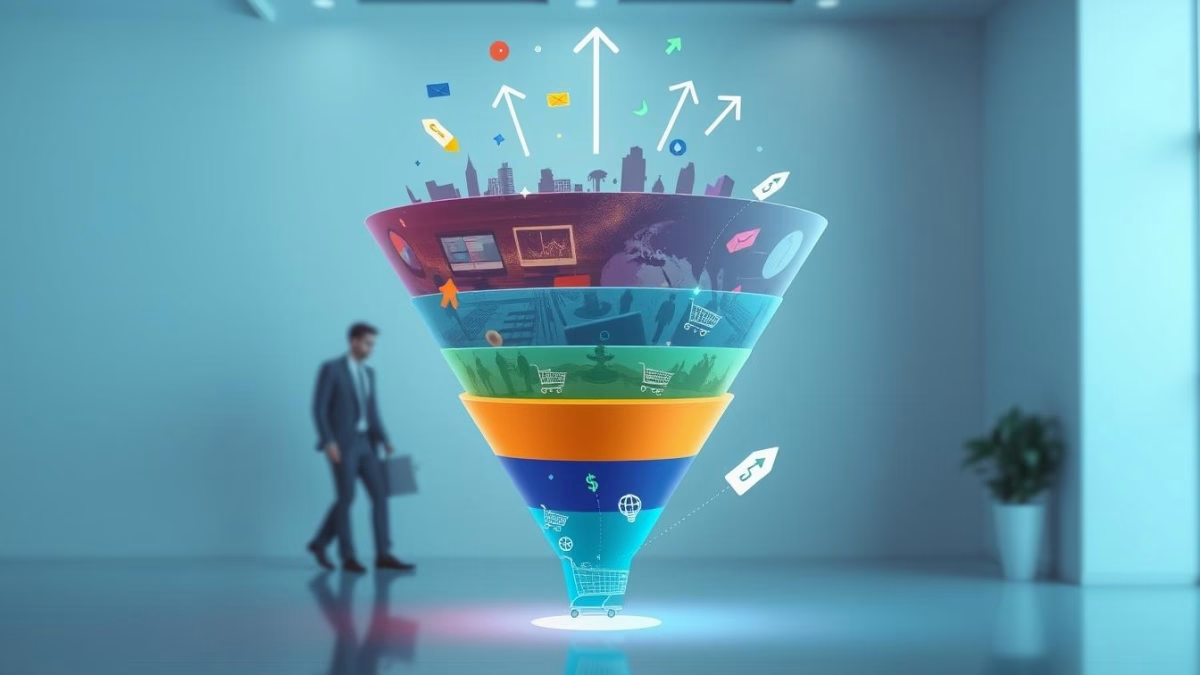
As small business owners, we all strive to attract new customers and convert them into loyal, paying clients. One of the most effective strategies to achieve this is through the use of sales funnels. Sales funnels are powerful content marketing frameworks that guide potential customers through their buying journey, ultimately leading them to make a purchase.
At their core, sales funnels serve to nurture and convert leads into customers by providing valuable content, building trust, and demonstrating how your products or services can solve their problems. By understanding the stages of the customer journey and tailoring your messaging accordingly, you can create a more personalized and effective marketing strategy that drives results.
Sales funnels are a crucial component of the flywheel marketing method, which involves understanding your target audience, creating clear and compelling messaging, building a strong website foundation, crafting content and sales funnels, and effectively promoting your offerings. By mastering the art of sales funnel optimization, you can unlock the secrets to sustainable lead generation, improved conversion rates, and ultimately, a healthier, more profitable small business.
Key Takeaways
- Sales funnels are powerful content marketing frameworks that guide potential customers through their buying journey.
- Understanding the stages of the customer journey is crucial for creating an effective sales funnel.
- Clear messaging and a strategically built website are essential for successful sales funnel implementation.
- Optimizing your sales funnel can lead to increased lead generation, improved conversion rates, and a healthier, more profitable small business.
- Leveraging the flywheel marketing method can help small businesses achieve sustainable growth.
Understanding Sales Funnels
In today’s competitive business landscape, a well-crafted sales funnel can be the key to unlocking growth and success. A sales funnel is a step-by-step process that guides potential customers through the conversion process, from initial awareness to becoming loyal, paying clients. Understanding the importance of sales funnels is crucial for small businesses looking to streamline their customer acquisition efforts and maximize their marketing impact.
What is a Sales Funnel?
A sales funnel is a visual representation of the customer journey, where prospects move through various stages, including awareness, interest, desire, and action. This structured approach helps businesses attract the right audience, nurture relationships, and increase conversions. By breaking down the sales process into manageable steps, small businesses can more effectively guide potential customers towards making a purchase.
Importance of Sales Funnels for Small Businesses
Sales funnels are essential for small businesses for several reasons. They help to optimize the conversion process, ensuring that a greater percentage of prospects become paying customers. Additionally, sales funnels provide valuable insights into customer behavior, allowing small businesses to refine their marketing tools and improve customer acquisition strategies. By automating and streamlining the sales process, small businesses can consistently produce results and scale their operations more efficiently.
Ultimately, understanding and implementing a sales funnel is a crucial step for small businesses looking to grow their customer base, increase revenue, and solidify their position in the market. By leveraging the power of sales funnels, small businesses can navigate the complexities of the modern sales landscape and achieve their goals.
The Stages of a Sales Funnel
Understanding the stages of the customer journey, or sales funnel, is crucial for small businesses to effectively attract, engage, and convert potential customers. The sales funnel typically consists of three main phases: awareness, consideration, and decision.
Awareness Stage
In the awareness stage, potential customers are just beginning to recognize a problem or need. They may be searching for information, exploring various solutions, and trying to understand their options. Our role at this stage is to create content that educates and informs, building brand awareness and positioning our business as a trusted authority.
Consideration Stage
As potential customers move into the consideration stage, they are conducting more in-depth research, evaluating different products or services, and weighing the pros and cons of each option. Here, we need to provide valuable resources that demonstrate the unique benefits of our offering and how it can best solve their specific problem.
Decision Stage
Finally, in the decision stage, prospects are ready to make a purchasing decision. They have a clear understanding of their needs and have narrowed down their choices. Our focus at this stage should be on making the decision easy for them, providing clear calls-to-action, handling objections, and ultimately guiding them towards choosing our solution.
By understanding the customer journey and the buyer’s journey through the funnel stages, we can create a seamless experience that moves potential customers from awareness to consideration to decision, ultimately driving more sales for our small business.
Why Sales Funnels Matter for Growth
At the heart of any successful business lies a well-crafted sales funnel. These powerful tools not only help us acquire new customers, but also foster lasting relationships and drive business growth. By understanding the importance of sales funnels, we can unlock a world of opportunities for our small businesses.
Building Customer Relationships
Sales funnels are instrumental in building strong customer relationships. By guiding potential customers through a seamless journey, from initial awareness to the final purchase, we can nurture their trust and loyalty. This is particularly crucial for customer acquisition, as studies show that micro-influencers with 10,000 to 100,000 followers can effectively reach and engage with our target audience.
Increasing Conversion Rates
Optimizing our sales funnel can have a direct impact on our conversion rates. By analyzing attribution and understanding the customer journey, we can identify the most effective marketing channels and tailor our approach to meet the needs of our customers. This is especially important for businesses with a high average order value, as longer consideration timelines may be required to guide customers through the decision-making process.
Furthermore, customer lifetime value (CLV) analysis can provide valuable insights into our most loyal and valuable customers, enabling us to refine our marketing strategy and focus our efforts on the most promising opportunities for business growth.
In today’s competitive landscape, sales funnels have become an essential component of any successful marketing strategy. By investing in the right tools and techniques, we can unlock the power of sales funnels to drive customer acquisition, foster business growth, and strengthen our marketing strategy.

Creating Your First Sales Funnel
Building a successful sales funnel is crucial for small businesses seeking to attract the right customers, nurture relationships, and drive conversions. The key is to start by identifying your target audience and mapping out the customer journey. This will help you create a tailored funnel that addresses your buyers’ pain points and expectations.
Identifying Your Target Audience
Start by defining your buyer personas – the unique profiles of your ideal customers. Understand their demographics, interests, pain points, and behaviors. This will allow you to craft compelling offers and messaging that resonate with them. Effective customer segmentation is also essential, as it helps you personalize your approach for different groups.
Mapping Out the Customer Journey
Next, map out the customer journey from awareness to loyalty. Consider the touchpoints, content, and offers you’ll need at each stage of the funnel mapping process. This will ensure a seamless experience that guides your prospects through the sales cycle and encourages them to take the desired actions.
By defining your target audience and carefully planning the customer journey, you’ll be well on your way to creating a sales funnel that drives growth and success for your small business.
Tools to Build Sales Funnels
Crafting an effective sales funnel is crucial for the growth of any small business. Fortunately, there is a wide array of tools and software solutions available to help you build, automate, and optimize your sales funnel. From customer relationship management (CRM) systems to email marketing platforms and landing page builders, the options are diverse and cater to businesses of all sizes and budgets.
Recommended Software Solutions
Some of the top-recommended tools for creating sales funnels include:
- HubSpot – an all-in-one platform that combines CRM, marketing automation, and sales tools.
- ClickFunnels – a comprehensive funnel-building solution with features like landing pages, order forms, and email integration.
- Kartra – an all-in-one platform that offers a wide range of features, including a website builder, email marketing, and membership sites.
Cost-Effective Options for Beginners
For small businesses or entrepreneurs on a tighter budget, there are several cost-effective options to consider:
- Mailchimp – a popular email marketing platform with basic funnel-building capabilities, starting at $11 per month.
- Leadpages – a user-friendly landing page builder with pre-designed templates, starting at $27 per month.
- WordPress – a flexible content management system that can be enhanced with various funnel-building plugins, often at a lower cost.
When selecting the right tools for your business, it’s important to consider factors such as integration capabilities, ease of use, and overall cost. By leveraging the right funnel software, marketing automation, and CRM tools, you can streamline your sales process and drive sustainable growth.
Common Mistakes to Avoid
As small business owners delve into the world of funnel optimization and conversion rate optimization, it’s essential to steer clear of common pitfalls that can derail their efforts. Let’s explore the two primary mistakes to avoid when building and refining your sales funnel.
Overcomplicating Your Funnel
One of the most common mistakes businesses make is creating overly complex sales funnels. While the temptation to include every possible feature and touchpoint may be strong, simplicity is key. Overcomplicating your funnel can lead to customer confusion, increased drop-off rates, and a convoluted customer journey.
Instead, focus on streamlining your funnel to align with your customers’ needs and decision-making process. Keep the steps clear, concise, and focused on guiding your leads seamlessly towards conversion.
Ignoring Analytics and Data
Another critical mistake to avoid is neglecting the power of data analysis. Funnel optimization and conversion rate optimization rely heavily on understanding your audience, their behavior, and the performance of your sales funnel. Ignoring data analysis means you’re flying blind, missing out on valuable insights that could transform your funnel’s effectiveness.
- Regularly track key metrics like conversion rates, lead-to-customer ratios, and customer lifetime value.
- Analyze user behavior data to identify pain points and optimize the customer journey.
- A/B test different elements of your funnel to determine what resonates best with your audience.
By embracing funnel optimization and data analysis, you’ll be well on your way to creating a sales funnel that truly drives growth for your small business.
Optimizing Your Sales Funnel
As a small business owner, optimizing your sales funnel is crucial for driving conversion optimization, gaining valuable customer insights, and leveraging funnel analytics to achieve sustainable growth. By continuously refining your funnel, you can ensure it remains aligned with your business goals and customer needs.
A/B Testing Your Funnel
One of the most effective ways to optimize your sales funnel is through A/B testing. By experimenting with different elements, such as landing page designs, email subject lines, and calls-to-action, you can identify the most effective tactics that resonate with your target audience. This data-driven approach allows you to make informed decisions and continuously improve your funnel’s performance.
Understanding Customer Feedback
Collecting and analyzing customer feedback is essential for optimizing your sales funnel. Utilize surveys, customer interviews, and funnel analytics to gain insights into your customers’ pain points, preferences, and experiences throughout the buyer’s journey. This valuable information will help you identify areas for improvement and make data-driven decisions to enhance the overall customer experience.
Continuous optimization based on customer insights and funnel analytics is the key to maintaining an effective sales funnel. Regular analysis of key performance indicators (KPIs) and adjusting your strategies accordingly will ensure your funnel remains aligned with your business goals and customer needs.
Content Marketing and Sales Funnels
As a small business owner, you know the importance of capturing leads and converting them into loyal customers. One powerful strategy to achieve this is by leveraging the power of content marketing alongside your sales funnel. By creating valuable, informative content tailored to each stage of the buyer’s journey, we can guide prospects through the funnel and drive conversions.
Creating Content for Each Stage
The content marketing funnel typically comprises three main stages: attracting customers, educating them about your brand, and converting them into sales. At the top of the funnel (TOFU), we’ll focus on awareness-building content such as blog posts, infographics, and social media posts to capture the attention of potential leads. In the middle of the funnel (MOFU), we’ll provide more in-depth educational content like webinars, case studies, and comparison guides to nurture leads and build trust. Finally, at the bottom of the funnel (BOFU), we’ll create conversion-focused content like product demos, free trials, and customer testimonials to encourage sales.
Leveraging Social Media
- Social media platforms are a powerful tool for social media marketing and distributing your content across the sales funnel.
- By sharing TOFU content on platforms like Twitter, Instagram, and LinkedIn, we can reach a wider audience and drive traffic to the top of your funnel.
- Engaging with your audience on social media can also help you gather valuable customer insights to inform your content strategy and optimize your funnel.
Remember, an effective content marketing approach is not a one-size-fits-all solution. By tailoring your content to the unique needs and preferences of your target audience at each stage of the sales funnel, you can nurture leads, build trust, and ultimately drive more inbound marketing conversions.
Leveraging Email Marketing
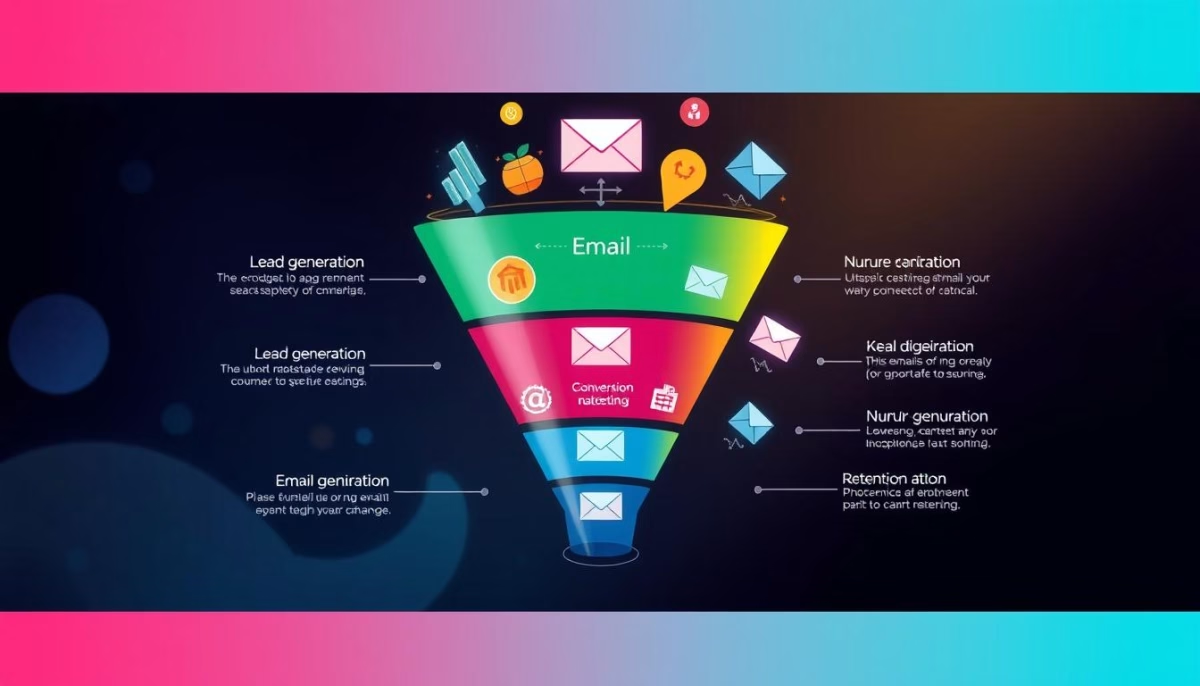
Email marketing is a powerful tool in any sales funnel. By segmenting your email list based on customer characteristics, behaviors, or funnel stages, you can deliver more targeted and personalized communication. This level of personalization is crucial for email automation, lead nurturing, and driving conversions.
Segmenting Your Email List
Effective email segmentation starts with understanding your audience. Analyze your customer data to create targeted lists based on factors like demographics, interests, purchase history, and engagement levels. This allows you to craft tailored email campaigns that speak directly to the needs and preferences of each segment.
- Segment by demographics: age, gender, location, occupation, etc.
- Segment by interests and preferences: product categories, content topics, etc.
- Segment by purchase behavior: loyal customers, cart abandoners, new leads, etc.
- Segment by engagement levels: active, inactive, re-engaged, etc.
Crafting Effective Email Campaigns
Once your email list is segmented, focus on creating compelling email content that resonates with each audience. Craft eye-catching subject lines, provide valuable information, and include clear calls-to-action. Automation can help nurture leads through the funnel, delivering the right message at the right time.
- Write subject lines that grab attention and encourage opens
- Offer useful, relevant content that educates and engages your audience
- Include clear calls-to-action that guide recipients to the next step
- Leverage email automation to nurture leads and drive conversions
By leveraging email marketing and incorporating strategies like list segmentation and personalized campaigns, you can optimize your sales funnel and drive better results. Stay tuned for more insights on tracking your funnel performance and collaborating with Solved for Success to take your business to new heights.
Tracking Your Funnel Performance
Monitoring the performance of your sales funnel is crucial for ongoing optimization and growth. By closely analyzing key metrics, we can identify areas for improvement, make data-driven decisions, and ensure our funnel remains effective in driving conversions and maximizing ROI.
Key Metrics to Monitor
Some of the essential metrics to track in your sales funnel include:
- Conversion rates at each stage of the funnel, from initial awareness to final purchase
- Average time spent in the funnel by customers
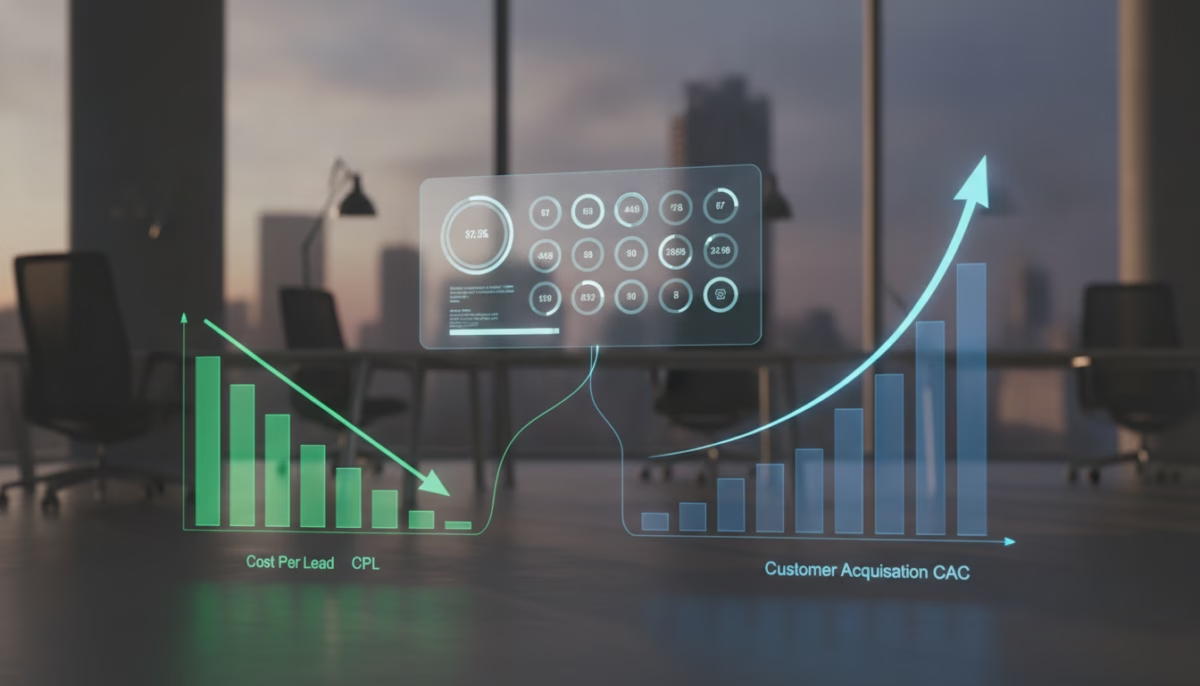
- Customer acquisition cost and return on investment (ROI)
- Click-through rates, bounce rates, and engagement rates
Adjusting Your Strategy Based on Data
By closely analyzing these funnel analytics and conversion tracking metrics, we can identify bottlenecks, drop-off points, and opportunities for optimization. This data-driven approach allows us to make informed decisions and adjust our strategies accordingly, ensuring the funnel remains effective and aligned with our overall business goals and ROI measurement.
Regular review and refinement of our sales funnel enable us to continually enhance the customer experience, improve conversion rates, and drive sustainable growth for our small business.
Partnering with Solved for Success
At Solved, we understand the vital role that sales funnels play in driving business growth for small companies. Our team of experts is dedicated to helping you create, implement, and continuously optimize your sales funnel strategy to drive maximum results.
How We Can Help
Whether you’re a new business looking to establish your first sales funnel or an established company seeking to refine and enhance your existing funnel, we have the expertise and tools to support you. Our services include strategic sales funnel development, content creation, marketing automation, and data-driven optimization.
By partnering with Solved, you’ll gain access to our comprehensive sales funnel services, including market research, target audience identification, compelling content creation, and strategic implementation. We’ll work closely with you to ensure your sales funnel is aligned with your unique business goals, delivering a seamless customer experience that drives conversions and revenue growth.