
How to Design Effective Social Media Graphics

Top Techniques for Closing Sales Deals More Effectively

Unlocking the power of your marketing funnel is key to driving business growth. At its core, your marketing funnel represents the journey that potential customers take, from initial awareness to final conversion. By closely monitoring and analyzing this process, we can uncover valuable insights that empower us to optimize our strategies and maximize our return on investment (ROI).
The majority of website visitors – around 96% – are not yet ready to make a purchase. However, these individuals can still provide a wealth of marketing data, if properly nurtured. By understanding their behavior and preferences, we can tailor our approach to guide them seamlessly through the funnel, transforming them into loyal customers over time.
Your ability to make the most of your incoming traffic can substantially impact the quality of results generated from your marketing funnel. To ensure that your funnel is consistently generating high-quality leads, you need to regularly optimize it, paying attention to trends and changes in consumers’ behavioral patterns. Marketing funnel analysis allows you to identify who your prospects are, where they’re coming from, things that can trigger their exit, and everything you can implement to help them progress to the next stage.
Key Takeaways
- Discover how to measure and optimize your marketing funnel performance
- Understand the importance of analyzing key marketing funnel metrics
- Learn strategies to boost your conversion rates and marketing ROI
- Identify opportunities to nurture and convert your website visitors
- Implement techniques to continuously optimize your marketing funnel
Understanding Marketing Funnel Metrics
As we delve into the world of marketing funnel analysis, it’s crucial to understand the key metrics that provide valuable insights into our campaign performance. These metrics serve as the building blocks for making informed decisions and optimizing our marketing efforts.
Cost per Acquisition (CPA)
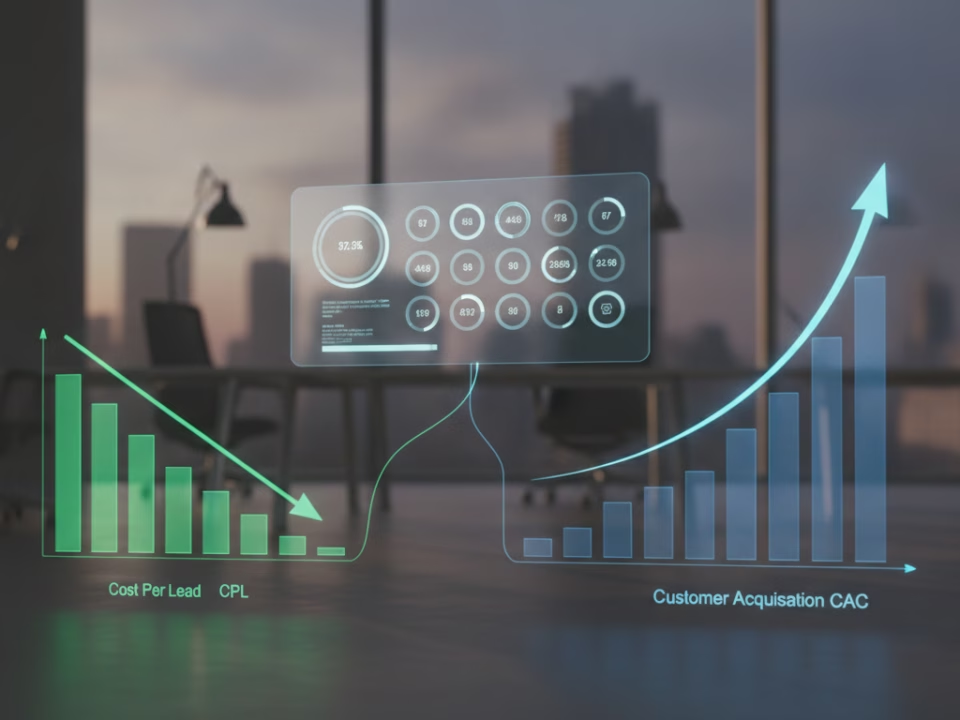
One of the fundamental metrics to consider is the cost per acquisition (CPA). This metric reveals how much it costs to acquire a new customer or lead. By understanding our CPA, we can assess the efficiency of our marketing spend and ensure that our acquisition efforts align with our business goals.
Customer Lifetime Value (CLV)
Another important metric is the customer lifetime value (CLV), which provides insights into the overall revenue a customer generates during their relationship with our business. CLV is particularly crucial for subscription-based models, as it helps us identify the most valuable leads and focus our resources on retaining and nurturing these customers.
Alongside CPA and CLV, the return on ad spend (ROAS) metric is also essential in understanding the financial impact of our advertising campaigns. ROAS measures the revenue generated for every dollar spent on advertising, giving us a clear picture of the profitability and effectiveness of our marketing efforts.
Finally, the conversion rate is a crucial metric that tracks the percentage of leads that complete a specific action, such as making a purchase or signing up for a service. By monitoring our conversion rates, we can identify opportunities to improve our marketing funnel and optimize the customer journey.
By closely monitoring these marketing funnel metrics, we can make data-driven decisions, refine our strategies, and ensure that our marketing investments are delivering the desired results.
Analyzing the Marketing Funnel Stages
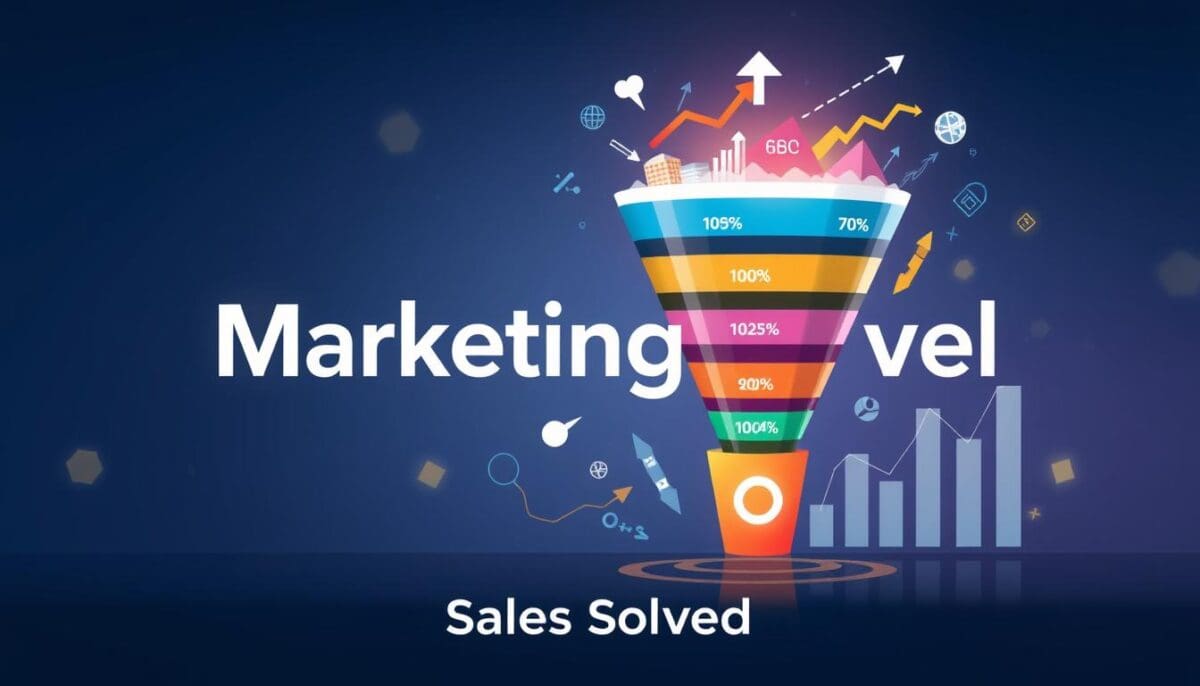
Understanding the different stages of the marketing funnel is crucial for businesses to effectively track and optimize their customer journey. The typical marketing funnel consists of five main stages: Awareness, Interest, Consideration, Intent, and Purchase. By closely monitoring the key metrics associated with each stage, organizations can gain valuable insights to improve their marketing strategies and drive better results.
Key Metrics to Track
To analyze the marketing funnel stages, we need to track a range of metrics that provide a comprehensive view of the customer journey. Some of the key metrics to focus on include:
- Leads generated – the number of potential customers who have expressed interest in your product or service
- Conversion rates between stages – the percentage of leads that move from one stage to the next
- Cost per acquisition (CPA) – the average cost of acquiring a new customer
- Customer lifetime value (CLV) – the estimated revenue a customer will generate over the course of their relationship with your business
By closely monitoring these marketing funnel stages, funnel metrics, and customer journey data points, businesses can identify bottlenecks, optimize their marketing efforts, and make informed decisions to improve overall performance.

Marketing Funnels Analysis Techniques
As we strive to measure and analyze the performance of our marketing funnels, a range of powerful techniques are available to us. From heatmap analysis and session recording to A/B testing and multivariate testing, these tools can provide invaluable insights into the user journey and help us identify areas of friction or opportunity.
Heatmap analysis and session recording, for instance, allow us to gather in-depth information about how users interact with each stage of the funnel. By visualizing user behavior, we can pinpoint where they are getting stuck or abandoning the process, enabling us to make data-driven decisions to optimize the experience.
Similarly, A/B testing and multivariate testing empower us to experiment with different variations of our funnel, validating changes before implementing them for all users. This approach helps us determine the optimal trial period length for our SaaS organization, for example, or identify the most effective messaging and call-to-action placements.
Comprehensive marketing funnel analysis solutions, such as HubSpot, Improvado, Google Analytics, and Mixpanel, offer a wealth of features to support our efforts. These platforms provide deep insights into each stage of the funnel, enabling us to fine-tune our strategies and maximize our return on investment (ROI).
By leveraging these funnel analysis techniques, we can gain a holistic understanding of our customers’ behavior and make informed decisions to optimize the user experience, drive conversions, and ultimately, achieve our marketing goals.
Conclusion
In conclusion, regular marketing funnel analysis is vital for growing a small business and optimizing your marketing performance. By understanding key metrics like cost per acquisition (CPA), customer lifetime value (CLV), return on ad spend (ROAS), and conversion rates, we can identify friction points, make data-driven decisions, and implement strategies to improve our customer acquisition and retention.
Techniques such as heatmap analysis, A/B testing, and multivariate testing can provide valuable insights to help us refine our marketing funnel and boost our sales. Even small changes in our funnel can have a significant impact on our overall business growth. If you need assistance optimizing your marketing funnel and increasing your sales, consider consulting the experts at Solved to guide you through the process.
Remember, marketing funnel optimization, conversion rate improvement, and sales growth are essential for the success of your small business. By diligently analyzing your funnel and implementing data-driven strategies, you can unlock new opportunities for growth and solidify your position in the market.