Conducting an SEO Audit for Your Small Business Website

Harnessing the Power of Social Proof to Increase Sales
There’s no question that the development of better analytical tools and approaches in recent years has given business leaders significant new decision-making firepower. Yet while advanced analytics provide the ability to increase growth and marketing return on investment (MROI), organizations seem almost paralyzed by the choices on offer. As a result, business leaders tend to rely on just one planning and performance-management approach, quickly finding that even the most advanced single methodology has limits. An integrated analytics approach can free up some 15 to 20 percent of marketing spending, which worldwide equates to as much as $200 billion that can be reinvested by companies or drop straight to the bottom line. One property-and-casualty insurance company in the United States increased marketing productivity by more than 15 percent each year from 2009 to 2012 by using marketing analytics.
Key Takeaways
- Marketing analytics can unlock significant cost savings and drive business growth.
- Integrated analytics approaches are more effective than relying on a single methodology.
- Data analysis can boost marketing productivity and efficiency.
- Marketing analytics provide insights to optimize strategies and enhance customer experiences.
- Leveraging marketing analytics can lead to improved ROI and stronger customer relationships.
Anchoring Marketing Analytics to Business Strategy
At the heart of any successful marketing strategy lies a data-driven approach. By aligning marketing analytics with our overarching business goals, we can unlock the true potential of data to drive small business growth. This starts with identifying our strategic priorities and understanding the consumer decision journey.
Identifying Strategic Priorities
Our company’s strategy should be the guiding force behind our choice of analytical options. Instead of basing marketing decisions on the previous year’s budget or recent product performance, we need to measure proposals based on their strategic return, economic value, and payback window. This data-driven strategy ensures we allocate resources effectively and maximize our marketing return on investment (MROI).
Understanding the Consumer Decision Journey
Equally crucial is our understanding of the target consumers’ buying behavior. The traditional marketing “funnel” approach is no longer sufficient, as the buying process has become more dynamic and subject to various moments of influence. By closely examining the consumer decision journey, we can identify the most effective touchpoints to engage our audience and optimize our marketing-mix modeling. For example, one home-appliance company shifted spending away from general advertising to distributor website content, resulting in a 21 percent increase in e-commerce sales.
By anchoring our marketing analytics to our business strategy and consumer insights, we can make data-driven decisions that truly resonate with our target audience and drive sustainable growth for our small business.
Making Data-Driven Decisions with Marketing Analytics
To establish the right marketing mix, organizations must evaluate the pros and cons of various analytical approaches, including marketing-mix modeling, heuristic analysis, and attribution modeling. An integrated strategy that combines direct-response data and insights can reduce the inherent biases in any single MROI method, providing business leaders the flexibility to allocate resources toward the most impactful activities.
Identifying the Best Analytical Approaches
Marketers can leverage a range of analytical techniques to drive data-driven decision-making. Marketing-mix modeling helps quantify the impact of different marketing channels, while heuristic analysis like reach-cost-quality can offer a more holistic view. Attribution modeling, on the other hand, can attribute revenue to specific touchpoints along the customer journey.
For example, an international power company used reach-cost-quality analysis to adjust its out-of-home and sponsorship mix, increasing reach within its target audience and raising the efficiency of marketing communications by 10 to 15 percent. The company then turned to marketing-mix modeling to get a more granular MROI assessment.
Integrating Capabilities for Comprehensive Insights
An integrated approach that pulls in direct-response data and insights can provide a more comprehensive understanding of marketing performance. This reduces the biases inherent in any one MROI method and equips leaders with the flexibility to shift budgets toward the most impactful activities.
By leveraging a mix of analytical techniques, businesses can make data-driven decisions that optimize their marketing efforts and drive tangible growth. Continuous monitoring and timely adjustments to strategies, campaigns, and tactics can further enhance performance and deliver a stronger return on investment.

The Power of Marketing Analytics for Small Businesses
In today’s rapidly evolving business environment, small businesses can no longer afford to overlook the power of marketing analytics. By harnessing the insights generated from data, small businesses can drive sustainable growth, enhance their marketing ROI, and make informed, data-driven decisions.
One of the key challenges facing small businesses is the sheer volume of digital marketing data available. With so much information at their fingertips, it can be overwhelming to sift through and identify the most meaningful metrics. However, by focusing on the right key performance indicators (KPIs), small businesses can gain a competitive edge and optimize their marketing strategies.
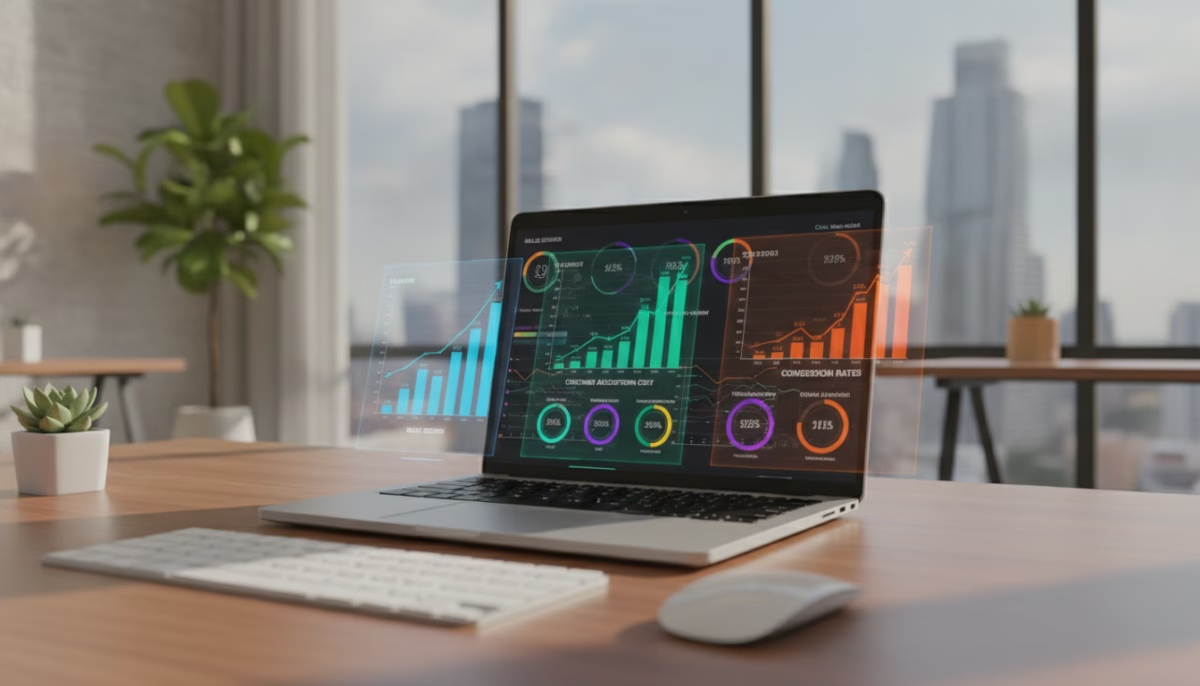
Tracking metrics such as website traffic, social media engagement, and lead generation can provide valuable insights into the effectiveness of marketing campaigns. By analyzing these KPIs, small businesses can identify areas for improvement, refine their messaging, and allocate resources more effectively. This data-driven approach not only enhances marketing ROI but also helps small businesses stay agile and responsive to changing market conditions.
Furthermore, small businesses can leverage the expertise of digital marketing agencies to help them navigate the complex world of analytics. These agencies can provide actionable insights and data-driven recommendations, empowering small businesses to make informed decisions and optimize their marketing efforts for maximum impact.
By embracing the power of marketing analytics, small businesses can unlock new opportunities for growth, stay ahead of the competition, and achieve their desired business objectives. Whether it’s refining target audiences, developing personalized content strategies, or optimizing website performance, data-driven decision-making can be the key to small business success in today’s fast-paced marketplace.
Marketing Analytics: Unlocking Customer Insights
In the world of modern marketing, data is the key to unlocking valuable customer insights. By leveraging marketing analytics, businesses can gain a deeper understanding of their target audience, identify emerging trends, and uncover crucial customer segments. This data-driven approach empowers marketers to make informed decisions, optimize their strategies, and stay ahead of the competition.
Identifying Trends and Patterns
Marketing analytics allows us to analyze customer behavior, preferences, and market trends in real-time. By aggregating data from various sources, such as website analytics, social media interactions, and purchase history, we can identify patterns and emerging trends that shape the customer decision journey. This information is vital for crafting personalized marketing campaigns, enhancing product development, and adapting to the evolving needs of our customer base.
Uncovering Customer Segments
- Through rigorous data analysis, we can uncover distinct customer segments based on their demographic, psychographic, and behavioral characteristics.
- This granular understanding of our customer base enables us to deliver targeted, relevant, and impactful marketing messages.
- By identifying these customer segments, we can optimize our marketing efforts, tailor our product offerings, and deliver a superior customer experience.
In today’s competitive landscape, embracing marketing analytics is crucial for small businesses to thrive. By harnessing the power of data-driven insights, we can make informed decisions, enhance our customer engagement, and drive sustainable growth.
Key Performance Indicators for Monitoring Digital Marketing
Tracking the right Key Performance Indicators (KPIs) is crucial for small businesses to gauge the success of their digital marketing efforts. These quantifiable metrics provide valuable insights, allowing you to identify areas of strength, address weaknesses, and make data-driven decisions to optimize your marketing strategy.
Website Traffic and Conversion Rates
Monitoring website analytics, such as organic traffic, bounce rates, and conversion rates, can reveal how effectively your online presence is attracting and engaging potential customers. By understanding user behavior and identifying high-performing pages, you can focus your efforts on optimizing the website analytics and conversion optimization to drive more qualified leads and sales.
Customer Acquisition Costs and Lifetime Value
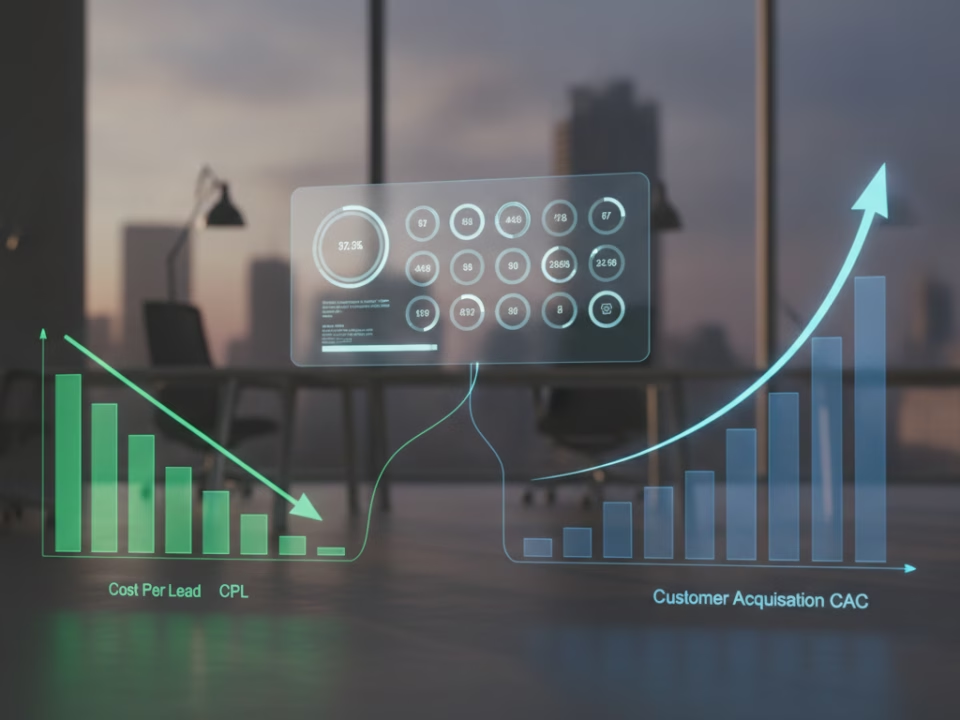
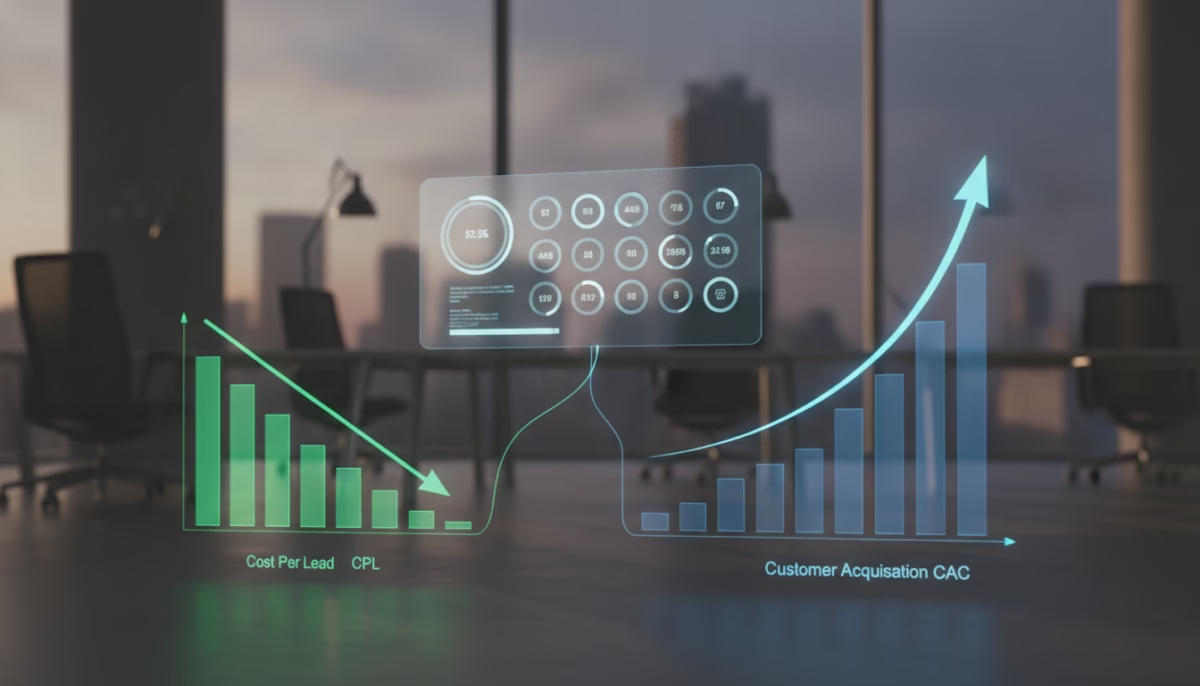
Calculating your customer acquisition cost (CAC) and customer lifetime value (CLV) can help you maximize the return on your marketing investments. CAC measures the expenses required to acquire a new customer, while CLV provides insight into the revenue generated by a typical customer over time. By closely monitoring these metrics, you can make strategic decisions to improve your customer acquisition cost and increase profitability.
Leveraging KPIs to track your digital marketing performance is a critical step in driving sustainable growth for your small business. By focusing on the right metrics, you can make data-driven decisions, optimize your marketing campaigns, and enhance your overall marketing ROI.
Practical Strategies for Enhancing Performance with Marketing Analytics
Monitoring digital marketing performance using analytics is essential for any business aspiring to succeed in the digital era. By staying ahead of the curve and leveraging the latest analytics tools and techniques, businesses can gain a competitive edge in the market. Tracking and analyzing KPIs such as website traffic, conversion rates, customer acquisition costs, and customer lifetime value can provide valuable insights into the efficacy of marketing strategies and identify areas for enhancement.
Selecting the Right KPIs
When it comes to KPI selection, it’s crucial to identify the key metrics that align with your business goals and objectives. This may involve a combination of metrics such as:
- Website traffic and conversion rates
- Customer acquisition costs and lifetime value
- Social media engagement and reach
- Email open and click-through rates
- Return on investment (ROI) for marketing campaigns
By carefully selecting the right KPIs, you can gain a comprehensive understanding of your marketing performance and make data-driven decisions to optimize your strategies.
Leveraging Analytics Tools and Agencies
To effectively analyze and interpret your marketing data, it’s essential to leverage the right analytics tools. From website analytics platforms to social media monitoring tools, there’s a wide range of solutions available to help you track and measure your digital marketing efforts. Additionally, partnering with a digital marketing agency that provides comprehensive analytics services can be a game-changer. These agencies can help you interpret data, identify trends, and suggest strategic improvements in real-time, enabling you to make informed decisions that drive business growth.
By combining the right KPIs, analytics tools, and the expertise of digital marketing agencies, you can unlock the true potential of marketing analytics and position your small business for long-term success.
Conclusion
In our exploration of marketing analytics, we have discovered how harnessing the power of data-driven insights can significantly enhance the performance of small businesses in today’s dynamic digital landscape. By aligning our marketing strategies with key business objectives and leveraging the comprehensive insights provided by advanced analytics platforms, we can make informed, data-driven decisions that drive sustainable growth.
From identifying the most effective marketing channels and optimizing our campaigns in real-time, to uncovering valuable customer insights and anticipating future market trends, marketing analytics has proven to be a game-changer for small businesses seeking a competitive edge. By partnering with experienced digital marketing agencies and implementing robust analytics frameworks, we can unlock the true potential of our marketing efforts and achieve exceptional returns on our investment.
As we move forward, mastering the art of marketing analytics will be a crucial skill for small business owners and marketing professionals alike. By embracing the data-driven mindset and continuously refining our strategies based on the insights garnered, we can navigate the ever-evolving digital landscape with confidence and propel our businesses to new heights of success. The future of small business growth lies in the strategic integration of marketing analytics, and we are excited to embark on this transformative journey.