
Getting Started with Google Ads for Small Businesses

Writing SEO-Friendly Blog Posts for Your Small Business Website

Influencer marketing is rapidly becoming mainstream, but many small businesses have yet to try it, despite evidence of its effectiveness. Influencer marketing involves partnering with people of influence to help with your online marketing. An influencer is somebody with the power to affect the purchase decisions of others due to their authority, knowledge, position, and relationship with their audience. While influencer marketing grew out of celebrity marketing, it is very different – modern influencer marketing leverages online experts to promote suitable products to their custom audience. Small businesses can partner with influencers to boost brand awareness, generate sales, and increase their reach.
Key Takeaways
- Influencers have significant following in a niche or topic and actively engage with their audience.
- Micro-influencers provide excellent engagement and trust with their audience at a lower cost than mega or macro-influencers.
- The organic method of influencer marketing involves building relationships and selecting influencers internally.
- Influencer marketing can effectively boost brand awareness, lead generation, and sales for small businesses.
- Collaborating with the right influencers aligned with your brand and target audience is crucial for successful campaigns.
What is Influencer Marketing?
Influencer marketing is a powerful strategy that involves partnering with individuals who have a significant following and influence within a specific industry or niche. These influencers, whether they are micro-influencers or industry leaders, can help to amplify your brand’s message and reach a highly engaged audience.
Influencer Marketing vs. Content Marketing
While influencer marketing and content marketing may seem similar, there are some key differences. Content marketing is the process of creating and distributing valuable, relevant, and consistent content to attract and retain a clearly defined audience. Influencer marketing, on the other hand, is about leveraging the social proof and credibility of influential individuals to promote your products or services.
In essence, influencer marketing is a targeted approach to content distribution, where brands work with influential individuals to share their message with a receptive audience. This can be a highly effective way to boost brand awareness, drive engagement, and ultimately, increase sales.
By partnering with the right influencers, businesses can tap into their follower base, expertise, and brand reputation to create authentic and compelling content that resonates with their target audience. This can be a game-changer for small businesses looking to stand out in a crowded marketplace.
Benefits of Influencer Marketing for Small Businesses
As small business owners, we understand the challenges of traditional advertising and the importance of building meaningful connections with our target audience. Fortunately, influencer marketing has emerged as a powerful tool that can help us overcome these barriers and drive extraordinary results.
One of the primary benefits of influencer partnerships is the ability to tap into engaged communities, particularly within niche markets. By collaborating with micro-influencers who have a strong presence in our industry, we can effectively reach and connect with our ideal customers. This not only boosts brand awareness but also generates social proof that can lead to increased sales and conversions.
- Businesses achieve an ROI of $4.87 for every $1 spent on influencer marketing.
- 71% of people are more likely to buy if the product is recommended by influencers they trust.
- 82% of brand leads from influencer marketing are of better quality compared to other campaign types.
Moreover, influencer marketing can help us forge long-lasting relationships with our target customers. When we partner with trusted micro-influencers, we not only gain access to their loyal following but also establish a sense of authenticity and credibility that traditional advertising often lacks.

The benefits of influencer marketing for small businesses are truly remarkable. By leveraging the power of influencer partnerships and social proof, we can remove the barriers of traditional advertising, reach new audiences, and scale our operations in a cost-effective manner. It’s a game-changer that can propel our small businesses to new heights of success.
Types of Influencers
When it comes to influencer marketing, understanding the different types of influencers is crucial for small businesses looking to boost their brand visibility and drive sales. Influencers are typically grouped by the size of their following, each offering unique benefits for influencer partnerships and social proof.
Mega-influencers
Mega-influencers are individuals with at least one million followers or subscribers on a social media platform. While their vast audience reach can be impressive, their content often lacks a real connection with their followers, making them less effective for small businesses seeking to build genuine micro-influencer relationships.
Macro-influencers
Macro-influencers have a large, engaged audience, usually ranging from 100,000 to one million followers. They can be highly effective for targeting specific niches, but they may be challenging to contact and relatively expensive to work with.
Micro-influencers
Micro-influencers, with 10,000 to 100,000 followers, are often topic or industry experts who have built tremendous trust with their audience. They typically cost considerably less than mega or macro-influencers, and most successful influencer marketing campaigns utilize micro-influencers.
Nano-influencers
Nano-influencers have a relatively small following, usually between 1,000 to 10,000 followers, but they boast incredibly high engagement rates and deep knowledge of their local or niche audience. This makes them an excellent choice for small businesses with limited budgets.
Influencer Marketing Strategies
Leveraging the power of influencer marketing can be a game-changer for small businesses looking to boost their visibility and reach. When it comes to executing an effective influencer marketing strategy, there are a few key approaches businesses can consider.
The Organic Method
The organic method involves small businesses handling the entire influencer selection, management, and analysis process internally, without the use of paid tools or platforms. This hands-on approach requires significant time and effort to build genuine relationships with influencers, but it doesn’t guarantee successful influencer partnerships. Small businesses must be prepared to invest resources into identifying, vetting, and nurturing these relationships to secure social proof and reach through micro-influencers.
Influencer Marketing Platforms
Alternatively, businesses can leverage influencer marketing platforms that provide access to a wider pool of vetted influencers, as well as tools for discovery, outreach, and campaign management. These platforms can save small businesses valuable time and resources as they scale their influencer partnerships and seek to maximize the impact of their social proof through micro-influencers.
Ultimately, the choice between the organic method and influencer marketing platforms will depend on the specific needs and resources of the small business. Both approaches have their advantages and can be effective in boosting brand awareness and driving customer engagement.
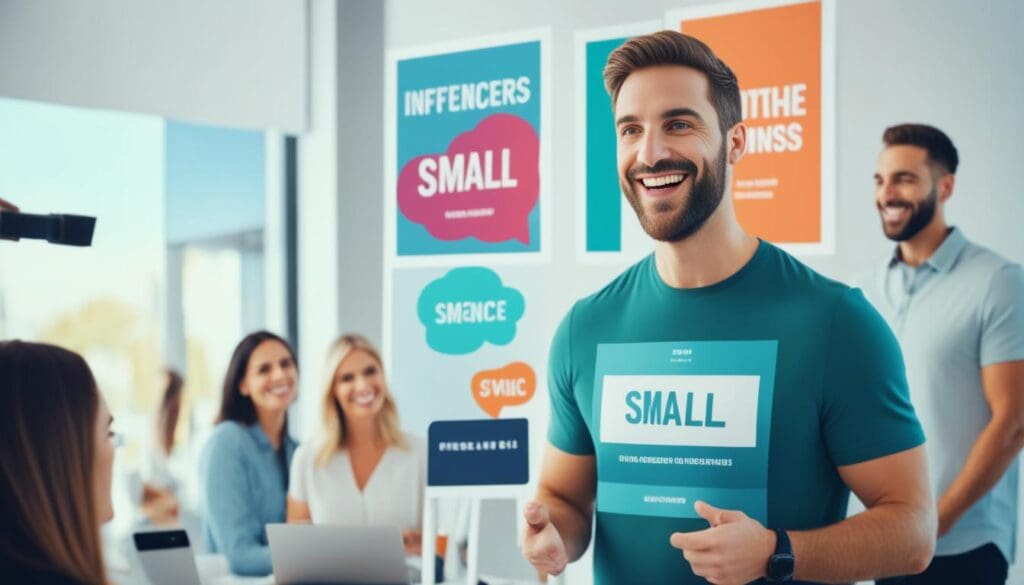
Influencer Marketing
In the digital age, influencer marketing has emerged as a powerful strategy for small businesses to boost brand awareness and reach new audiences. By partnering with influential social media figures who promote products or services to their engaged followers, businesses can tap into the trust and credibility of these influencers. This can lead to increased brand visibility, enhanced social proof, targeted reach, and the potential for higher sales.
However, it’s crucial for small businesses to carefully select the right micro-influencers whose audience aligns with their target demographics and brand values. These influencers, with follower counts ranging from 10,000 to 100,000, maintain a good level of engagement and focus on specific niche audiences, making them a highly effective choice for small businesses seeking to build influencer partnerships.
Measuring campaign performance and leveraging the expertise of digital agencies can also be crucial for maximizing the impact of influencer marketing efforts. Key performance indicators (KPIs) such as reach, relevance, resilience, and engagement are essential for tracking the success and return on investment (ROI) of these campaigns.
As consumers become increasingly skeptical of traditional marketing tactics, building trust through social proof is more important than ever. By aligning with the right influencers, small businesses can tap into the power of authentic and engaging content to drive brand awareness, credibility, and ultimately, sales.
Conclusion
As we navigate the rapidly evolving digital landscape, it’s clear that influencer marketing has become a game-changing strategy for small businesses looking to boost their brand awareness and reach new audiences. By partnering with influential social media figures, we can leverage the trust and credibility of these influencers to drive increased visibility, social proof, and potential for higher sales.
However, the key to successful influencer marketing lies in carefully selecting the right micro-influencers and tracking campaign performance. By working with digital agencies that have the expertise to maximize the impact of our influencer marketing efforts, we can ensure that our investment in this powerful strategy pays off.
As small businesses continue to navigate the ever-changing digital marketing landscape, incorporating influencer partnerships into our overall strategy can be a powerful way to propel our brand to new heights. With the right approach and data-driven insights, we can harness the power of influencer marketing to drive meaningful growth and achieve our business goals.