

How to Create Social Media Ads that Convert

Conducting an SEO Audit: A Step-by-Step Guide for Small Businesses

As a small business owner, you likely know content marketing’s power. It helps you reach and engage your audience. But, managing content day after day can be tough. Luckily, experts like Tabitha Jean Naylor recommend using a content calendar to organize all your content.
The online world is where many people find and learn about local businesses. Your online content acts like your virtual store, providing a glimpse into your physical shop. A structured content calendar can transform how you market online. It allows for a more focused and consistent approach that truly connects with your audience.
Key Takeaways:
- A content calendar provides a strategic implementation plan for your content marketing efforts.
- Scheduling content marketing in bulk for 2-6 months can save you time and effort.
- Automation tools can help you schedule and post content across various social media platforms.
- Regular engagement is crucial for effective content marketing, as irregular posts can diminish impact and engagement levels.
- Tracking data through a content calendar allows you to make informed marketing decisions.
Introduction
For small businesses, keeping up with a content strategy is a challenge. But, using a content calendar makes it easier. It helps in organizing your marketing efforts. This keeps your business efficient, focused, and reaching its goals.
Understanding the Importance of a Content Calendar
A content calendar is like a map for your content. It guides what and when you post. Planning ahead means you always have interesting content. This content goes on your site, blog, and social media. It’s key for standing out online and grabbing your audience’s attention.
The Benefits of a Well-Planned Content Strategy
Using a content calendar offers many pluses for your small business. It ensures you post regularly and with purpose. It also lets you use your team’s skills effectively. Plus, it helps in keeping all members on the same page. With a content calendar, you can see what works and improve over time. It’s about making smart choices based on what your data tells you.
What is a Content Calendar?
A content calendar is a key tool for marketers and content creators. It helps them plan and manage when and where their content will be published. This tool is a visual guide that brings together all content plans in one place.
Defining a Content Calendar
This calendar lays out what content will be published, where it will go, and the publication dates. It keeps businesses and creators on track with a consistent approach. By ensuring messages reach the right audience at the right time, it boosts the impact of marketing efforts.
The Role of a Content Calendar in Content Marketing
A content calendar plays a vital role in the success of marketing strategies. It allows businesses to align their content with their goals. This way, they can handle everything from creating to tracking content in a structured manner. As a result, their content marketing efforts become more unified and effective.
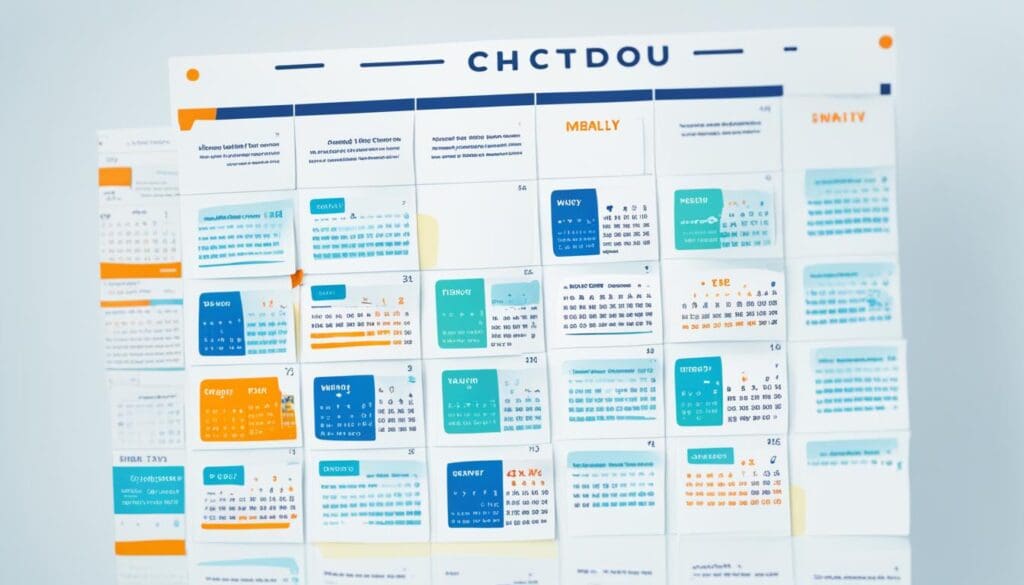
Why Every Small Business Needs a Content Calendar
A content calendar is essential for small businesses. It helps them plan and execute their content strategy well. It ensures these businesses stay on track. So, here’s why a content calendar is a must for every small business.
Consistency in Content Creation
Being consistent is vital in content marketing. A content calendar aids in this. For instance, blog posts should ideally come up four times a week. On Facebook, companies shouldn’t post more than twice a day during weekdays and once on weekends. This maintains audience interest. With a calendar, planning and scheduling posts becomes easy. It keeps the audience hooked with timely content.
Effective Planning and Strategy
A well-organized strategy, thanks to a content calendar, boosts website traffic, engagement, and trust. You can fill your content calendar months in advance. This allows for better content strategy, mapping back to your business goals. It keeps the audience interested through a wide variety of content types and subjects.
Efficient Use of Resources
Working without a content calendar leads to duplication of efforts. A calendar gives a clear view of your content strategy. This helps spot areas where you can work smarter. It also ensures that resources like time, effort, and creativity are used wisely.
Tracking and Measuring Content Performance
With a content calendar, you can keep an eye on how your content is performing. This is key for improving your strategy. It lets you measure things like website traffic and engagement to see what works. Such data-driven insights allow for smart adjustments to your plan.
Content Calendar
A content calendar is a must-have for small businesses. It helps keep our content marketing consistent and strategic. With it, we plan, organize, and execute content better. This leads to more engagement, better performance, and a more robust online presence.
This tool gives us a clear view of the content we’re publishing, when, and where. It’s like a roadmap for our team. We keep track and make sure we’re always putting out top-notch content.
With a content calendar, we sync our marketing efforts with our big business goals. This means we plan our content far ahead, making everything more efficient. It’s about using our resources wisely.
Also, a good content calendar means better teamwork. We can assign tasks, set deadlines, and see how our content work is going. This keeps everything organized and makes our strategies work better.
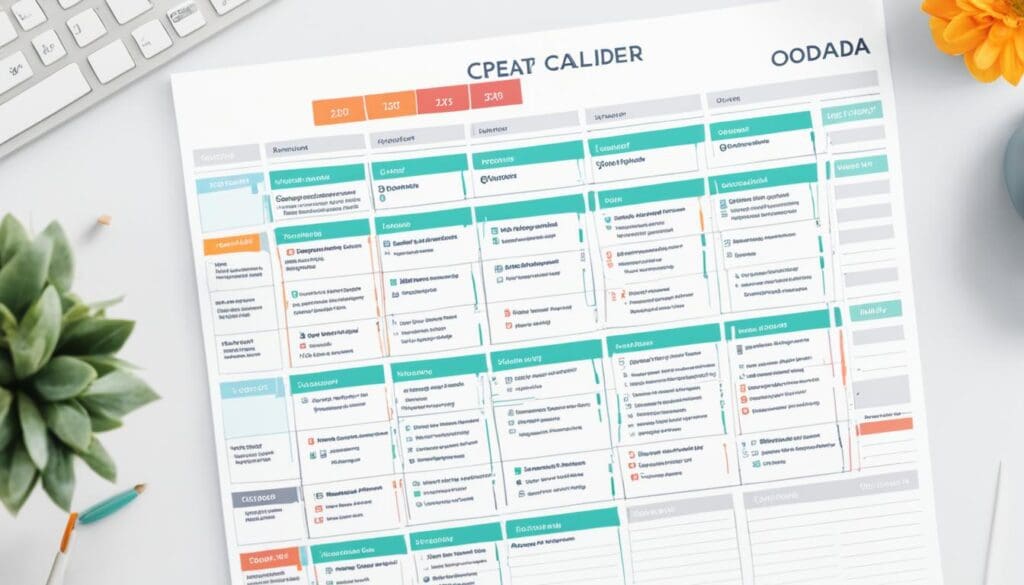
How to Create an Effective Content Calendar
Creating a strong content calendar is key for your business’s online presence. We’ll guide you through making one that matches your target audience, goals and objectives, and content types. This will also make content scheduling and content planning smoother.
Understand Your Target Audience
Start by knowing your audience really well. Find out their age, what they like, what they struggle with, and how they prefer to get information. This info helps you choose what content types to make and when to share them. It makes your messages hit home more.
Set Clear Goals and Objectives
Have specific and clear goals and objectives for your content efforts. You might aim to get your brand noticed more, bring more people to your website, get leads, or sell more. Knowing these goals shapes your content planning. It also helps you see how well your content calendar is working.
Choose the Right Content Types
Use content types that your audience likes and fits your goals. You can try different things like articles, videos, podcasts, tweets, and newsletters. Mixing it up keeps people interested.
Schedule and Organize Your Content
Make a content calendar that shows when you’ll share things. It lists what you’ll share, when, and who’s working on it. Keep your calendar up-to-date to meet your content planning and target audience needs.
Essential Elements of a Content Calendar
To make our small business’s content marketing work better, we need a good content calendar. It should have some key elements:
Content Types and Topics
Our calendar needs to show what content types we will make. This might be blog posts, videos, infographics, or podcasts. It should also list the content topics that our audience is interested in. This will help us do better on search engines and catch more people’s eyes.
Publishing Dates and Platforms
We should plan when each piece of content will go out. This makes sure we always have something new for people to see. It might go on our website, blog, email, or social media.
Content Creators and Deadlines
The calendar needs to say who will make each piece of content. It should also set times when each step is due, like research, writing, and editing. This keeps things moving smoothly.
Asset Management and Workflow
For everything to work well, we must note how to manage what we create. This includes keeping research and design in check, and handling different versions of our work.
With these elements in our content calendar, we can tackle our small business’s marketing well. This approach can spike up engagement, performance, and how much we’re noticed online.
Tips for Maintaining and Optimizing Your Content Calendar
To keep your business’s content calendar working well, these tips can help:
Regularly Review and Update
It’s vital to often look over and refresh your content calendar. This keeps your content strategy headed in the right direction. Look at past results to see what you can improve. Tweak your topics, dates, or resources to match what your audience likes.
Analyze Performance and Adjust Strategy
Keep an eye on how well your content does, like views and clicks. Tracking this data can give you ideas on how to better your strategy. Find what content your audience loves and put more of that in your calendar. This method keeps your business engaging and up-to-date.
Collaborate with Your Team
Managing a content calendar well needs everyone on board. Make sure your team talks openly and shares ideas. Have regular meetings to go over the calendar and any upcoming content. Doing this helps everyone feel responsible and makes your strategy better.
Conclusion
In summary, a content calendar is key for small businesses. It helps them organize their content marketing. By using a content calendar, businesses can do the following:
Keep their online presence strong and united through regular content. Plan, organize, and carry out their marketing content easily. This leads to more interaction and better results. It also helps in using time and money wisely, making content marketing more effective.
A good content calendar is a big step for small businesses online. It allows them to lead in marketing, beat the competition, and grow. This tool is crucial for success in the digital world.