
Navigating Local SEO: A Comprehensive Guide

Mastering Video Marketing: Strategies for Success

Welcome to our comprehensive guide on email marketing strategies that can help boost engagement and drive conversions for your business. In today’s digital age, email marketing remains one of the most powerful and effective tools for reaching your target audience and achieving your business goals.
Whether you’re a small startup or a well-established company, implementing successful email campaigns can significantly impact your bottom line. With the right strategies in place, you can captivate your subscribers, nurture customer relationships, and ultimately drive conversions that contribute to the growth and success of your business.
Key Takeaways:
- Email marketing is a powerful tool for boosting engagement and driving conversions for your business.
- Implementing effective email campaigns can help nurture customer relationships and drive growth.
- Personalization and segmentation are essential for creating personalized experiences and maximizing email effectiveness.
- Optimizing engagement and conversion rates requires attention to detail in crafting subject lines, email design, and call-to-action buttons.
- Analyzing email metrics and KPIs provides valuable insights to optimize your email marketing strategies.
Understanding Email Marketing Best Practices
In the world of digital marketing, email campaigns play a pivotal role in engaging customers and driving conversions. To make the most out of your email marketing efforts, it is essential to understand and implement best practices that can maximize your results. In this section, we will delve into the key best practices for email marketing, including email campaigns, email automation, and email best practices that ensure deliverability, engagement, and conversions.
Email Campaigns: Creating Compelling Content
- Create personalized and valuable content that resonates with your target audience.
- Craft attention-grabbing subject lines that entice recipients to open your emails.
- Segment your email list based on demographics, preferences, and behaviors to deliver targeted messages.
- Include a clear call-to-action (CTA) that encourages recipients to take the desired action.
Email Automation: Streamlining Your Processes
Implementing email automation can save you time and effort while ensuring timely and relevant communication with your subscribers. By setting up automated workflows, you can:
- Welcome new subscribers and introduce them to your brand.
- Send personalized emails based on specific actions or triggers.
- Re-engage inactive subscribers with targeted campaigns.
- Follow up with customers after a purchase or interaction.
Email Best Practices: Ensuring Deliverability and Engagement
To optimize the performance of your email campaigns, it’s important to follow industry best practices:
- Ensure your email list is built organically and complies with email marketing regulations.
- Use a reputable email service provider (ESP) to improve deliverability.
- Optimize your emails for different devices and email clients.
- Regularly test your emails to identify and fix any formatting or display issues.
- Include an unsubscribe link and honor opt-out requests promptly.
By following these email marketing best practices, you can enhance the effectiveness of your campaigns, cultivate stronger customer relationships, and drive higher conversions. Now let’s move on to the next section, where we will explore the power of personalization in email marketing.
Harnessing the Power of Personalization
Personalization is a crucial element of successful email marketing. At our company, we understand the importance of creating personalized experiences for our subscribers. By implementing dynamic content and leveraging customer segmentation, we can deliver targeted messages that resonate with each individual.
Customer segmentation allows us to divide our subscriber base into different groups based on their demographics, preferences, and behaviors. This segmentation enables us to tailor our email campaigns to specific audience segments, ensuring that the right message reaches the right people at the right time. By understanding our subscribers on a deeper level, we can provide content that is relevant and valuable to them.
Dynamic content takes personalization to the next level. It allows us to create email templates with interchangeable content blocks that can be customized based on individual subscriber data. For example, we can dynamically insert the subscriber’s name, location, or purchase history into the email content. This level of personalization creates a sense of connection and improves engagement.
Benefits of Email Personalization:
- Increased open rates: Personalized subject lines and content capture the attention of subscribers, leading to higher open rates.
- Improved click-through rates: When emails are tailored to individual interests, subscribers are more likely to click on the links provided.
- Enhanced customer loyalty: Personalized experiences make subscribers feel valued and understood, fostering stronger relationships and customer loyalty.

By harnessing the power of personalization, we can create email campaigns that stand out in crowded inboxes and drive meaningful interactions with our subscribers. Join us in the next section as we discuss how to optimize email engagement and conversions.
Optimizing Email Engagement and Conversions
In this section, we will focus on optimizing email engagement and conversions to boost the success of your email marketing campaigns. By implementing effective strategies, you can improve open rates, click-through rates, and ultimately drive more conversions for your business.
1. Craft Compelling Subject Lines
Your subject line is the first thing your subscribers see in their inbox. A well-crafted subject line can significantly impact the open rates of your emails. Grab your readers’ attention by using personalization, creating a sense of urgency, or offering valuable incentives.
2. Design Visually Appealing Emails
A visually appealing email design can captivate your subscribers and encourage them to explore your content further. Use clean layouts, eye-catching images, and consistent branding to create a professional and engaging email experience. Remember to optimize your emails for mobile devices to reach a wider audience.

3. Implement Effective Call-to-Action Buttons
A strong call-to-action (CTA) can prompt your subscribers to take the desired action, whether it’s making a purchase, signing up for a webinar, or downloading a resource. Use clear and compelling language, and make sure your CTA stands out visually. Consider testing different colors, placement, and wording to optimize click-through rates.
4. Personalize and Segment Your Email Campaigns
Personalization is key to engaging your subscribers. Utilize customer segmentation to deliver targeted content based on their preferences, demographics, or behavior. This tailored approach can lead to higher open and click-through rates, as well as improved conversion rates.
5. Leverage A/B Testing for Continuous Optimization
A/B testing allows you to compare different versions of your emails to determine which ones perform better. Test variables such as subject lines, email layouts, CTAs, and even the time of sending. Analyze the results and refine your email marketing strategies based on data-driven insights.
By following these strategies, you can optimize your email engagement and drive higher conversion rates. Remember to continuously analyze your metrics and adapt your approach to meet the evolving needs of your subscribers.
Analyzing Email Marketing Metrics and Key Performance Indicators (KPIs)
Analyzing email marketing metrics and key performance indicators (KPIs) is essential for measuring the success of your campaigns. As a business, it is crucial to track and analyze key metrics to gain valuable insights and improve your email marketing strategies.
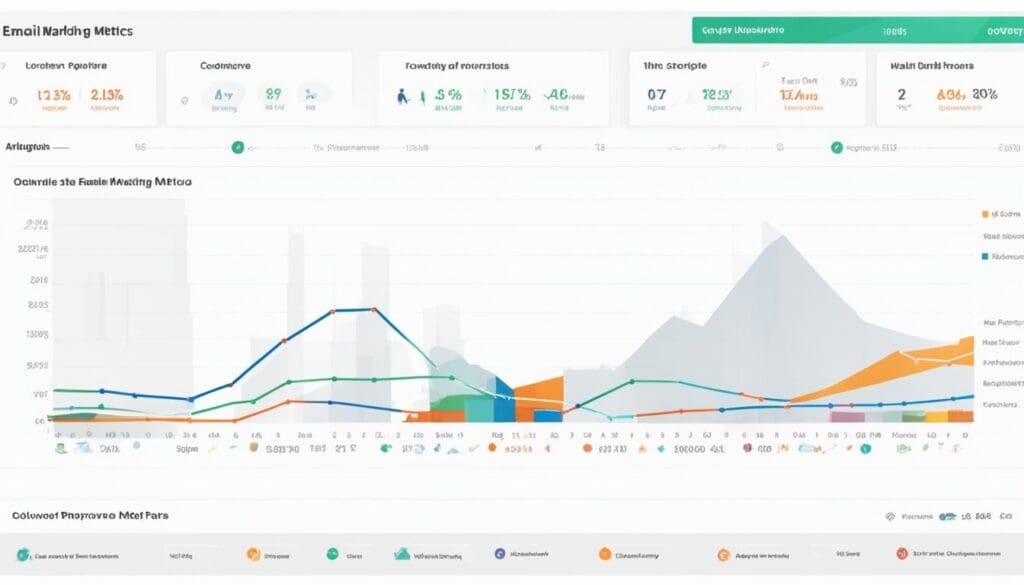
When it comes to email metrics, there are several important factors to consider:
1. Open Rates
Open rates measure the percentage of recipients who opened your email. By analyzing open rates, you can gauge the effectiveness of your subject lines and the overall appeal of your emails.
2. Click-Through Rates
Click-through rates indicate the percentage of recipients who clicked on a link within your email. This metric helps evaluate the effectiveness of your call-to-action buttons and the overall engagement of your audience.
3. Bounce Rates
Bounce rates measure the percentage of emails that were undeliverable or bounced back. High bounce rates may indicate issues with your email list quality or deliverability, highlighting the need for list hygiene and regular email scrubbing.
4. Conversion Rates
Conversion rates represent the percentage of recipients who completed a desired action, such as making a purchase or filling out a form. By analyzing conversion rates, you can assess the effectiveness of your email campaigns in driving desired outcomes.
It’s crucial to consistently track and monitor these key metrics to identify trends, patterns, and areas for improvement. This data-driven analysis enables you to optimize your email marketing efforts and achieve better results.
The Importance of A/B Testing
In addition to analyzing email metrics, A/B testing is a valuable technique for optimizing your email campaigns. By testing different variations of subject lines, email designs, and call-to-action buttons, you can gather data and insights to make informed decisions about what resonates best with your audience.
At [Your Company Name], we understand the significance of email performance analysis and KPI tracking. Our team of experts can help you leverage the power of data to refine your email marketing strategies and achieve your business goals. Contact us today to unlock the full potential of your email campaigns.
Conclusion: Partner with Sales Solved for Email Marketing Success
In conclusion, email marketing strategies have the potential to drive significant success for businesses. By implementing the best practices, personalizing your campaigns, optimizing engagement and conversions, and analyzing key metrics, you can unleash the full potential of email marketing.
At Sales Solved, we understand the power of email marketing and its ability to grow your business. Our team of experts is dedicated to helping you achieve email marketing success. With our proven strategies and industry knowledge, we can guide you in creating effective campaigns that engage your audience and drive conversions.
Don’t let your business miss out on the opportunities that email marketing can offer. Partner with Sales Solved today and take your email marketing efforts to the next level. Contact us now to get started on your journey towards business growth and success.
FAQ
What are some best practices for creating effective email campaigns?
When creating email campaigns, it’s important to focus on compelling subject lines, engaging content, and clear call-to-action buttons. Personalize your emails based on customer segmentation and leverage dynamic content to deliver personalized experiences.
How can email automation streamline my email marketing processes?
Email automation allows you to set up triggers, workflows, and sequences to automate various aspects of your email marketing, such as welcome emails, abandoned cart reminders, and birthday greetings. This saves time and ensures timely and relevant communication with your subscribers.
What are some email best practices for ensuring deliverability, engagement, and conversions?
To enhance deliverability, it’s crucial to maintain a clean email list, use a reputable email service provider, and avoid spam triggers. To boost engagement and conversions, design visually appealing emails, optimize for mobile devices, and implement effective call-to-action buttons.
How can I harness the power of personalization in my email campaigns?
Personalization is a key driver of email marketing success. Start by segmenting your subscribers based on their preferences, demographics, or past interactions. Then, implement dynamic content to tailor the email content based on each recipient’s unique characteristics.
What strategies can I use to optimize email engagement and conversions?
To improve email engagement, craft compelling subject lines, create engaging and personalized content, and optimize the email design for readability and visual appeal. To boost conversions, include clear and persuasive call-to-action buttons and use scarcity or urgency tactics when appropriate.
How can analyzing email marketing metrics and key performance indicators (KPIs) help optimize my campaigns?
By tracking and analyzing key metrics such as open rates, click-through rates, bounce rates, and conversion rates, you can gain insights into what is working and what needs improvement. A/B testing different elements of your emails can help optimize your strategies based on data-driven decisions.
How can Sales Solved help me achieve email marketing success and grow my business?
Sales Solved is a trusted partner in email marketing. We provide expert guidance, personalized strategies, and cutting-edge tools to help businesses unlock the full potential of email marketing. Contact us today to start leveraging the power of email marketing and drive success for your business.