
How to Rank Higher in Local Searches with SEO

How to Create a Winning Social Media Marketing Strategy

In today’s competitive digital landscape, search engine optimization (SEO) plays a pivotal role in helping small businesses thrive. A well-designed website that aligns with SEO best practices can significantly boost your online visibility, driving more Google search traffic and increasing sales. At Solved, we specialize in helping businesses like yours create technically sound and user-friendly websites that appeal to both visitors and search engines.
When it comes to user experience, a seamless and intuitive design is crucial. This includes clear navigation, mobile optimization, and fast loading times—all of which help search engines index and rank your site higher. However, it’s equally important to strike a balance between creative design and SEO tactics. By integrating data-driven insights, small businesses can create websites that not only look great but also perform exceptionally well on search engines.
In this article, we’ll explore actionable tips and best practices to enhance your website’s SEO performance. Whether you’re just starting out or looking to refine your current strategy, Solved is here to guide you every step of the way. Let’s dive in and uncover how you can leverage SEO to grow your business effectively.
Key Takeaways
- SEO is essential for improving your website’s visibility and driving organic growth.
- A user-friendly design with clear navigation and mobile optimization boosts search engine rankings.
- Striking a balance between creative design and SEO tactics is crucial for success.
- Fast loading times and technical optimization are key to improving your site’s performance.
- Solved is your trusted partner in creating SEO-optimized websites that drive sales.
Introduction: Embracing SEO and Design for Small Business Growth
In the fast-paced digital world, small businesses need every advantage they can get. This is where SEO and web design come together to create a powerful tool for growth.
A website that looks great and is easy to use is just the start. To truly succeed, it needs to be optimized for search engines so potential customers can find it. However, balancing these two aspects can be tricky. While you want your site to be visually appealing, it also needs to follow SEO best practices to rank higher in search results.
When you combine effective SEO strategies with a well-designed website, you open the door to more organic traffic, better search engine rankings, and a user experience that keeps visitors coming back. These elements work together to help your business grow and thrive in a competitive market.
Throughout this article, we’ll share practical tips and expert advice to help you make the most of your online presence. Whether you’re just starting out or looking to improve your current strategy, we’ve got you covered. Let’s explore how you can use SEO and design to take your small business to the next level.
The Intersection of SEO, Web Design, and User Experience
Creating a seamless online experience is key to attracting and keeping visitors. When SEO and web design work together, they create a powerful combination that boosts both search rankings and user satisfaction.
Understanding Core Design Principles
A well-structured site with clear navigation is essential. This not only helps users find what they’re looking for but also makes it easier for search engines to crawl and index your pages. Organizing your content logically ensures that both users and search engines can understand your site’s hierarchy.
Impact on User Engagement and Conversion
Internal linking is another crucial aspect. By linking to other relevant pages on your site, you guide users to more content and help search engines understand your site’s structure. This can lead to higher engagement and better conversion rates.
Clear navigation and effective keyword placement are also vital. They help users and search engines understand your pages, improving both rankings and user experience. Even small design tweaks can make a big difference in engagement and conversion.
SEO-Friendly Website Design
A well-crafted online presence is more than just aesthetics. It’s about creating a seamless experience that appeals to both your audience and search engines. At Solved, we believe that SEO-friendly design is the cornerstone of a successful online strategy for small businesses.
Defining What It Means for Our Business
So, what makes a website truly SEO-friendly? It starts with clean, efficient code that search engines can easily crawl. Responsive design ensures your site looks and performs great on all devices, from desktops to mobile phones. Fast load times and intuitive navigation are also crucial, as they directly impact user experience and search engine rankings.
Key Elements to Consider
When building or optimizing your site, focus on these essential elements:
- Optimized title tags and meta descriptions that clearly communicate your content to both users and search engines.
- A logical internal linking structure that guides visitors and helps search engines understand your site’s hierarchy.
- Using schema markup to provide additional context to search engines, enhancing your rich snippets in Google search results.
By integrating these elements, you can improve your site’s visibility, drive more organic traffic, and build trust with your audience. At Solved, we’re here to help you implement these strategies and elevate your online presence.
Building a Strong Site Structure for Higher Rankings
A well-organized site structure is like the backbone of your online presence, supporting both user experience and SEO success. At Solved, we believe that a clear and logical structure is essential for helping small businesses grow.
Planning Your Navigation Hierarchy
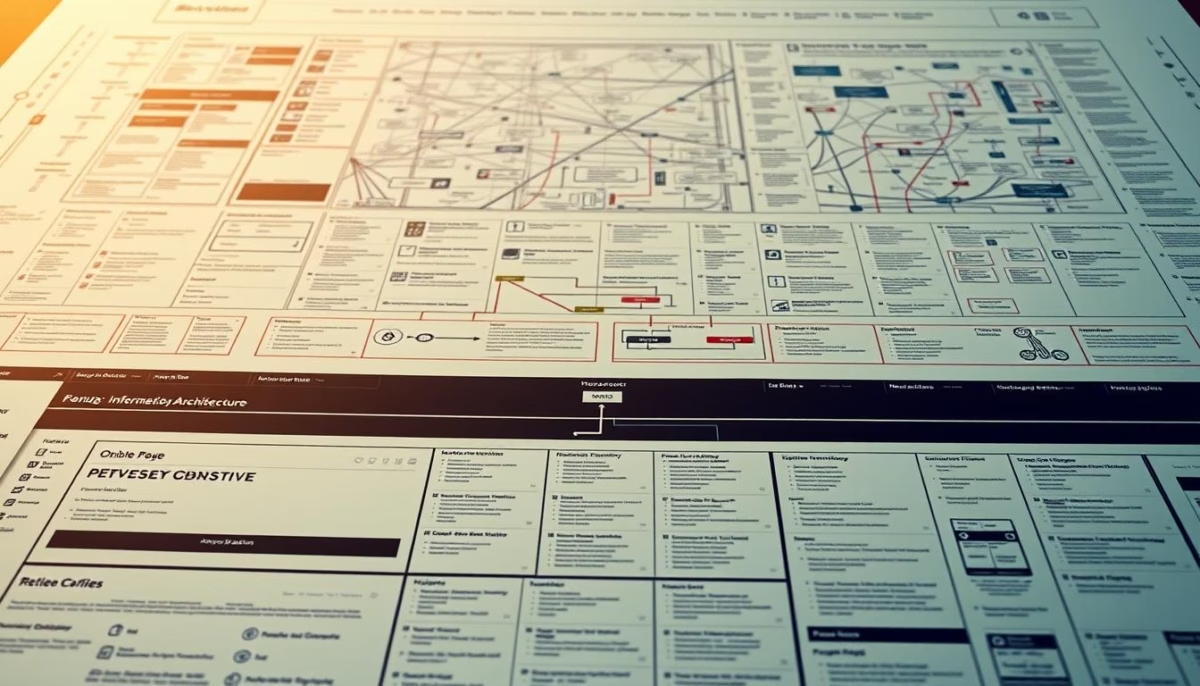
Start by mapping out your navigation to ensure it’s simple and intuitive. Aim for a shallow site structure—ideally, no more than three levels deep. This makes it easier for users and search engines to find your content. Avoid nesting pages too deeply, as this can hurt both SEO and user engagement.
Properly naming your images and using descriptive tags is another key strategy. Use clear, descriptive file names for your images and include relevant keywords in your alt tags. This helps search engines understand your content better. For example, instead of “image123.jpg,” name your file something like “small-business-seo-strategy.jpg.”
Tools like Google Search Console can help you monitor your site’s health and performance. Regularly check for crawl errors and ensure your site is indexed properly. This ensures search engines can find and rank your pages effectively.
- Plan a shallow navigation hierarchy to improve crawl efficiency.
- Use descriptive file names and alt tags for images.
- Leverage tools like Google Search Console for monitoring.
Internal linking is also crucial. Link to other relevant pages on your site to guide users and help search engines understand your content hierarchy. This not only boosts engagement but also improves your site’s overall SEO performance. By organizing your site structure thoughtfully, you create a better experience for your visitors and improve your chances of ranking higher in search results.
Optimizing for Mobile-Friendliness and Speed
Mobile-friendliness and speed are critical for both SEO and user satisfaction. With Google’s mobile-first indexing, ensuring your site is optimized for mobile devices is no longer optional—it’s essential. Slow-loading pages can drive visitors away, hurting both your traffic and conversion rates.
Mobile Optimization Strategies
A responsive design is the foundation of mobile optimization. Ensure your site adapts seamlessly to all screen sizes, providing an intuitive experience on any device. Focus on accessibility by simplifying navigation and prioritizing touch-friendly elements. These adjustments not only enhance user experience but also improve your site’s performance in search results.
Improving Page Load Times
Speed is crucial. Compress images to reduce file sizes without sacrificing quality, and optimize code to eliminate unnecessary elements. Tools like Google’s PageSpeed Insights can provide actionable insights to enhance your site’s performance. By addressing these factors, you can significantly reduce load times, boosting both user satisfaction and your search engine rankings.
- Ensure responsive design for all devices
- Optimize images and code for faster loading
- Use tools like PageSpeed Insights for monitoring
Crafting Compelling Content and Keyword Strategy
Creating content that resonates with your audience is essential for driving growth. It all starts with a well-thought-out keyword strategy that aligns with your business goals.
Keyword Research Tailored for Small Businesses
Understanding your audience’s search intent is the first step in effective keyword research. Use tools to identify keywords that match your niche and analyze competitors to find gaps. Focus on long-tail keywords for lower competition and higher conversion rates.
- Identify keyword intent: informational, navigational, or transactional.
- Target low-competition, high-relevance keywords.
- Naturally incorporate keywords into your content.
Developing Content that Resonates
Engaging content is key to capturing and retaining your audience. Craft meta descriptions that are concise and compelling, including your primary keyword. Aim for a keyword density of 1-2% to keep content natural and readable.
- Write clear, compelling meta descriptions.
- Maintain a natural keyword density.
- Blend creativity with SEO best practices.
By consistently publishing high-quality content, you’ll build a strong online presence and improve conversion rates. Let Solved help you create content that drives results.
Leveraging On-Page SEO Techniques
Effective on-page SEO is the cornerstone of a successful online strategy. It helps search engines understand your content and improves your site’s visibility. At Solved, we believe in leveraging these techniques to drive growth for small businesses.
Optimizing Title Tags and Meta Descriptions
A strong title tag is essential. It should be clear, concise, and include your primary keyword. For example, “Small Business SEO Tips | Improve Your Online Presence” is both informative and engaging.
Meta descriptions are equally important. They should summarize your page content and include your keyword. A good meta description might look like, “Discover how to improve your small business SEO. Learn tips and tricks to boost your online presence and attract more customers.”
Enhancing URL Structures
URLs should be simple and descriptive. Instead of “page123,” use “small-business-seo-tips.” This helps search engines understand your content and improves click-through rates.
- Craft clear, keyword-focused title tags to attract search engine traffic.
- Write compelling meta descriptions that summarize content and entice clicks.
- Use descriptive URLs to enhance search performance.
By balancing creativity with SEO best practices, you can create content that resonates with your audience and improves your search rankings. At Solved, we’re here to help you implement these strategies and grow your online presence.
Implementing Technical SEO and Metadata Best Practices
Technical SEO is the backbone of a well-optimized online presence. It ensures your site is structured in a way that search engines can easily crawl and index. At Solved, we focus on creating a solid technical foundation to enhance your search rankings and user experience.
Creating Effective Sitemaps and Robots Files
A sitemap is like a roadmap for search engines, guiding them to your most important pages. To create an effective sitemap:
- Organize your content logically, ensuring all key pages are included.
- Use a sitemap index if your site has a large number of pages.
- Submit your sitemap to Google Search Console to aid in indexing.
A robots.txt file tells search engine crawlers which pages to access. Configure it carefully to:
- Allow crawling of important pages.
- Block access to sensitive or unnecessary areas.

Ensuring Mobile-First Indexing Compliance
With Google’s mobile-first indexing, your mobile site is the primary version. Ensure:
- Your mobile site mirrors your desktop site in content and structure.
- Mobile pages load quickly and are free of errors.
Internal linking also plays a role in communicating page importance. Use logical links to guide users and search engines through your content hierarchy. Structured data helps search engines understand your site’s information, further enhancing your rankings.
By following these best practices, you’ll maintain a technically healthy site that performs well in search results. At Solved, we’re here to help you implement these strategies and elevate your online presence.
Enhancing Navigation and Internal Linking for Visibility
Clear navigation and internal linking are essential for guiding users through your site and improving search engine rankings. A well-structured site helps both users and search engines understand your content hierarchy, leading to better visibility and engagement.
Streamlining the User Journey
A seamless user journey starts with intuitive navigation. By organizing your site’s structure logically, you make it easier for visitors to find what they’re looking for while also helping search engines crawl and index your pages more effectively.
- Logical Navigation: Ensure your site’s navigation is simple and easy to follow, allowing users to find key pages without confusion.
- Internal Linking Best Practices: Link to relevant pages within your site to guide users and help search engines understand your content hierarchy.
- Clear Title Tags: Use descriptive title tags that include your primary keyword to improve crawlability and performance.
Regularly auditing your site’s navigation can reduce bounce rates and increase dwell time. By implementing these strategies, you create a user-friendly experience that also boosts your site’s ranking and visibility.
Harnessing Analytics and Performance Monitoring
Monitoring your online performance is crucial for understanding how well your strategies are working. Tools like Google Search Console provide valuable insights that can guide your SEO efforts and help you make data-driven decisions.
Using Google Search Console and Other Tools
Google Search Console is an essential tool for any business looking to improve its online presence. It helps you monitor how your site performs in search results, identify crawl issues, and understand user behavior. By setting up and using these tools effectively, you can uncover opportunities to enhance your SEO strategy.
Interpreting Key Performance Metrics
Key metrics such as organic traffic, page load times, and ranking positions give you a clear picture of your site’s performance. Regular audits can help you spot issues before they affect user experience, ensuring continuous improvement. At Solved, we specialize in helping businesses leverage this data to drive growth and refine their strategies.
- Track organic traffic to measure SEO success.
- Monitor page load times for optimal user experience.
- Analyze ranking positions to refine your strategy.
By focusing on these metrics, you can make informed decisions that boost your online presence and keep your business thriving.
Partnering with Solved to Boost Your Sales
In today’s competitive market, businesses need expert guidance to stand out. At Solved, we specialize in integrating robust SEO practices with innovative design elements to help small businesses thrive. Our approach combines technical expertise with creative solutions, ensuring your online presence is both effective and engaging.
Our services are tailored to enhance your digital marketing strategy. We focus on creating a seamless user experience while ensuring your site is optimized for search engines. By simplifying complex SEO processes, we help you maximize your ROI and drive more organic traffic to your product pages.
- Expert integration of SEO and design elements for a cohesive online strategy.
- Proven success in boosting organic traffic and sales through effective SEO practices.
- Unique approach combining technical SEO with creative design for superior results.
- Simplifying technical processes to enhance your digital marketing ROI.
Ready to elevate your business? Contact Solved today to learn how we can help you achieve your growth goals. Let us handle the technical aspects while you focus on what you do best—growing your product and reaching new customers.
Conclusion
In today’s fast-paced digital world, optimizing your online presence is more crucial than ever. By combining optimization techniques with intuitive design, small businesses can enhance visibility and drive organic growth. Mobile-friendliness, fast page speeds, and a comprehensive content strategy are essential for success.
Clear navigation and proper analytics empower businesses to refine their strategies and improve their online presence. At Solved, we specialize in helping small businesses implement these best practices effectively.
Ready to elevate your business? Contact Solved today to learn how we can help you achieve your growth goals. Let us handle the technical aspects while you focus on growing your product and reaching new customers.