
Which is Better: Paid Ads or Organic Marketing for Small Businesses?

How Social Proof Can Increase Your Sales and Credibility

Managing Google Ads campaigns can be challenging, especially for small businesses. At Solved, we understand the complexities of creating effective ad campaigns that drive real results. This is where AI comes into play, offering powerful tools to transform how you manage your ads.
AI can automate tasks like keyword research and ad copy creation, saving you time and reducing errors. With 24/7 monitoring, AI ensures your campaigns are always optimized, even when you’re not actively managing them. This leads to better conversion rates and a higher return on investment.
By streamlining these processes, AI helps businesses of all sizes grow. At Solved, we’re committed to providing solutions that make managing your Google Ads campaigns easier and more effective. In this article, we’ll explore actionable tips to enhance your campaign performance and share insights to help you make informed decisions.
Key Takeaways
- AI automates tasks like keyword research and ad copy creation.
- 24/7 monitoring ensures continuous campaign optimization.
- AI reduces human error and saves time.
- Improved conversion rates and ROI for businesses of all sizes.
- Actionable tips to enhance your Google Ads performance.
Understanding the Impact of AI on Google Ads
Small businesses often face significant hurdles when managing their ad campaigns manually. One major challenge is the sheer amount of time required to handle tasks like keyword research and ad copy creation. Without the right tools, these processes can become overwhelming, leading to inefficiencies and potential errors.
Another critical issue is the constant need for monitoring and adjustments. Daily tweaks to campaigns are essential for maintaining performance, but they demand a lot of time and attention. Without automated solutions, it’s easy to miss opportunities or misallocate budgets.
Traditional methods also struggle with tasks like negative keyword management and ad scheduling. These activities, while crucial, can consume a significant portion of a marketer’s time. Moreover, without data-driven insights, it’s challenging to make informed decisions, often resulting in budget overruns and inefficient spending.
Key Benefits of AI Integration
Integrating AI into your ad strategy can transform how you manage campaigns. AI automates routine tasks, reducing the risk of human error and freeing up time for more strategic activities. It also provides 24/7 monitoring, ensuring your campaigns are always optimized, even when you’re not actively managing them.
With AI, you gain access to advanced analytics and insights that can enhance your performance metrics. It helps in identifying the right keywords, creating compelling ad copy, and allocating your budget more effectively. This leads to better conversion rates and a higher return on investment.
By streamlining these processes, AI enables businesses of all sizes to grow more efficiently. It’s not just about saving time; it’s about making smarter, data-backed decisions that drive real results. This shift from manual management to AI-driven optimization is a game changer for small businesses aiming to compete in today’s fast-paced digital landscape.
Implementing AI for Google Ads Optimization
Transitioning to an AI-driven campaign can seem daunting, but with the right approach, it becomes a straightforward process. Let’s break it down into manageable steps to help you get started effectively.
Setting Up Your AI-Driven Campaign
The first step is choosing the right tool. Select a platform that aligns with your business needs and budget. Once chosen, configure the tool by inputting your campaign goals and target audience. This initial setup lays the foundation for your AI-driven strategy.
Leveraging Smart Bidding Tools
- Smart bidding tools enhance accuracy by analyzing real-time data, ensuring your bids are competitive and effective.
- For instance, tools like Target CPA and Target ROAS have shown to improve conversion rates by up to 20% in some cases.
AI continuously analyzes historical data to adjust bids, ensuring optimal ad placements. By automating this process, you save time and reduce the risk of human error.
Setting a budget is crucial. Define your daily budget and let the AI allocate funds where they’ll have the most impact. Regular assessments through automated systems help maintain campaign efficiency and effectiveness.
Smart bidding provides actionable insights, minimizing errors and boosting efficiency. This approach not only streamlines your workflow but also enhances your campaign’s overall performance.
Embracing AI is surprisingly simple and scalable, making it an ideal solution for small businesses aiming to grow. It’s not just about saving time but also about making smarter, data-driven decisions that yield real results.
Enhancing Ad Copy and Keyword Strategies
Crafting compelling ad copy and selecting the right keywords are crucial for capturing your audience’s attention. With AI, small businesses can now create ad copy that resonates deeply with their target audience, driving higher engagement and conversions.
Creative Ad Copy Development
AI tools are revolutionizing how ad copy is created. By analyzing audience behavior and preferences, these tools generate copy that speaks directly to your customers’ needs. For instance, AI can craft multiple versions of ad copy, allowing you to A/B test different approaches and identify what works best. This continuous refinement ensures your messaging stays relevant and effective.
Advanced Keyword Research Techniques
Keyword research is another area where AI shines. Advanced algorithms can identify high-performance keywords and even suggest negative keywords to avoid. By analyzing real-time data, AI helps maintain updated keyword lists and adjust bids based on current trends. This data-driven approach ensures your campaigns stay competitive and aligned with your audience’s search behavior.
By integrating these strategies, businesses can optimize their ad copy and keyword management, leading to improved click-through rates and higher conversion rates. AI not only streamlines these processes but also provides actionable insights to enhance overall campaign performance.
Streamlining Campaign Management and Budget Allocation
Managing PPC campaigns effectively is crucial for small businesses aiming to maximize their return on ad spend. Proper campaign management ensures that your budget is used efficiently, and your ads reach the right audience at the right time.
Efficient Ad Scheduling
Scheduling ads to target peak consumer activity times can significantly improve your campaign’s performance. By using data insights, you can identify when your audience is most active and adjust your ad schedule accordingly. This feature ensures that your ads are displayed when they are most likely to generate clicks and conversions.
- Use real-time data to identify peak hours and days for your target audience.
- Adjust your ad schedule to focus on these high-traffic times.
- Pause ads during low-engagement periods to conserve your budget.
Optimizing Spend with Real-Time Data
Real-time data tracking is essential for ensuring that your budget is allocated correctly throughout the day. AI-driven tools can monitor your campaign’s performance and make adjustments on the fly, preventing budget waste and improving your overall ROI.
- Monitor keyword performance to identify top-performing keywords.
- Allocate more budget to high-performing keywords and campaigns.
- Use precise targeting to avoid misallocation and ensure your ads reach the intended audience.
By combining efficient ad scheduling with real-time data optimization, small businesses can achieve better cost-per-click (CPC) rates and higher returns on their ad spend. Continuous refinement of your budget management strategy, based on data insights, will help you stay competitive in the ever-changing digital landscape.
Utilizing Analytics and Data Insights to Drive Results
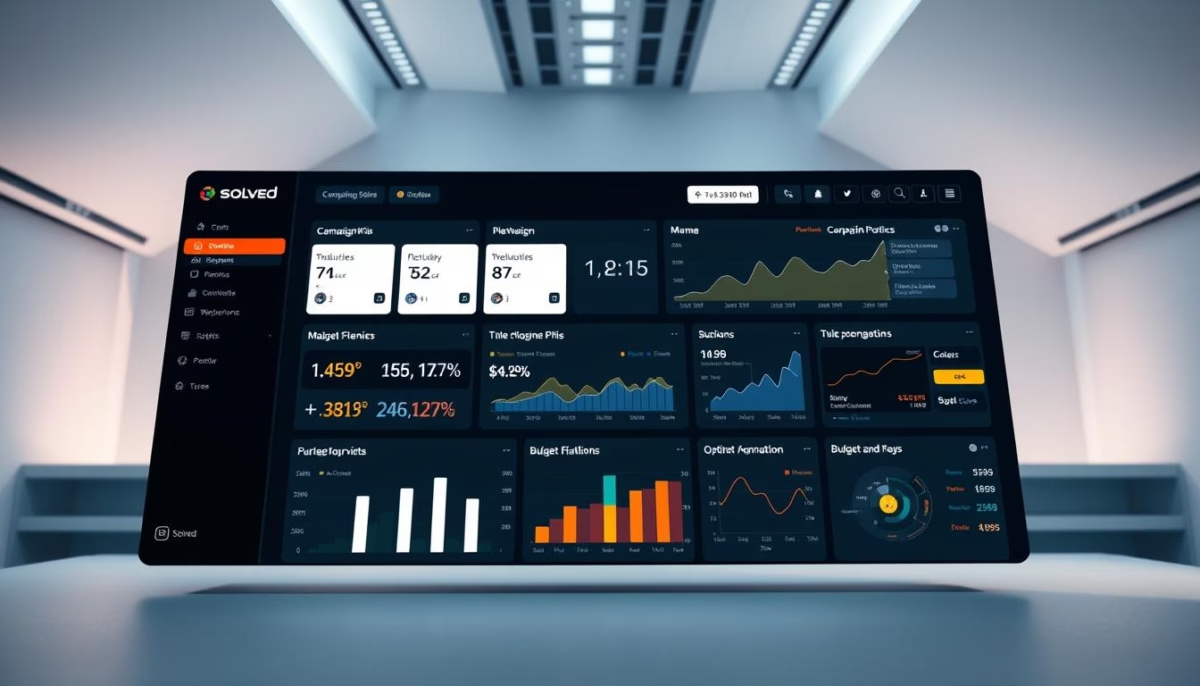
Making data-driven decisions is key to improving your campaign performance. Analytics tools provide valuable insights, helping small businesses refine their strategies and boost ROI.
Interpreting Performance Metrics
Tracking metrics like impression rates, click-through rates (CTR), and cost-per-click (CPC) is essential. These numbers show how well your ads are performing and where improvements can be made.
Performance dashboards combine data from various sources, offering a clear view of your campaign’s success. This comprehensive approach helps identify areas that need attention and opportunities for growth.
In one case, a business noticed low engagement on certain days. By adjusting their ad schedule, they saw a 15% increase in conversions. Real-time insights allow for quick adjustments, ensuring your campaigns stay competitive in today’s fast-paced digital landscape.
Continuous monitoring is crucial. By acting on data insights, businesses can optimize their strategies, leading to better ROI and sustained growth in the ever-changing digital world.
Addressing Common Challenges in Google Ads Campaigns
Every advertiser faces challenges when managing Google Ads campaigns. Two of the most common issues are budget overruns and human error. These pitfalls can hinder even the most well-planned campaigns, but there are solutions to overcome them.
Avoiding Budget Overruns
One major challenge is unintentional overspending. This often happens due to inaccurate budget estimates or unexpected ad placements. AI can detect these issues in real-time and adjust your budget allocation to prevent overruns. For example, AI can identify when certain keywords or ad placements are costing more than expected and automatically adjust bids to stay within your budget.
- Budget misestimations can lead to unexpected costs.
- AI adjusts bids in real-time to prevent overspending.
- Allocating funds to high-performance areas ensures cost efficiency.
Minimizing Human Error in Campaigns
Human error is another common issue in campaign management. Mistakes like incorrect bids or misplaced ad placements can lead to wasted resources. AI-based tools can significantly reduce these errors by automating routine tasks and providing predictive analytics to foresee potential pitfalls.
- AI automates tasks like bid adjustments and ad scheduling.
- Predictive analytics helps avoid budget misallocations.
- Real-time monitoring ensures campaigns stay on track.

By addressing these challenges, advertisers can achieve better conversion rates and higher returns. AI not only helps in avoiding budget overruns but also reduces human error, making campaigns more efficient and profitable. Embracing these solutions leads to a more sustainable and successful advertising strategy.
Streamline Campaigns with AI-Driven Bidding and Precise Ad Placement
Smart bidding and efficient ad placement are key to unlocking your business’s full potential in today’s competitive landscape. By leveraging smart tools, you can streamline your campaigns and ensure your ads reach the right audience at the right time. This approach not only saves time but also enhances your return on investment.
Throughout this article, we’ve explored how smart bidding, query management, and strategic ad placement can transform your campaigns. From setting up AI-driven strategies to overcoming common challenges, these steps provide a clear path to success. By embracing these solutions, you empower your business with actionable insights and scalable tools designed to drive growth.
At Solved, we specialize in helping small businesses thrive through effective campaign management. Our expertise ensures better ad placements, reduced manual errors, and cost-effective budget allocation. Ready to elevate your performance? Hire Solved today to increase your sales and watch your small business thrive.